
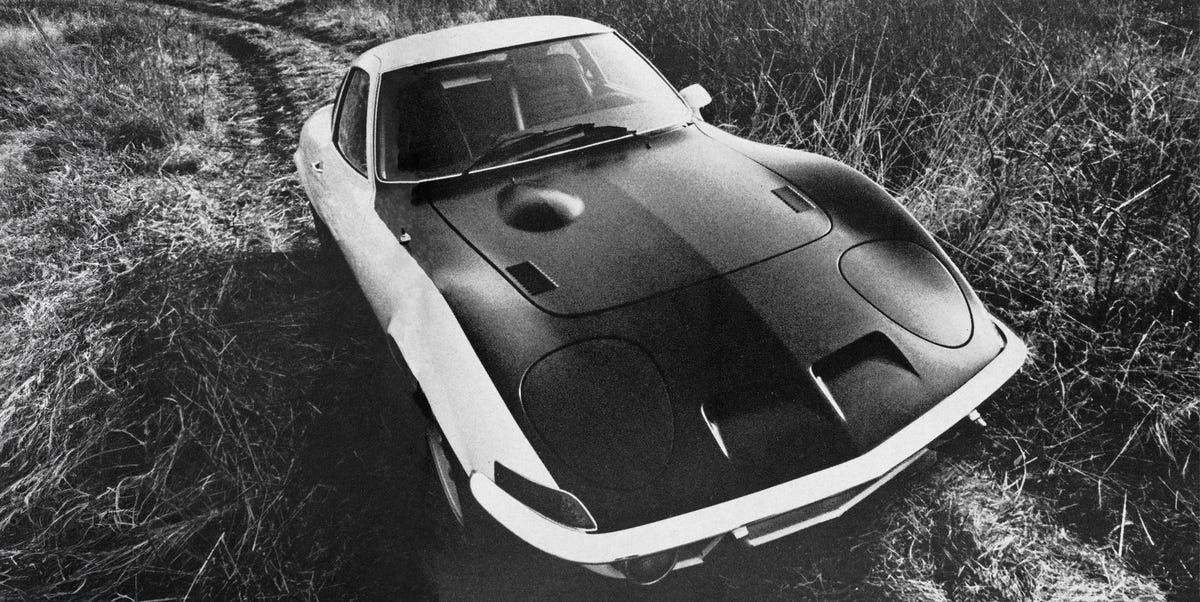


Fifty-five years ago, Car and Driver’s staff did something that would be unthinkable in today’s content-mill era of automotive journalism. They bought a car everyone agreed was terrible, tore it apart, and rebuilt it as a rolling middle finger to insurance companies, government regulators, and anyone else who wanted to suck the joy out of driving.
The car was a 1970 Opel GT, purchased for $3,324 from Buick, which imported the little German coupes and seemingly couldn’t care less about how they performed once they arrived stateside. The magazine’s July 1970 issue introduced readers to the project with prose so unapologetically defiant it reads like a manifesto.
“Cinch up your seat belts, stub out your cigarettes, and grab onto your grab handles,” the piece opened, before laying out a thesis that remains painfully relevant: the fun car doesn’t have to be the enemy. The insurance industry had begun putting bounties on horsepower. Washington was tightening emissions rules. The American performance car, in its crude, big-block, tire-shredding form, was under siege.
Car and Driver’s answer wasn’t to mourn. It was to adapt.
The staff picked the Opel GT because it looked fantastic and cost next to nothing. The driving experience, however, was another matter entirely. The engine sounded worse than a Farmall tractor, and the handling was described with one of the great automotive metaphors ever committed to print: “the car corners like the tires were bagels on a road covered with cream cheese.”
But that was the point. A perfect car can only get worse. A deeply flawed one gives you room to become a hero.
They farmed the mechanical work to Competition Research in Blauvelt, New York, a race shop staffed by guys who’d been extracting power from Formula Fords and Vees under tight rules restrictions. The challenge was identical here — squeeze everything possible from the Opel’s four-cylinder while keeping every emission control device intact. No cheating the carburetor. No gutting the distributor.
The engine was blueprinted, the head ported, the compression ratio nudged down to accommodate lead-free gasoline, and a custom exhaust header fabricated. The result: exactly 100 horsepower. Two less than advertised.
On paper, laughable. In practice, genius. No insurance agent would flinch at a 100-hp Opel. No bureaucrat would blink.
The handling transformation was where the real magic happened. Buick had stripped European-spec anti-roll bars and limited-slip differentials from American-market GTs and couldn’t even be bothered to look up the order codes when pressed. So the staff sourced aftermarket bars from a California outfit called Super-O — “a little crude, but for the price, you probably couldn’t make better ones in your basement” — and mounted Goodyear E60-15 Polyglas tires on 15×7-inch Minilite wheels.
The inner fender panels needed heavy hammer work. The outer sheetmetal survived untouched. The suspension was lowered, the axle ratio swapped, and suddenly the little coupe cornered with what the magazine claimed was enough grip and balance to “worry Porsches to death.”
They named it J. Edgar Opel, after the FBI director, as a final jab at the surveillance state creeping into American car culture. The name was a joke. The car was not.
What makes this piece resonate now isn’t nostalgia. It’s recognition. The forces arrayed against driving pleasure in 1970 — rising insurance costs, emissions mandates, a cultural narrative casting enthusiasts as antisocial — sound indistinguishable from today’s headlines. Swap “emission control devices” for “electrification mandates” and the parallels are almost eerie.
Car and Driver’s 1970 staff understood something that too many modern enthusiasts forget when they rage online about regulations. The answer has never been to fight the tide. It’s to find the car that slips through the cracks — cheap, light, overlooked, and perfectly invisible to anyone who would try to take your fun away.
A hundred horsepower was enough in 1970. It might be enough again.


Share this Story