
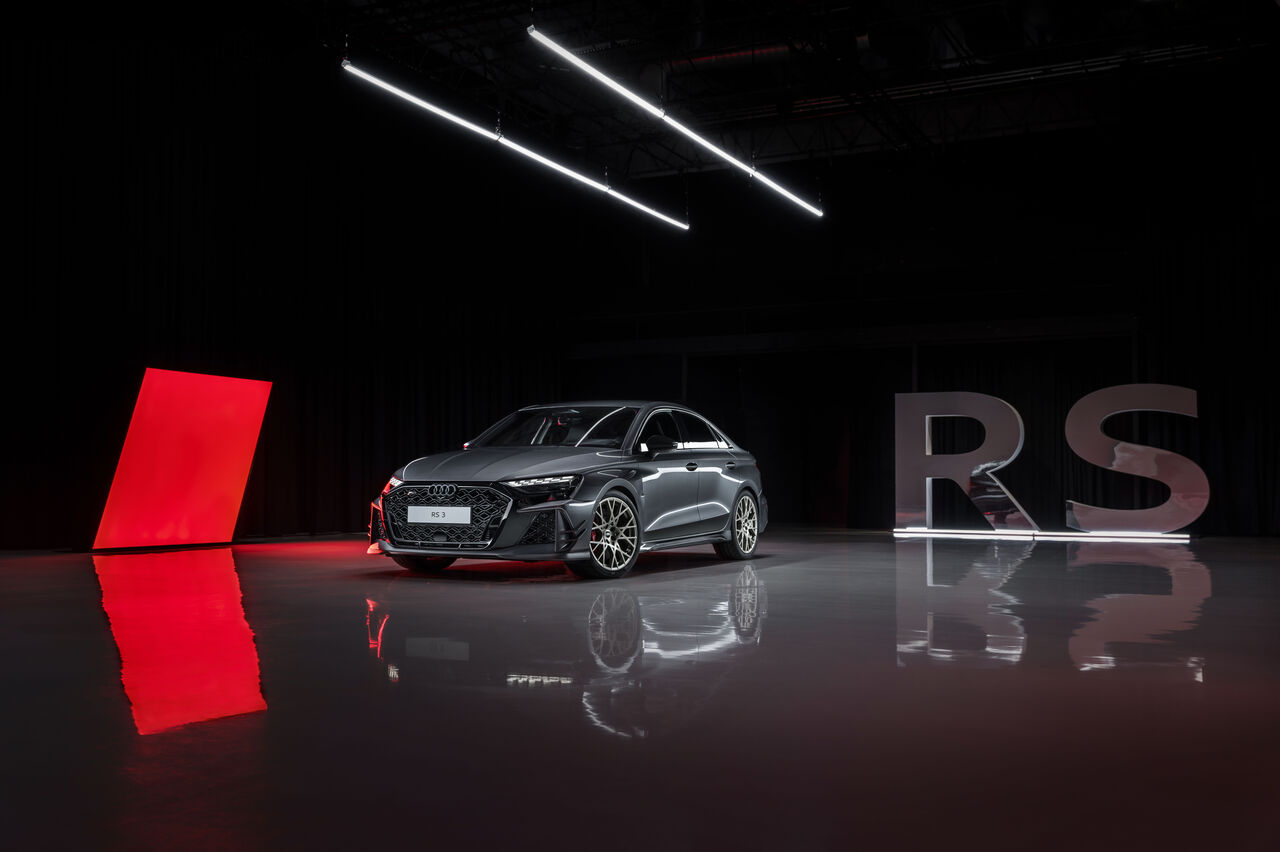


Only 750 will be built. Each one gets a serial number stamped into the center console. When they’re gone, so is the inline five-cylinder engine that defined Audi’s performance identity for half a century.
The RS 3 Competition Limited isn’t just a special edition. It’s a eulogy wrapped in malachite green paint and carbon fiber.
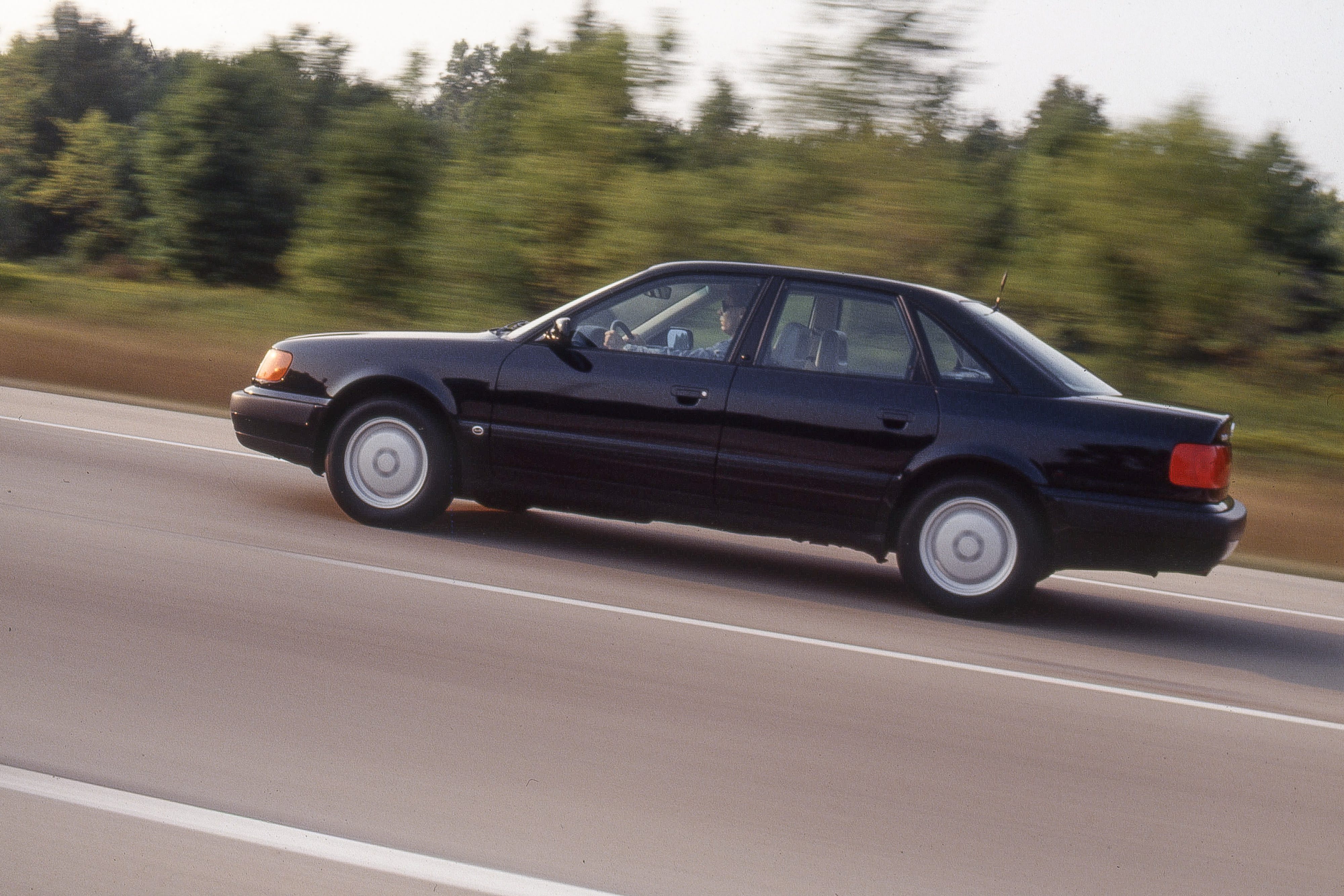
Audi Sport revealed the car on March 10, pegging it to the 50th anniversary of the five-cylinder engine that first appeared in the 1976 Audi 100. The press materials celebrate heritage. The subtext is extinction.
Emissions regulations are killing the 2.5-liter TFSI, and Ingolstadt knows it. So the company is doing what Germans do best with a dying breed — sending it off with obsessive engineering and a very large price tag.
The numbers haven’t changed. It’s still 400 PS and 500 Nm, still 0 to 100 km/h in 3.8 seconds, still topped at 290 km/h. The engine isn’t the story here. The chassis is.
For the first time on any RS 3, Audi has fitted a fully adjustable coilover suspension with three-way manually tunable dampers. Stainless steel twin-tube shocks up front with external reservoirs. Aluminum units at the rear with thicker piston rods.
Low-speed compression is adjustable in 12 clicks, high-speed in 15, rebound in 16. They even include the tools and a setup manual in the car. This isn’t a marketing exercise bolted to a standard chassis — this is track hardware.
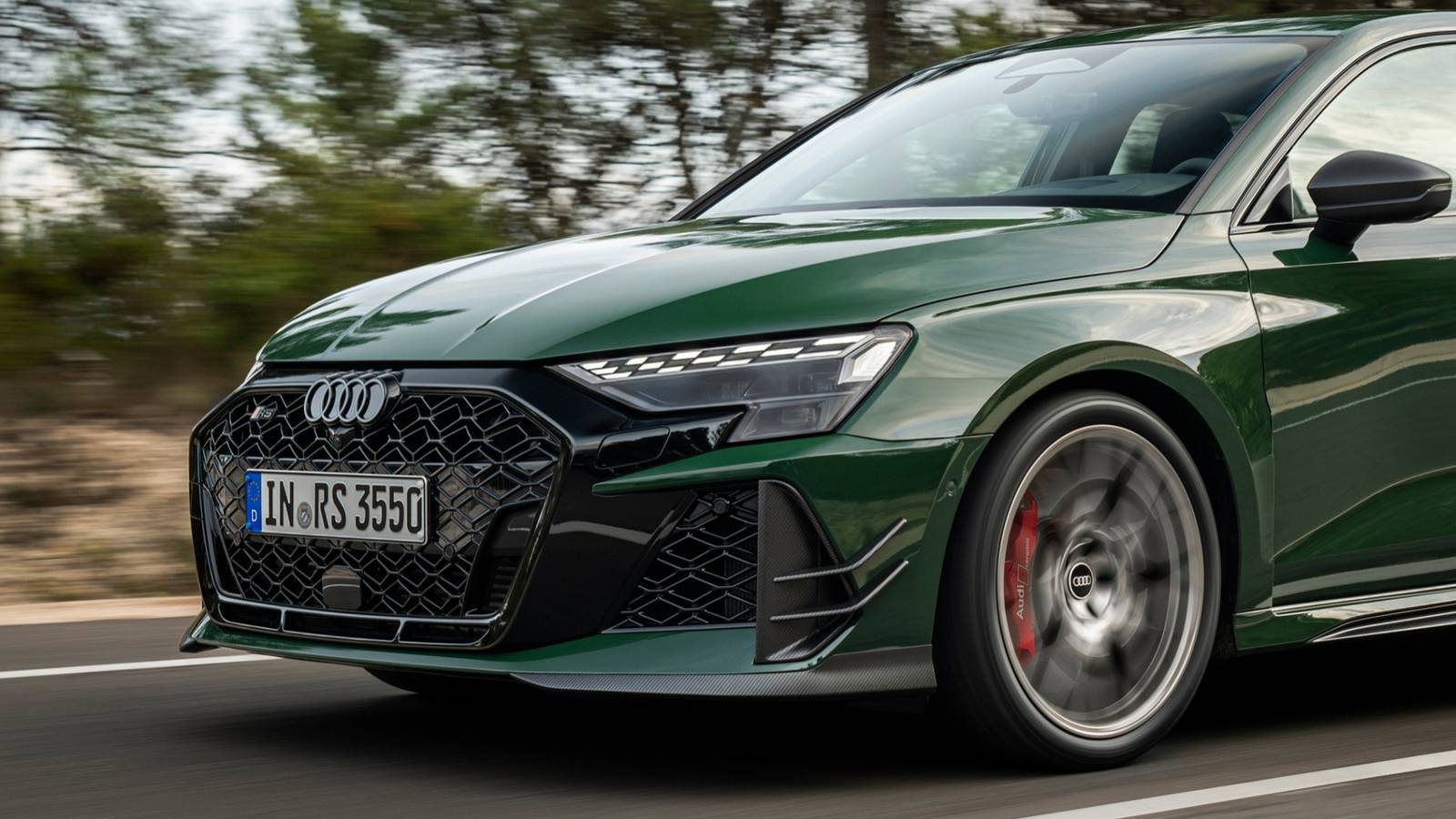
A stiffer tubular rear anti-roll bar at 85 N/mm and increased rear spring rates round out the mechanical upgrades. Standard ceramic brakes with red calipers. Optional Pirelli P Zero Trofeo R semi-slicks.
Audi stripped roughly four kilograms of sound insulation from the firewall so the 1-2-4-5-3 firing order reaches the cabin without a filter. That firing sequence also animates the matrix LED headlights every time the car is locked or unlocked — a detail that’s either brilliant or gratuitous depending on how much sentiment you carry for five cylinders.
The exterior leans hard on matte carbon: canards, mirror caps, side skirts, rear spoiler, diffuser trim. Three colors are offered. Daytona Gray is the safe pick, Glacier White Matte is the modern one, and Malachite Green is the collector’s choice, deliberately echoing the 1984 Sport Quattro that made this engine layout legendary in Group B rallying.
Inside, gold Dinamica microfiber on the seat centers and armrests is paired with white contrast stitching called “Ginger White.” White-faced digital gauges reference the 1994 RS 2 Avant’s analog dials. It’s nostalgia executed with precision, not laziness.
Of the 750 cars, 585 will be Sportbacks and 165 sedans. The UK gets exactly 11 — all Sportbacks, numbered 739 through 749, priced at £92,855 each. Every single one is already spoken for.
Germany starts at €108,365 for the Sportback and €110,005 for the sedan, with European deliveries beginning mid-2026. America will get the sedan only. Audi of America confirmed it’s coming but declined to share pricing or timing.
CarBuzz estimates roughly $90,000. A fully loaded standard RS 3 runs $78,140 stateside, so that figure tracks.
The RS 3 Competition Limited arrives at a peculiar inflection point. Audi’s own RS lineup is migrating to plug-in hybrid V6 power with the 2027 RS5. The five-cylinder — an engine configuration no other manufacturer in this segment even attempts — is being retired not because it stopped being brilliant but because the regulatory math no longer works.
Seven hundred and fifty cars is all the room that’s left. The waiting lists filled before the press release hit the wire.


Share this Story