
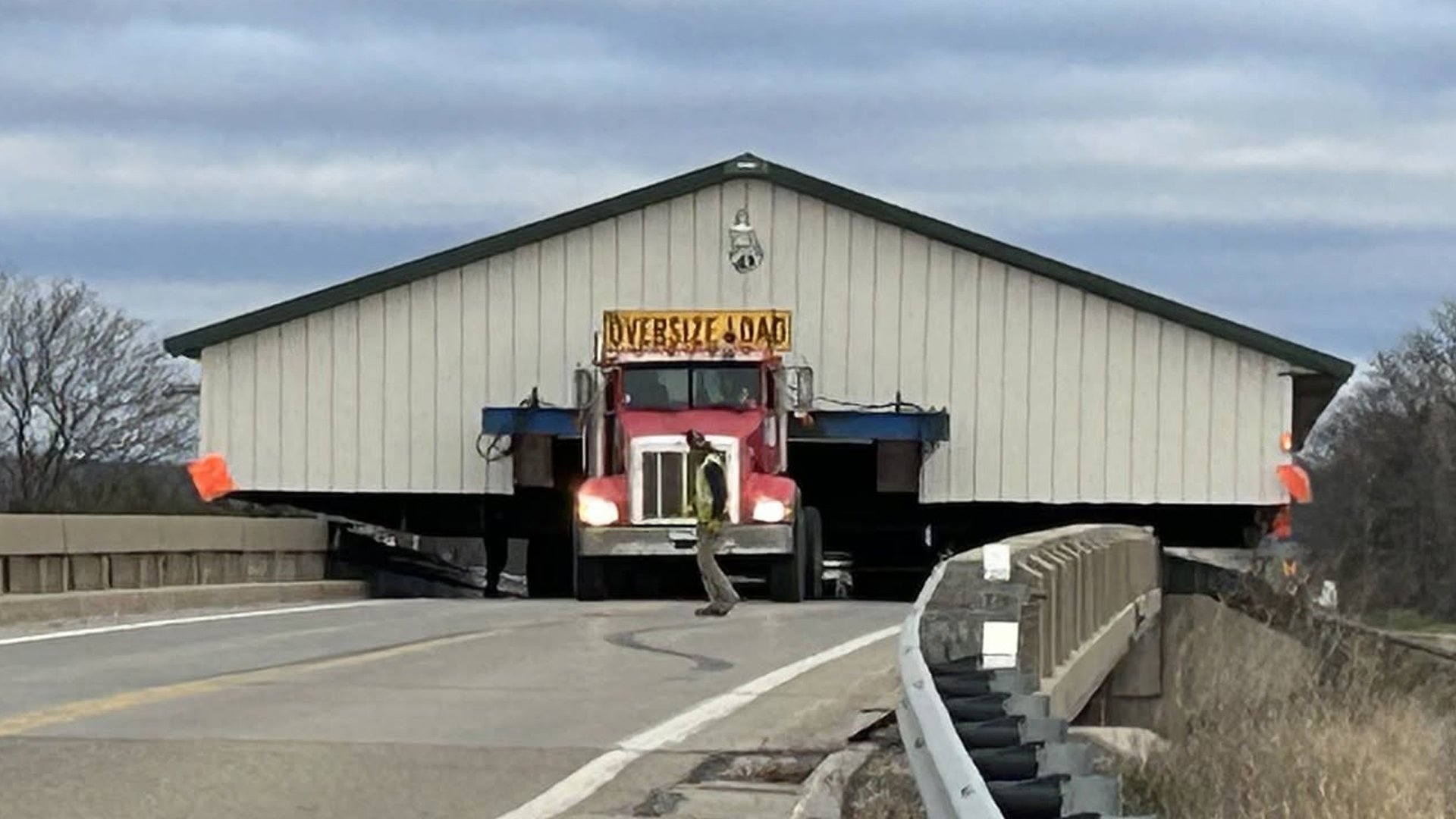


A building designed to move freight just became the freight. A 42-by-106-foot trucking transfer station, roughly 4,452 square feet of steel walls and wooden framing, rolled 25 miles down a public road on house-moving equipment.
The structure was about three times wider than the trailer carrying it. In photos, it fills what looks like three lanes as it crests a rise, a warehouse wall advancing on oncoming traffic like a slow weather front.
The pictures surfaced in a Facebook group called Pole Barns and Garages, where people swap truss spans and concrete pad advice. The Drive’s executive editor, Andrew P. Collins, spotted them while researching a pole building of his own in rural New York.
The new owner is Kelly Anderson. Her account of the job is almost casual.
“My brother-in-law is a professional building mover. My son and son-in-law both work for him,” she wrote. “Over the course of a week they prepped the site, moved it 25 miles and got it set in place.”
One week. Site prep, transport and placement, for a structure that once handled cargo transfers between trucks.
Next came the posts. Anderson said the crew would set them and sister them to the remaining frame to create 16-foot sidewalls.
Half the building is slated to become a heated shop. The other half goes to horse stalls, tack and cold storage.
So a facility built to serve diesel ends up housing hay. The trucking industry’s loss is a horse’s gain.
The crew belongs to Anderson Building Movers of Paynesville, Minnesota. It’s a family outfit with a trophy shelf, and the trophies come from housemovers conventions, which apparently exist.
The company has won awards for “Heaviest Wooden Structure Moved,” “Building Moved the Longest Distance on House Moving Equipment,” and “Tallest Structure Moved.” It has also turned up on a number of TV shows.
Against that résumé, a 4,452-square-foot pole building may barely register. Collins said as much, suggesting this job probably wasn’t a big deal by the company’s standards.
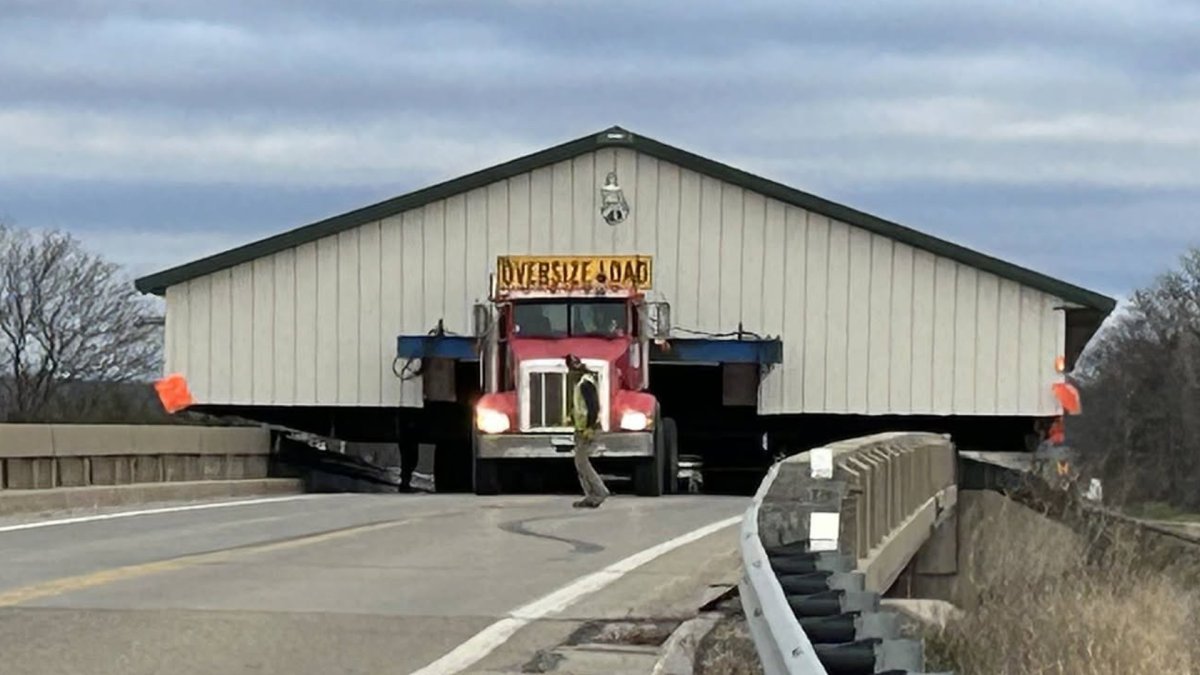
Nobody has spelled out the engineering. There are no details on how the load was spread during the lift, what route the convoy took, or how traffic was handled around something that wide.
Collins offered his own read on the method: slowly and carefully. He pointed to the lift as the likely danger point, where a badly spread load could tear thin metal walls open like a can of beans.
That’s a fair guess from anyone who has watched sheet steel fail. Big structures don’t break when they’re sitting still. They break when somebody picks them up wrong.
Most of us know the wide-load ritual from modular homes. A semi with a banner on the bumper, a pilot car or two up front, and a load sized to the road.
This one wasn’t. The road was sized to the load, at least for a day.
Anderson’s crew didn’t need a factory, a fleet or a corporate logistics department. They needed a week, the right equipment and a family willing to haul a building 25 miles down a public road.
The posts are going in now. The sidewalls are rising to 16 feet, and a former freight hub is learning to smell like horses.
The Drive has asked readers who have worked major building moves to send in their stories. After what the Andersons just pulled off, the bar is already sitting three lanes wide.

Share this Story