
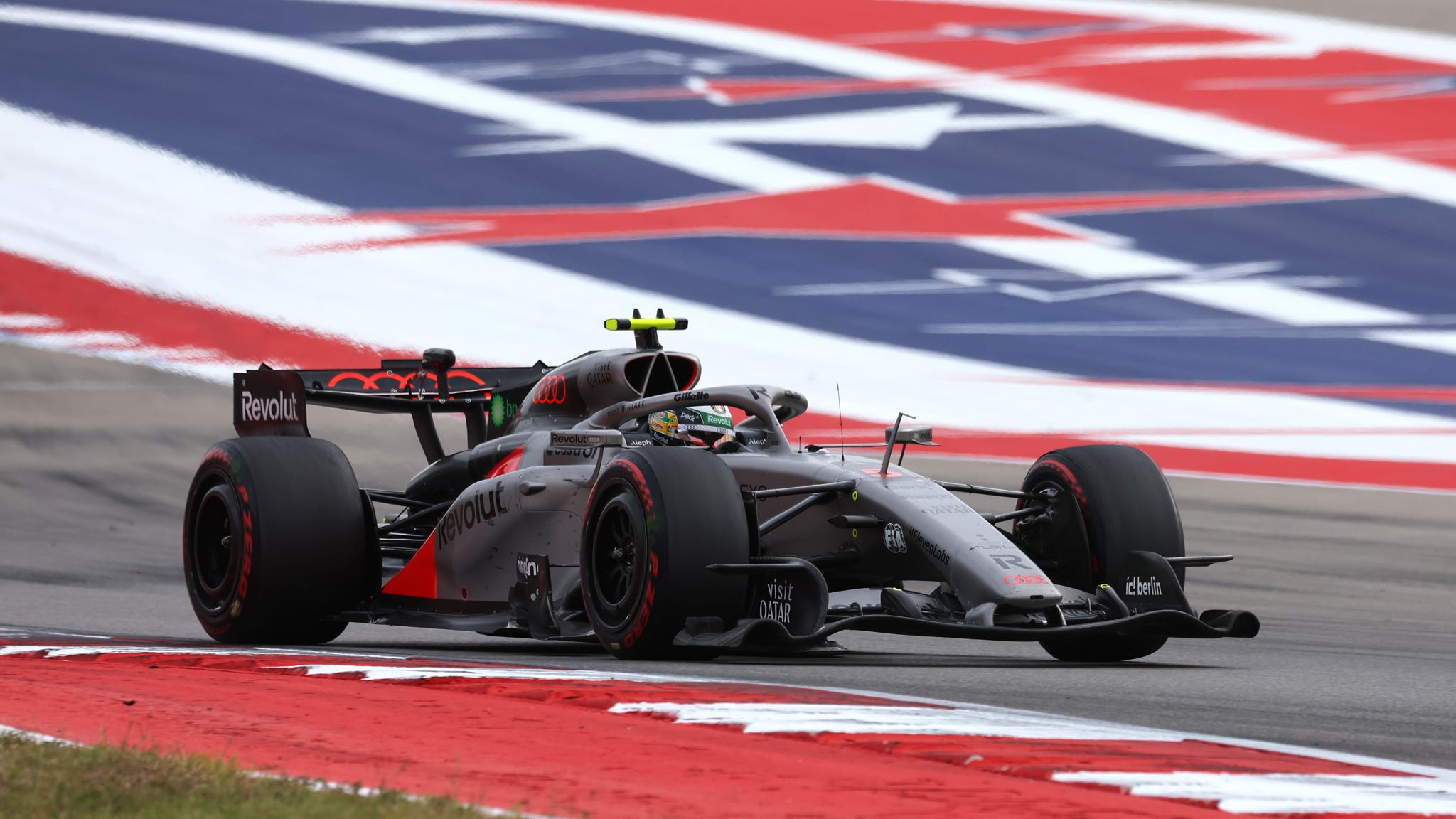


Eighteen races into its Formula 1 life, Audi sits eighth in the constructors’ standings with 23 points. That total leaves it closer to Haas in seventh than to Alpine in sixth.
This is a brand that has won Le Mans 13 times. It has won the Dakar and raced in Formula E. In F1, it is fighting for scraps in the midfield, and its racing director is fine with saying so.
Allan McNish, speaking with MotorTrend at the U.S. Grand Prix in Austin, did not dress it up. The car is slow in a straight line but strong through medium and high speed corners.
Some of the hardware holding it back was homologated at the start of the year and cannot be touched. So the updates keep coming, and the ceiling stays where it is.
The official target is championship contention by 2030. That job belongs to CEO and team principal Mattia Binotto, who owns the long-term plan after Audi absorbed Sauber and committed to building its own power unit.
McNish works the other end of the timeline. He runs trackside operations and sporting matters from the pit wall, managing drivers, engineers and strategy one weekend at a time.
His focus is not the title. It is the ambush.
“I’m more focused on ensuring that when the opportunity comes around … the team is ready, and the drivers are ready and prepared, and have the structure to be able to take it,” he said.
His reference point is Nico Hülkenberg’s podium at a rain-soaked Silverstone last year. Wet track, chaos at the front, and a midfield car in the right place with the right call. That is the blueprint for a team that cannot yet win on pace.
The numbers explain why. Hülkenberg, the veteran, has 13 points, while Gabriel Bortoleto, the Brazilian in his second season, has 10.
The goal right now is Q3 appearances and points finishes. In this part of the grid, a tenth of a second can mean four places.
Reliability has not helped. A failure in Singapore left Bortoleto visibly frustrated, and McNish’s response tells you how he operates.
“You’ve got to keep doing exactly what you were doing before, not change it, and not start questioning. Because if you start questioning, your focus goes from what’s ahead to what’s behind,” he said.
He wants the driver told exactly what broke and exactly what is being done about it. “That builds confidence and trust with a driver and team,” McNish said.
It is the language of an endurance man. McNish has three Le Mans victories, plus wins at Sebring, Petit Le Mans and the Silverstone 1000km. He ran Audi’s Formula E program until the company walked away after the 2020–21 season, then led its driver development effort.
Endurance racing rewards the team that is still standing and still sharp when others make mistakes. McNish is trying to install that reflex in a Formula 1 operation that, by his own account, needs work on hardware, aerodynamics and personnel structure alike.
He is not predicting a shake-up at the top. McNish expects the same four teams to lead next season.
That leaves Audi in an odd position. The championship plan runs on a four-year clock.
The first victory, if it arrives early, will not come from that plan at all. It will come from a wet afternoon, a safety car, or a rival’s blown engine.
McNish wants his people ready for that day. Nobody at Audi can say when it comes.



Share this Story