
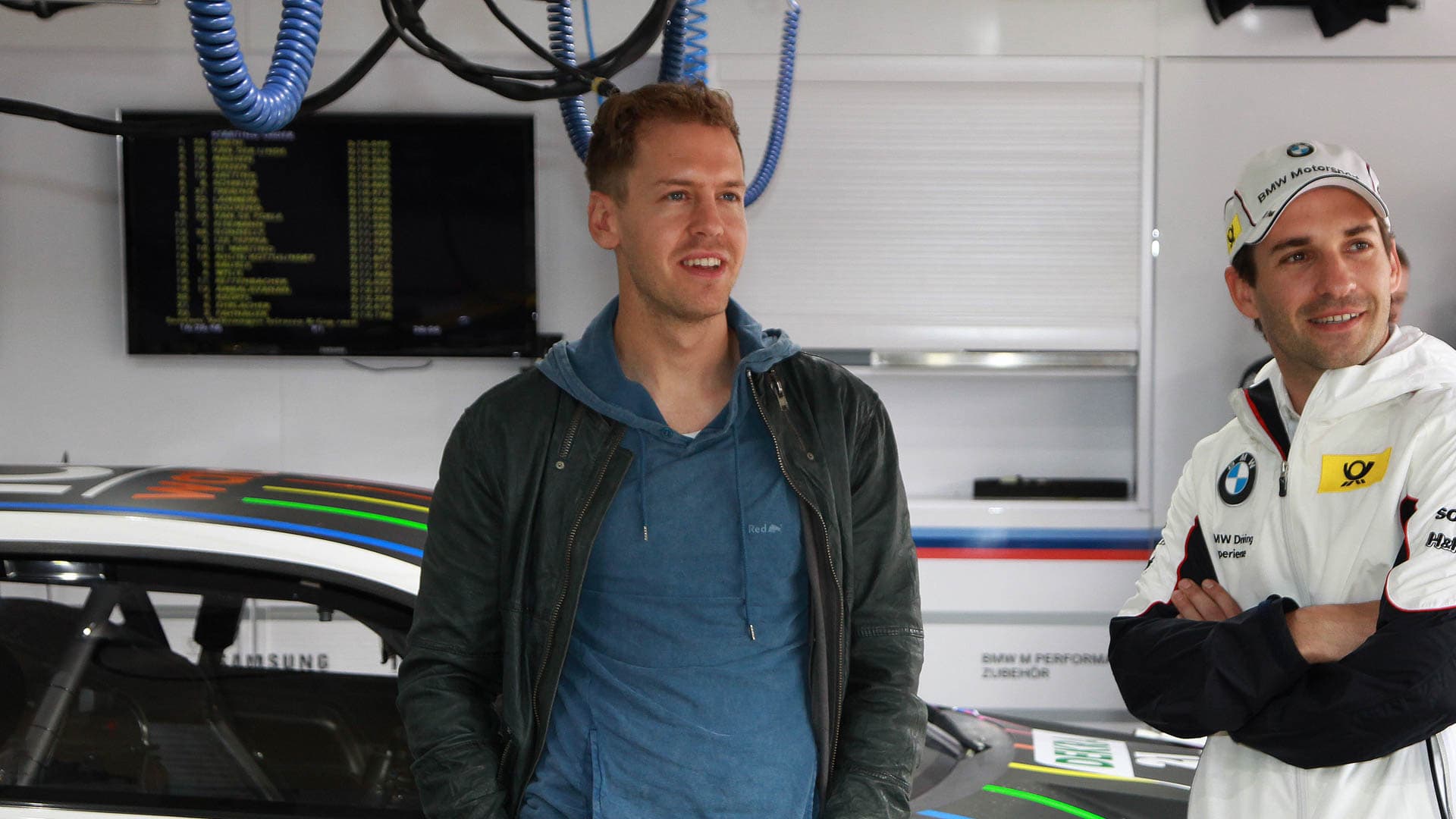


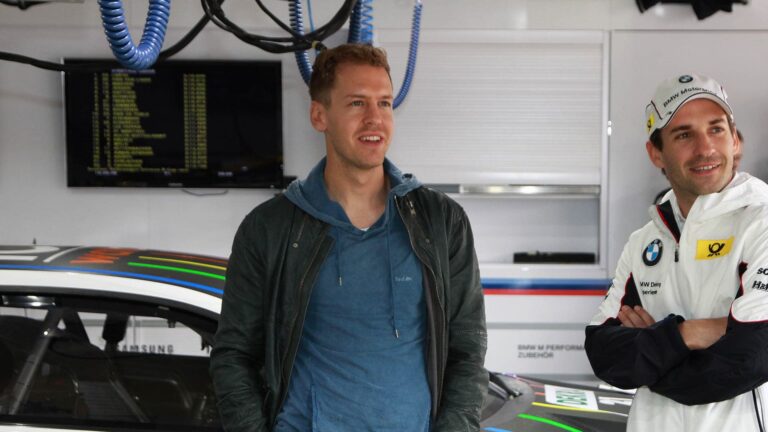
Sebastian Vettel had it in writing. His BMW contract said he would get a Formula 1 seat.
He never got one. Red Bull got four world championships instead.
In the new ARD documentary “Being Sebastian Vettel,” the German finally explains how a manufacturer with a signed commitment and a teenage prodigy on its books talked itself out of both.
“I actually already had one foot in the door because my contract with BMW stated that I would get a seat in Formula 1,” Vettel says. “But that never really materialized.”
The evidence was not subtle. At 19, in his first Friday practice outing at the 2006 Turkish Grand Prix, Vettel set the fastest time.
A year later, Robert Kubica was ruled out of the 2007 United States Grand Prix after his violent crash in Canada. BMW Sauber put its reserve driver in the car. Vettel finished eighth and became the youngest points scorer in F1 history at the time.
BMW looked at that and kept Nick Heidfeld and Kubica for 2008.
By Vettel’s account, the reason was a whisper campaign. “During my time at Sauber, there was this ‘rumor’ going around that Sebastian wasn’t that fast and wasn’t that good,” he says.
He is generous about it now, almost too generous. “Maybe there was even some truth to it, in a way, because I needed a bit of time before everything clicked.”
What he wanted was simple: a development plan and a guaranteed route to a race seat. BMW’s interest did not vanish, he says, but “there just wasn’t the same drive behind it.”
Red Bull had drive to spare. Helmut Marko, never one to pass up a chance to needle a rival, put it bluntly.
“Thank God the people at Sauber weren’t convinced of Vettel’s abilities, which meant we were able to get him,” Marko said. He added that Red Bull quickly found someone with speed, technical ability and a willingness to work.
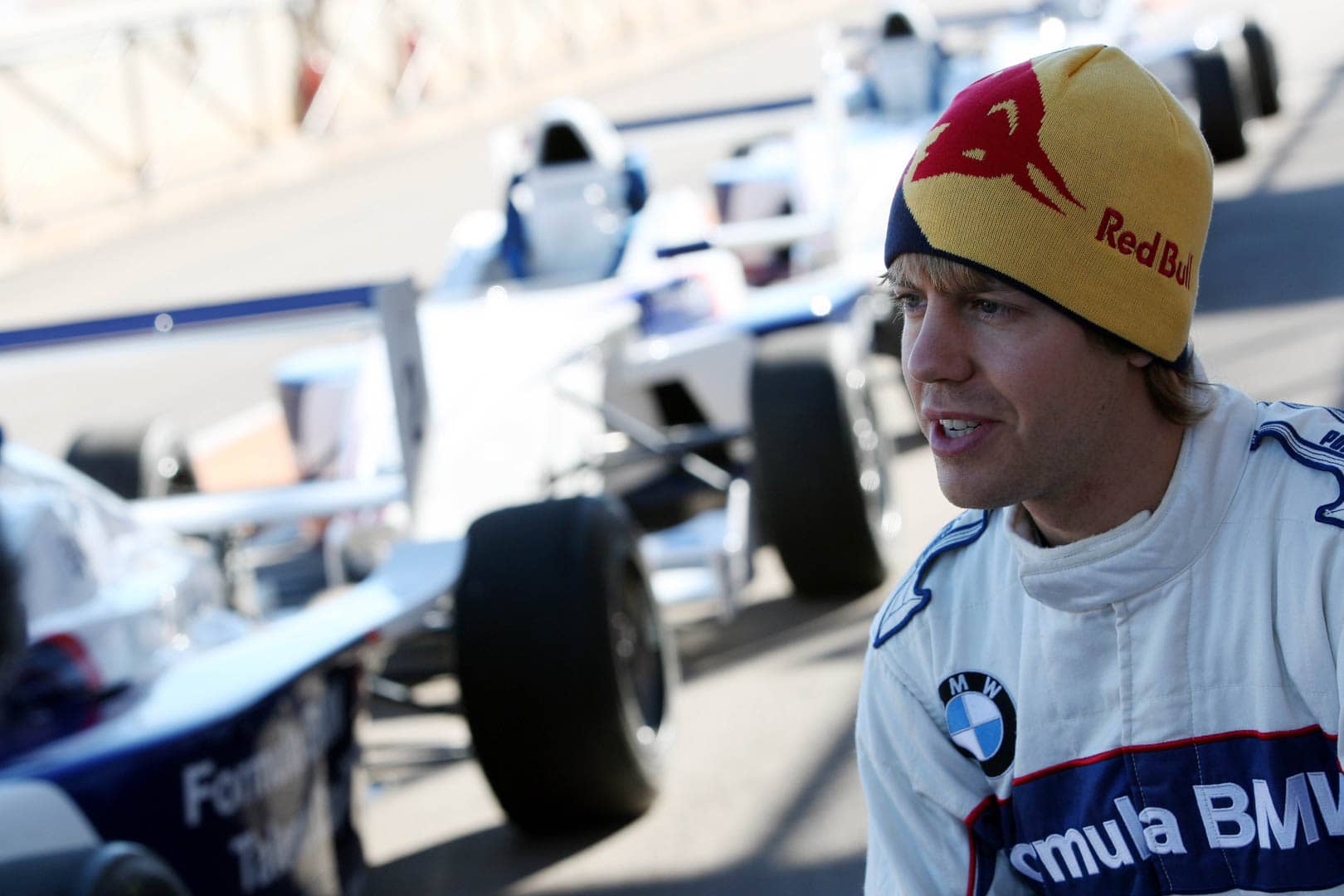
Red Bull’s decision took less time than BMW’s hesitation. According to Vettel, Dietrich Mateschitz ended the debate in one line: “Give the kid a chance. If it works out, great. If it doesn’t, it doesn’t.”
Vettel joined Toro Rosso midway through 2007, replacing Scott Speed. In 2008, in the rain at Monza, he took pole and won the Italian Grand Prix. It was the first F1 victory for any Red Bull-owned team, scored in a car from what had been the old Minardi operation.
Red Bull promoted him to the senior team for 2009. Then came four straight drivers’ titles from 2010 through 2013, and 53 Grand Prix wins.
BMW never saw any of it from the inside. The company quit Formula 1 at the end of 2009, one season into Vettel’s Red Bull career and a year before his first crown.
Vettel credits timing and the right people at the right moment, but he doesn’t leave it there. “A lot of what we call luck is actually in your own hands,” he says.
BMW has since made its own call on the sport. M CEO Frank van Meel says F1 shares too little with road cars and would demand an entirely separate technology center to compete.
Instead, the company is putting its money into WEC and IMSA, where the M Hybrid V8 and M4 GT3 feed engineering back into cars like the M5 and XM. That is a defensible business case.
It is also the second time BMW has looked at Formula 1, weighed the cost of commitment, and decided someone else could have it.
Share this Story