
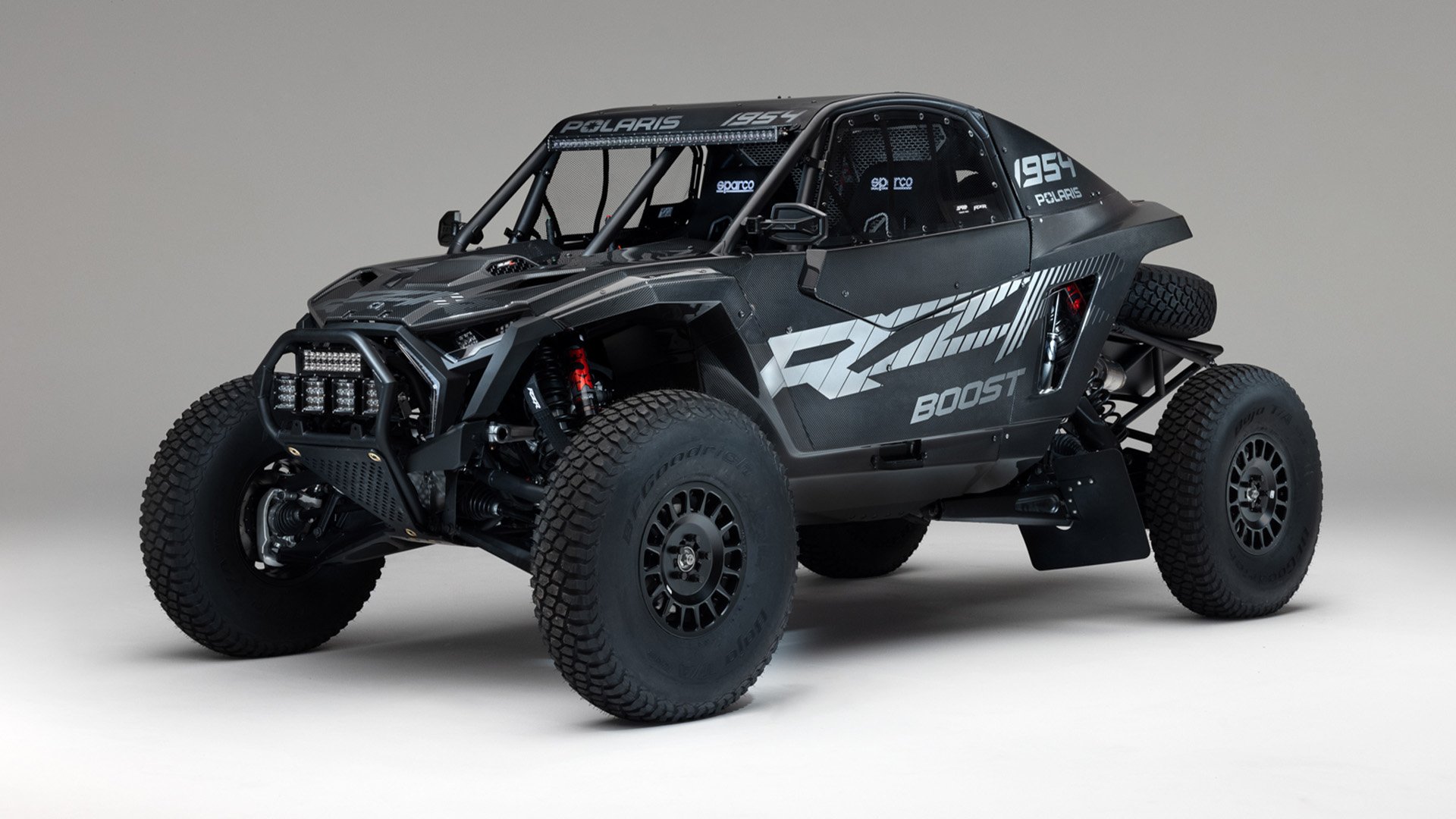


Polaris is asking $200,000 for a side-by-side. Not a truck, not a sports car. A RZR.
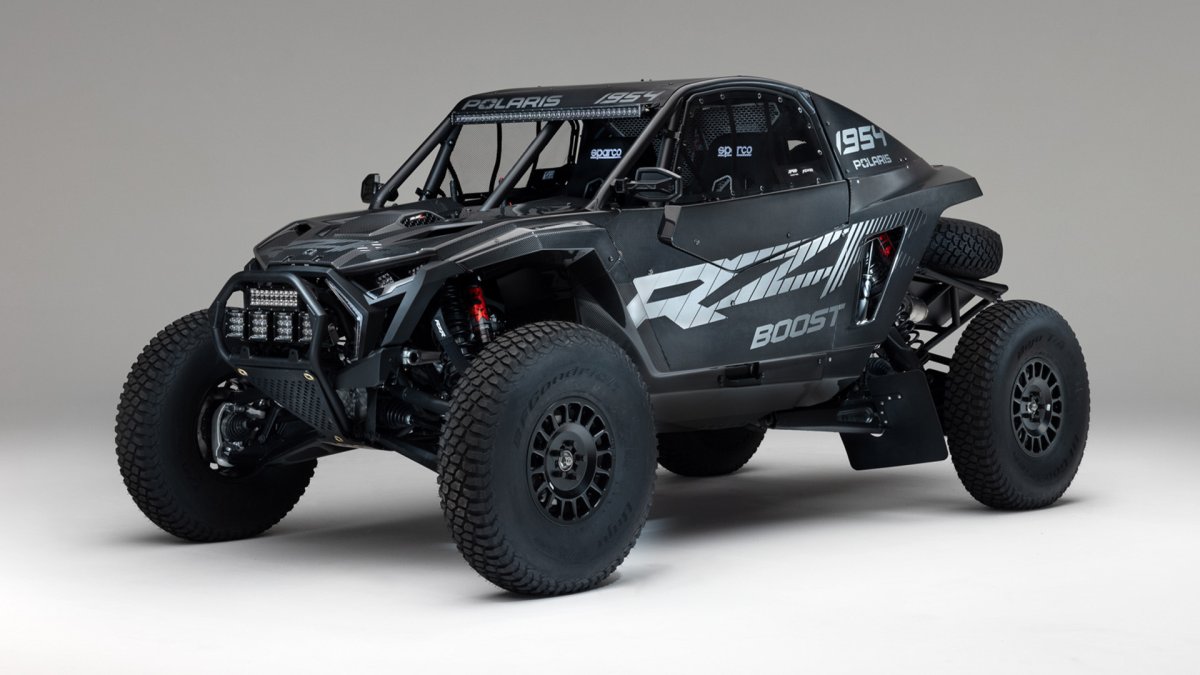
The machine is the RZR Pro R Factory Boost, a turnkey desert racer built for Baja, Dakar and the privateer teams who chase them. It makes 400 horsepower from a turbocharged 2.0-liter four-cylinder. It comes out of the same Roseau, Minnesota, plant that builds the regular Pro R.
That price invites an obvious question. Horsepower is the cheap part of this equation, and everybody in the off-road world knows it.
The standard Pro R Boost already makes 275 hp, which is plenty to scare a seasoned driver. Tuners have pushed this same engine much harder. The Drive reported on a modified Pro R making 643 hp on 35 psi of boost back in 2023.
So Polaris is not selling peak output. A speed shop will sell you that for a fraction of the cost. Polaris is selling what a speed shop usually can’t build.
Start with the chassis. The wheelbase grows 6.5 inches to 111 inches, buying straight-line stability for triple-digit runs across terrain that wants to throw the car sideways. Thicker tubing in key spots stiffens the frame, and the cockpit is two inches wider than a standard Pro R.
The bodywork is carbon fiber, shaped with computational fluid dynamics and modeled at speeds above 100 mph. Few independent fabricators have the tools or the experience to design aero that way. Polaris does, and the car looks mean because it was engineered to be fast.
Then there is fuel, the quiet tax on every boosted race engine. The Factory Boost carries a 45-gallon tank, bigger than what you’ll find in plenty of heavy-duty pickups. Polaris still only estimates range at “beyond 200 miles.”
Do the math and you land somewhere around five miles per gallon at full tilt. Nobody buying this car will care. They’ll care about how few pit stops it needs on a long stage.
The suspension may be where the money really goes. Polaris fits its Dynamix DV system with three-inch Fox Live Valve internal-bypass shocks that adjust damping up to 200 times per second. Shock shafts grow to one inch for extra strength over the Pro R Boost.
A Fox steering damper comes standard. It’s a small detail that matters a lot after hundreds of miles of rock and sand. Fatigue ends more desert races than horsepower ever wins.
Polaris isn’t handling the sale itself, either. Partner SCI Distribution will manage orders and customer support, which tells you exactly who this car is for. This is a race team purchase, not a garage toy.
Buyers who want one in the first delivery window must order by February 15, 2027. Polaris hasn’t said how many it plans to build.
The Factory Boost will sit alongside the non-turbo Pro R in the lineup. The gap between a showroom side-by-side and a factory race car is now measured in six figures.
The Drive’s Caleb Jacobs expects demand to outrun supply. If he’s right, the more interesting question is what Polaris builds next, and what it decides to charge for it.

Share this Story