
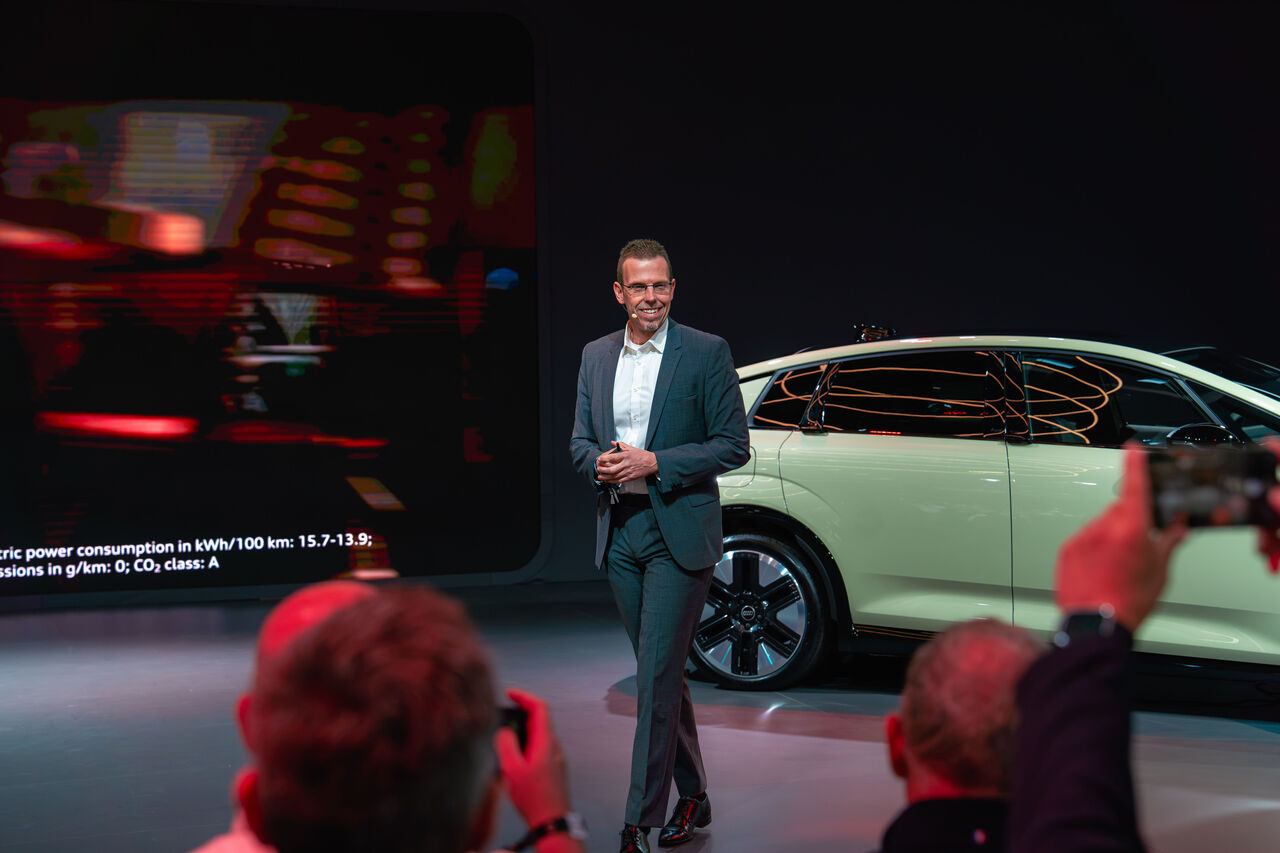


Twenty-three years after Audi killed the original A2, a quirky aluminum hatchback that was too clever for its own sales figures, the name is back. This time it runs on electrons, sips 12.8 kWh per 100 kilometers, and claims a WLTP range of 646 kilometers. Audi is calling it the most efficient car it has ever built.
The A2 e-tron made its public trade-show debut at the Paris Motor Show on October 12, following a world premiere on September 7. Orders opened three days after that reveal, and Audi expects European deliveries to begin in December 2026. The starting price in Germany is 38,200 euros, dropping it right into a compact EV brawl that already includes the Volkswagen ID.3, the Citroën ë-C3, and a wave of Chinese-designed competitors.
A drag coefficient of 0.24 is low for any car, let alone a compact hatchback. That slipperiness, combined with what Audi describes as a lightweight philosophy inherited from the original A2, drives the efficiency claim. Two power variants exist: a 140 kW version consuming as little as 12.8 kWh/100 km and a 170 kW variant rated at 13.9 kWh/100 km at best.
Audi board member Rouven Mohr framed the car around three pillars: efficiency, everyday practicality, and technology that actually does something for the driver. Bidirectional charging is part of the package, meaning the A2 e-tron can feed energy back to a home or the grid. That feature is rapidly becoming table stakes in the European market, but its inclusion at this price point signals Audi is not holding it back as a premium upsell.
Production is at Ingolstadt, Audi’s spiritual home in Bavaria. That detail matters more than it might seem. Planting the A2 e-tron there sends a message about where Audi sees its German workforce fitting into an electric future, and about keeping supply chains closer to the customer base.
Perhaps the most telling detail buried in the press material is the development timeline. Audi says it brought the A2 e-tron to production readiness 21 months faster than comparable previous models. That is a direct admission that Volkswagen Group’s notoriously slow development cycles have been a liability. Whether 21 months of acceleration is enough to keep pace with Chinese automakers who can go from sketch to showroom in under three years remains an open question.
The original A2 launched in 1999 as a fuel-economy marvel built from aluminum, an engineering showcase that bewildered buyers who could not square its pod-like looks with the four-ring badge. It lasted just six years. Audi is betting that market conditions have finally caught up with the philosophy: that efficiency itself can be the premium selling point, not just horsepower or leather.
At 38,200 euros, the A2 e-tron undercuts the entry-level Q4 e-tron by a healthy margin while offering comparable or better range. It also lands just above the price zone where subsidies and incentives in several European countries start to taper. How aggressively Audi pushes fleet and lease deals in the first quarter of availability will say more about the car’s real commercial ambitions than any spec sheet.
Deliveries start in eight weeks. The order books are open. Whether European buyers are ready to embrace a compact Audi that prioritizes efficiency over muscle is a bet the company is making with real factory capacity on the line.

Share this Story