
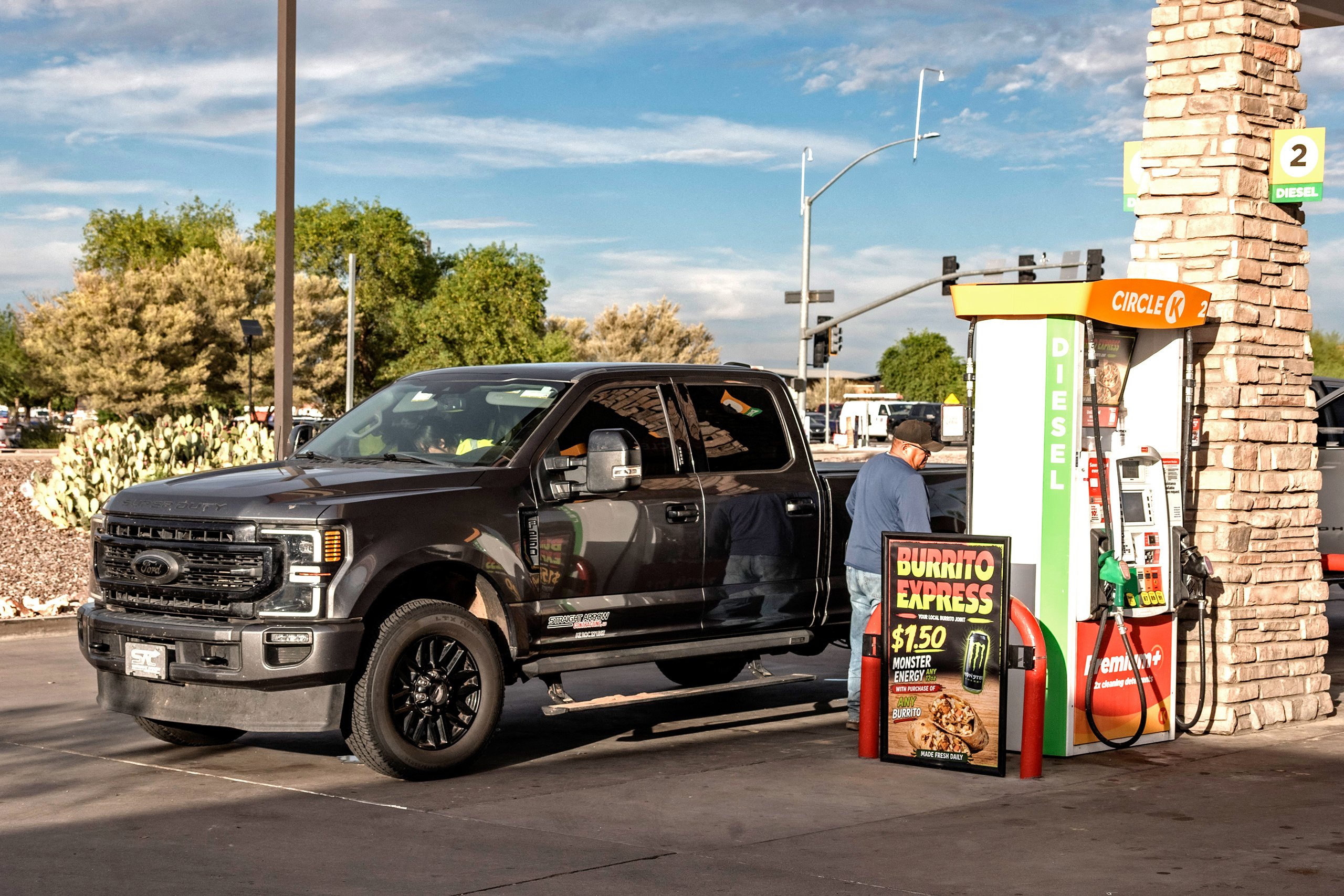


Ford pulled in $2.7 billion in pre-tax earnings last quarter and bumped its full-year guidance up by half a billion dollars. The engine behind that number is the same one it has always been: trucks. Lots of them.
CFO Sherry House was blunt about it. “We have not seen any decreases in the F-Series,” she told investors, adding that truck buyers have remained “incredibly resilient” in both retail and fleet channels despite elevated fuel prices. The F-Series, a nameplate that has topped U.S. sales charts for over four decades, apparently still prints money regardless of what the pump reads.
That resilience is not universal across the industry. Not even close.
Volkswagen reported its worst quarterly performance since the Dieselgate scandal cratered its credibility a decade ago. The German giant posted a $6.5 billion operating loss, a jaw-dropping collapse from the $1.4 billion it managed over the same period last year. CFO Arno Antlitz did not sugarcoat the situation.
“We cannot afford to lose any time,” he said. “We must act quickly and decisively.”
Two massive automakers, two wildly different realities. Ford is riding margin-rich pickups and SUVs through a difficult consumer environment. Volkswagen is drowning in the cost of its electric transition, factory overcapacity in Europe, and a collapsing position in China, where the China Passenger Car Association just projected a 22% annual plunge in auto sales, the steepest on record.
That Chinese downturn is compounding VW’s problems. The association pointed to shifting government subsidies that have hammered cheaper vehicles especially hard, which helps explain why Chinese automakers like BYD are pushing westward with increasing urgency. For VW, which once counted China as its single most profitable market, the math has turned brutal.
Ford is not immune to macro pressures, but its product mix is a shield. Truck and SUV buyers tend to be wealthier, more brand-loyal, and less price-sensitive at the fuel pump. Fleet customers, who purchase F-Series vans and pickups by the thousands, are even less likely to flinch at gas prices because those vehicles are tools, not discretionary purchases.
Elsewhere in the industry, Carvana posted $8 billion in quarterly revenue, an all-time record, and sold over 200,000 vehicles for the first time. Net income jumped 84% to $483 million. For a company that was flirting with bankruptcy just a few years ago, the turnaround has been swift and almost suspiciously clean.
On the product front, Volkswagen Group’s Audi brand appears to be hedging its bets. Reports suggest a second Audi model will be built at Scout Motors’ South Carolina plant alongside the electric pickup and SUV already planned there. The likely candidate is a battery-electric off-roader, possibly with a gas range extender, built on Scout’s Traveler platform. It is the kind of move that suggests VW knows pure EV demand alone will not fill its factories.
Ford’s quarterly number tells one story. VW’s tells another. The gap between them is not just financial. It reflects two fundamentally different bets on what consumers actually want to buy right now, and which company read the room correctly.
Antlitz says Volkswagen must act fast. The clock started ticking a while ago.


Share this Story