
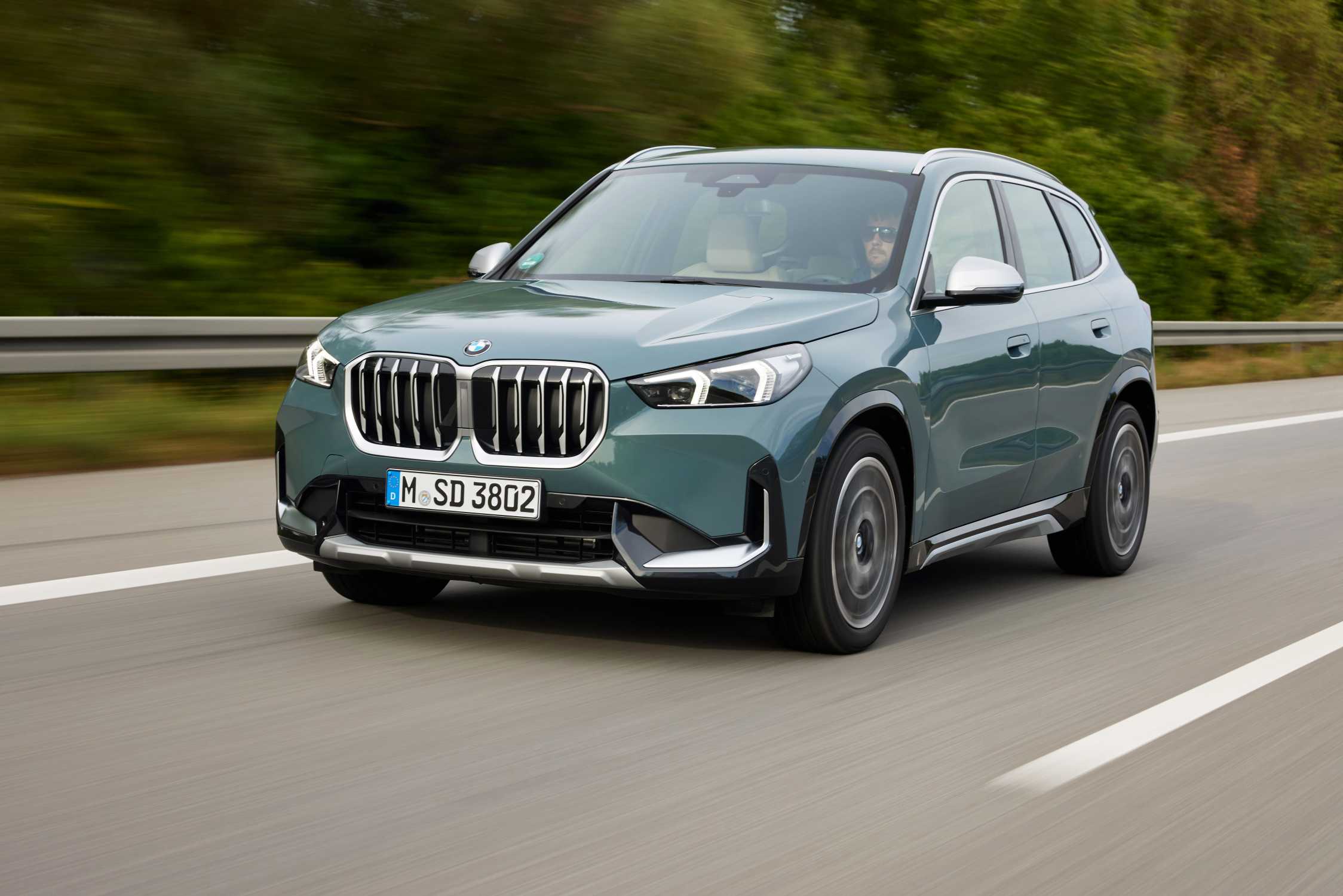


BMW is moving on multiple fronts simultaneously, and the velocity is hard to ignore. In the span of a few months, the company has unveiled the next-generation 3 Series, launched the new iX4 as its latest Neue Klasse electric model, started Gen6 battery production in China, and put humanoid robots to work at its Spartanburg plant. Any one of those would be a headline. Together, they paint a picture of a company trying to remake itself from the factory floor up.
Start with the 3 Series, the car that has defined BMW for more than fifty years. The eighth generation will be built in Munich and Dingolfing, backed by roughly two billion euros in production investment. Batteries will come from the new Irlbach-Straßkirchen plant.
That is not a minor detail. It means BMW is pulling battery supply closer to final assembly, tightening the chain in a way that insulates it from the kind of disruptions that hammered the industry earlier this decade.
The new iX4 sits alongside the iX3 in what is quickly becoming a full Neue Klasse SUV lineup. BMW describes it as an SUV in coupé form, fully electric, built on the same architecture that underpins the iX3 and the new 3 Series. The strategy is obvious: one platform, multiple body styles, maximum production efficiency.
It is the playbook Toyota perfected with TNGA and Volkswagen attempted with MEB, now executed with Bavarian precision and premium margins.
Sales numbers through September back up the aggression. BMW Group delivered over 1.7 million vehicles in the first nine months of 2026. MINI posted 6.8 percent growth.
BEV sales saw double-digit gains in Europe year to date. The transition to electric is not some distant aspiration here. It is showing up in the delivery reports.
Then there is Spartanburg, where BMW and Figure AI are deploying Figure 03 humanoid robots in production. This is not a tech demo or a concept video. The robots are being developed in parallel at the plant and at Figure AI’s facilities, integrated into actual manufacturing workflows.
BMW is treating physical AI the way it once treated lightweight construction or turbocharging, as a competitive lever worth embedding early.
Gen6 high-voltage battery production is now underway in Shenyang, China. That plant feeds the local market, but it also represents BMW’s willingness to build critical EV components in multiple geographies. Localizing battery production in China is partly about tariffs and partly about speed. The Chinese EV market does not wait for anyone.
The two billion euros flowing into the 3 Series production system tells you where BMW’s emotional center still sits. The 3 Series is the volume car, the brand’s spine. Committing that kind of capital to its eighth generation means BMW sees a long runway for a sedan that many analysts have tried to write off in an SUV-dominated world.
What connects all of this is a company placing parallel bets without hedging any of them. Electric SUVs, a reimagined sedan, humanoid robots on the line, battery plants on two continents. Each move reinforces the others.
BMW Motorrad, meanwhile, just introduced the F 450 RR, and the M3 turned forty. The company is celebrating its past while rewiring its future at a pace that leaves little room for hesitation.
Whether BMW can sustain this breadth of execution across so many programs, in so many markets, with so many new technologies reaching production at once, is the question that will define the next three years. The bets are placed. The chips are on the table.

Share this Story