
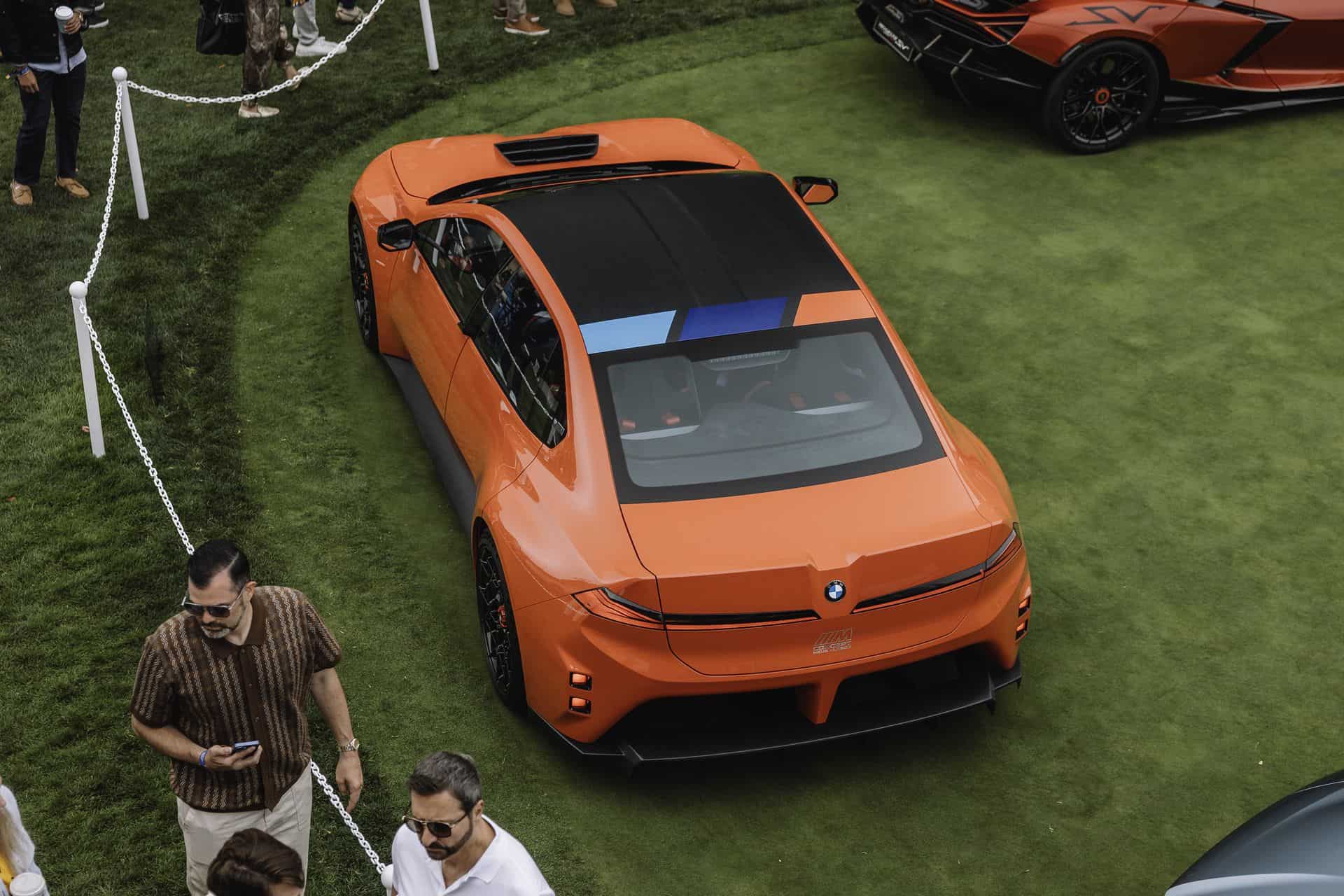


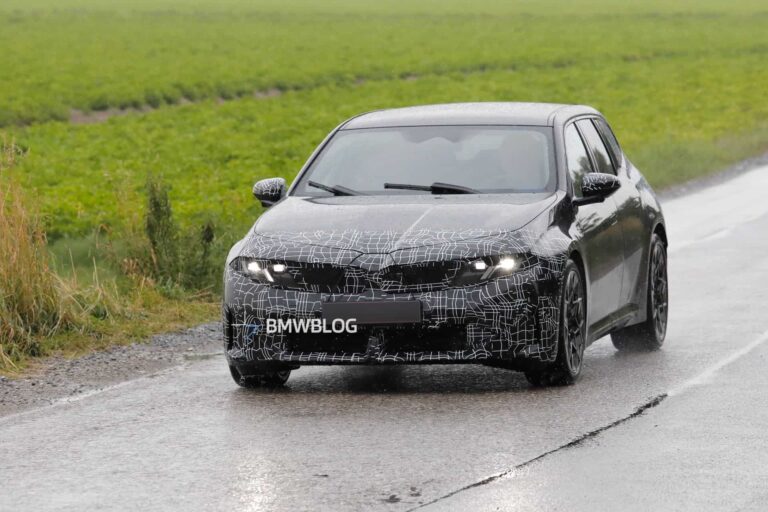
BMW M CEO Frank van Meel sat down with IMSA President John Doonan at the Rolex Monterey Motorsports Reunion and said the quiet part out loud: the electric M3, arriving in 2027, will use artificial sound and simulated gear shifts to replicate the emotional hit of a combustion engine.
That’s a telling admission from the man running BMW’s most hallowed performance division. The car internally codenamed ZA0 won’t just be quick. It will pretend to have gears.
“That’s why it will have a sound, and it will also have the possibility to shift between different stages,” van Meel told Doonan, framing it as a way for drivers to better judge what the car is doing on track. Downshift, hear simulated revs climb, modulate speed accordingly. The logic is sound, even if the sound is not.
Van Meel knows the pushback is coming. He pre-empted it by walking through every controversial powertrain transition in M3 history. Four cylinders to six raised weight concerns. The jump to a V8 drew balance complaints. Turbocharging triggered fears of lag.
Each time, the car won skeptics over on track. He’s betting electric can do the same.
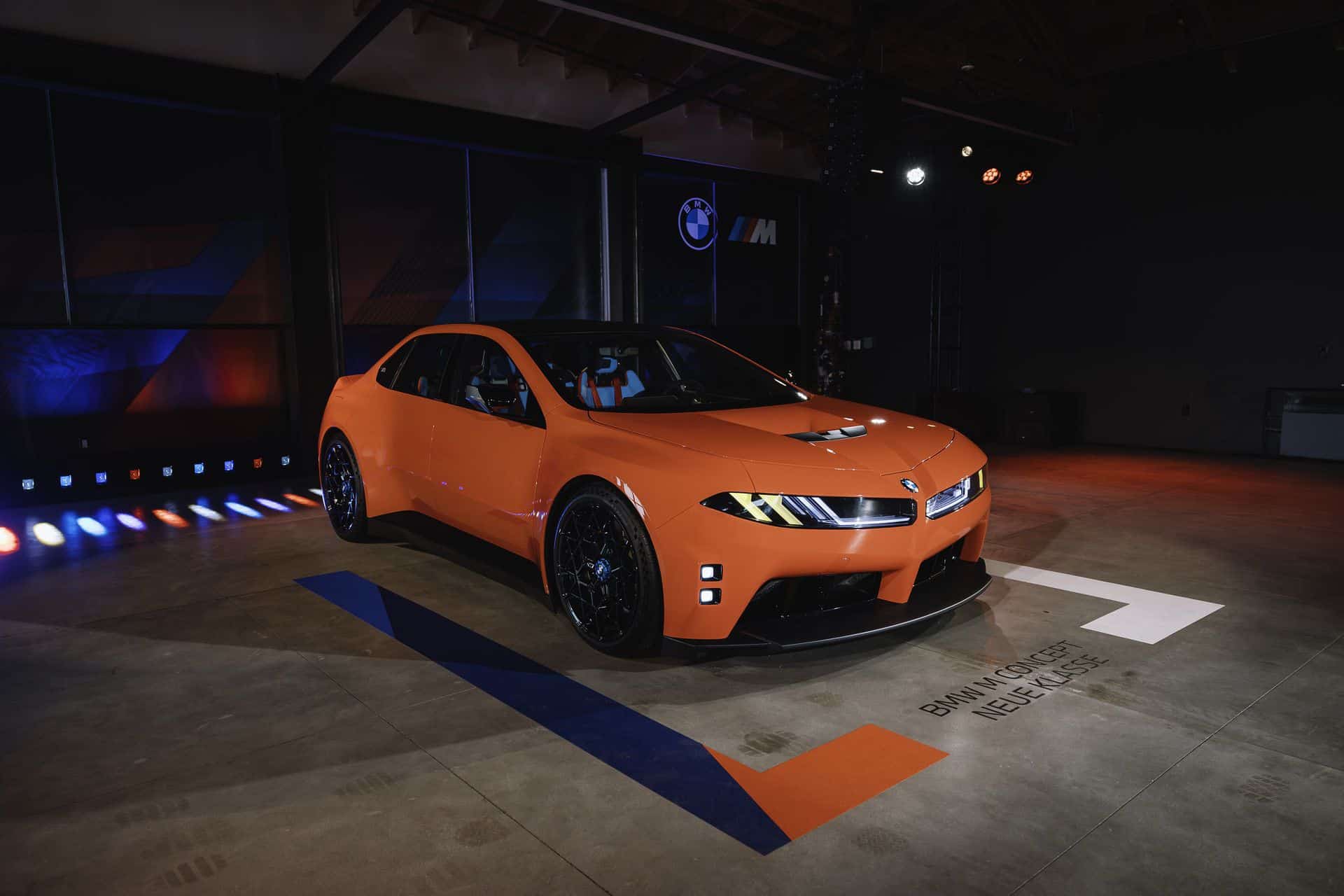
The M Concept Neue Klasse that previews the production car borrows heavily from BMW’s racing program. Yellow lighting nods to the GTP endurance racer. A flow-through hood pulls from the M4 GT3 playbook, serving both aero and thermal management.
Center-lock wheels appear on the concept, though van Meel conceded they’re impractical for daily use and will almost certainly not reach production.
One material change is more than cosmetic. BMW is replacing carbon fiber with natural-fiber composites in several areas, a material already proven in the company’s GT4 race cars. Van Meel claims comparable weight, durability, and strength with a 40 percent reduction in manufacturing CO₂ emissions.
That’s a real engineering shift, not a marketing bullet point.
Van Meel said the electric M3 will handle the same drive-to-the-track, push-hard, drive-home cycle that M car owners expect. That’s a direct response to EV skeptics who point to battery thermal limits and degraded performance after sustained high loads. Whether BMW has solved that problem with a battery pack likely exceeding 100 kWh remains to be proven under real conditions.
The company is also hedging its bets in a way that reveals the market’s uncertainty. Van Meel confirmed combustion M cars are not going anywhere. The G84 M3, expected in 2028, will run an inline-six with mild-hybrid assistance.
Two M3s, two philosophies, same badge. “The problem of choosing will be up to the customer, not up to us,” he said.
That line is doing a lot of heavy lifting. It sounds like customer empowerment. It also sounds like a company unwilling to fully commit to either direction.
The manual gearbox, meanwhile, may be gone for good across both variants. That detail landed quietly but will sting the loudest among the faithful.
Simulated gear shifts in an electric car are not a new idea. Hyundai, Lexus, and Toyota have all explored the concept. But BMW attaching this tech to the M3 badge carries different weight.
The M3 has been a benchmark for driver connection since 1986. Faking that connection through software is either a clever preservation of driving culture or a sign that the culture has already moved on.
Van Meel seems to believe it’s the former. Production will determine which it really is.
Share this Story