
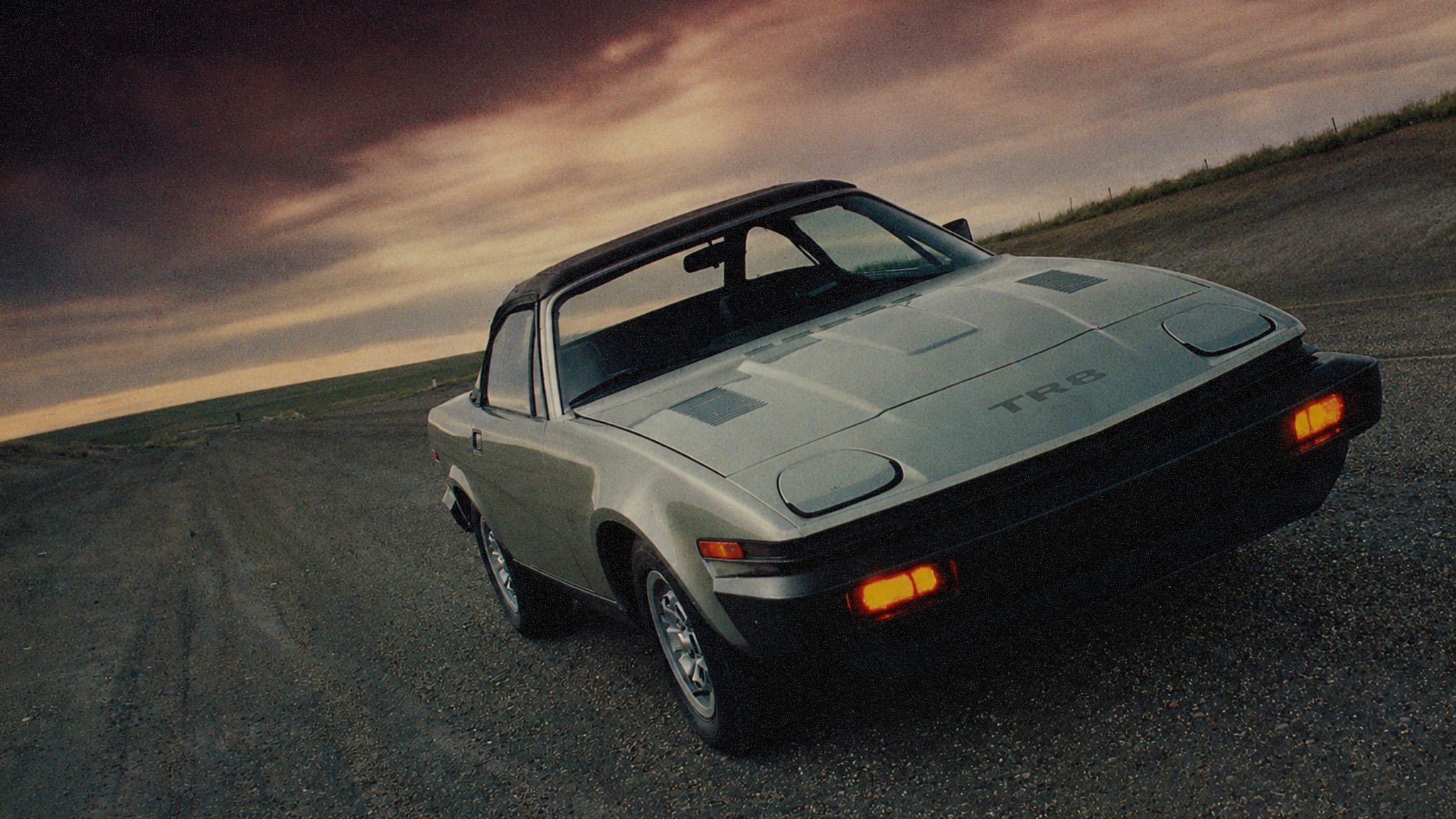


A 21,000-mile test of the 1980 Triumph TR8 revealed a sports car that could hit 123 mph, corner like a go-kart, and return 25 mpg on the highway. It also revealed an alternator that boiled its own battery acid, shocks that gave up at 17,000 miles, and brakes that belonged on a lesser car. That was British Leyland in a single package: brilliant engineering sabotaged by the parts bin.
The engine told the whole story of Anglo-American improvisation. General Motors designed the 215-cubic-inch aluminum V-8 for early-1960s Buick Skylarks and Olds F-85s, then dumped it when Americans decided small displacement was beneath them. British Leyland bought the tooling, stuck the engine in Rovers for years, and finally dropped it into the TR7 body that had been kicking around since 1975.
The result was 148 fuel-injected horsepower pushing just 2,600 pounds, a ratio that made the TR8 feel faster than the numbers suggested.
Motor Trend’s long-term test, published in February 1981, painted the picture of a car that rewarded you every mile it wasn’t breaking. The V-8 pulled cleanly from under 1,000 rpm in fifth gear, whispered at highway speeds, and delivered a fuel injection whistle from its Bosch-Lucas intake that served as a constant audio reminder you were driving something special. The rack-and-pinion steering had no numb power-assist deadness, giving the driver a direct conversation with the front tires.
Then there was the alternator.
The built-in regulator overcharged the battery relentlessly, boiling away electrolyte and filling the trunk with sulfur fumes that occasionally seeped into the cabin. No Triumph dealer could fix it. No factory-authorized test existed for the specific failure mode. One service rep suggested driving with the headlights on to bleed off excess current on a $13,000 car.
In western Canada, the system reversed course entirely and let the battery go dead in the mountains, then resumed overcharging after a jump start. A Lucas repair shop tore the alternator apart, found nothing, and sent it back. The rotten-egg smell became, as the testers put it, part of the car’s personality.
The chassis told a similar tale of highs followed by inevitable lows. For 17,000 miles, the TR8 tracked like it was on rails. The live rear axle on coil springs, as American as anything from Detroit, delivered predictable and confidence-building cornering.
Then the original shocks started fading. By 20,000 miles, the car wallowed side to side at speed and the rear end wouldn’t stay planted through turns that had been effortless months earlier. A $100 pair of rear shocks restored about 70 percent of the original composure.
The brakes were the one area where the balance fell apart completely. Triumph upgraded them from TR7 specs but never went far enough. The car had far more engine than stopping power.
It would outrun a VW Vanagon by any measure yet couldn’t outbrake one. Four-wheel discs would have completed the package, but the budget wasn’t there. It never was at British Leyland.
The cabin was quiet, comfortable, and paradoxically starved of fresh air. Engine heat warmed the ventilation ducting so thoroughly that even cool outside air arrived warm at the dash vents. The convertible’s aerodynamics sealed the side windows in a cocoon of still air.
You could feel the breeze half an inch outside the window line but couldn’t coax it inside. The solution was obvious: drop the top. It folded in three minutes.
Motor Trend’s staff called it the perfect American sports car, and they weren’t entirely wrong. Front engine, rear drive, a V-8 with broad torque, and handling that rewarded aggression. At its price point, nothing from Germany or Japan offered the same combination of power and feel.
Within two years, Triumph was dead. The Solihull factory closed in 1984. The TR8 was the last new model the marque ever produced, a car that proved British Leyland could still build something thrilling when it wanted to, just not reliably enough or long enough to survive.


Share this Story