
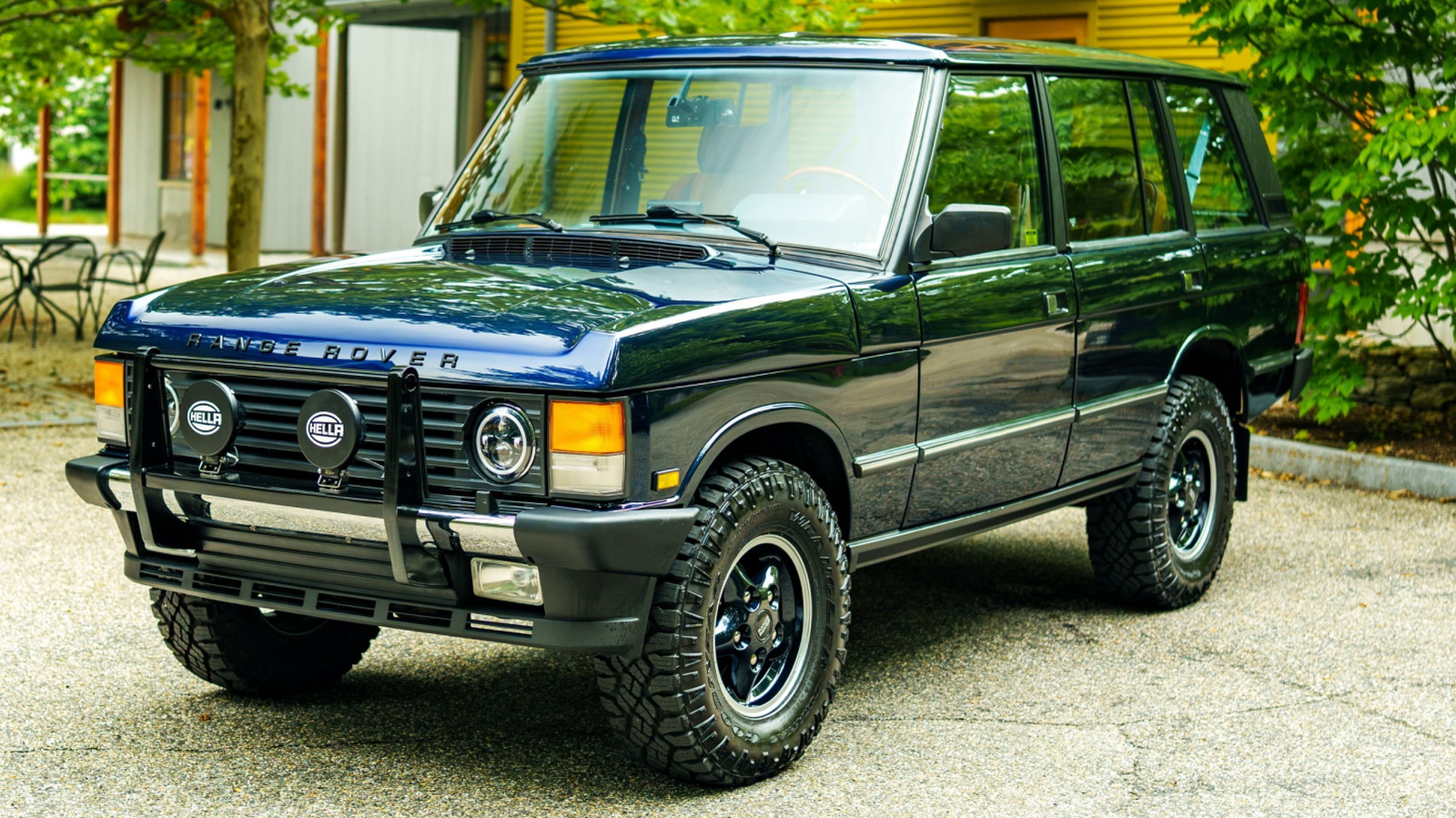


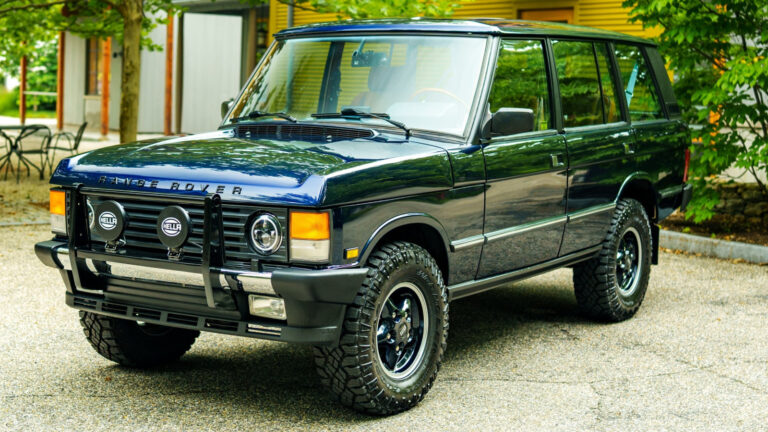
A 1993 Range Rover Classic LWB just rolled out of Legacy Overland’s shop wearing Midnight Atlantic Blue paint and a butter-and-ocean leather interior. They call it Nova. And the most interesting decision the builders made was the one they didn’t make.
They kept the original V8.
In a restomod market drunk on LS swaps, supercharged crate motors, and electric conversions, Legacy Overland left the factory 3.9-liter eight-cylinder alone. Around 200 horsepower, give or take. They inspected it, serviced it, replaced the radiator, expansion tank, hoses, sensors, and thermostat. Then they closed the hood.
This is the same outfit that previously dropped an LS3 into a Range Rover Classic. They know how to do a powertrain swap. They chose not to. That restraint says something about where the restomod market might be heading, or at least where a slice of the clientele wants it to go.
The chassis got real attention. New coil springs and dampers at all four corners. Fresh brake discs and calipers. The axle and differential were gone through properly. This is the unsexy work that separates a show piece from something you’d actually drive to Montana and back without calling a flatbed.
Outside, Nova wears a set of color-matched 16-inch five-spoke wheels wrapped in Goodyear Wrangler all-terrains. A custom bull bar sits up front with auxiliary driving lights. New bumpers, restored badges. Nothing overwrought.
The Range Rover Classic’s proportions, those impossibly thin pillars and that honest squared-off greenhouse, don’t need much help. They just need to not be messed with.
The interior is where Legacy Overland spent its creative energy. Two-tone full-grain leather in what they’re calling Butter Rum and Deep Ocean covers the seats, dashboard, and door panels. Deep Ocean Wilton wool carpeting runs across the floor. Navy blue seat belts, a light cream headliner. It reads like a bespoke British club chair that happens to have four-wheel drive.
Technology sneaks in carefully. A 400-watt amplifier feeds Kicker 4-inch speakers. A digital rearview mirror replaces the original glass. And there’s a pop-up infotainment screen with Apple CarPlay, the kind that hides away when you don’t need it so the dashboard still looks like 1993.
Legacy Overland built its reputation on tasteful resurrections. Their Series II Discovery, known as Project Earnie, followed a similar philosophy of preserving character while fixing what age had broken. Nova fits that pattern, but pushes it further by refusing to apologize for the original powertrain’s modest output.
Two hundred horsepower is plenty if your goal is to actually enjoy driving rather than to win a stoplight drag race against a Kia EV6. The Range Rover Classic was never fast. It was composed, comfortable, and capable in ways that had nothing to do with acceleration times. Swapping in a modern engine fixes a problem this truck doesn’t have.
The restomod industry has become a horsepower arms race, each builder trying to outgun the last with bigger numbers and wilder swaps. Legacy Overland looked at that escalation and built a truck with period-correct power, handsome materials, and the kind of mechanical sorting that means you can actually use it.
No price has been announced. If Legacy Overland’s previous projects are any indication, Nova won’t come cheap. The clientele for a truck like this isn’t shopping on budget. They’re shopping on taste. And right now, restraint might be the most expensive thing you can buy.
Share this Story