
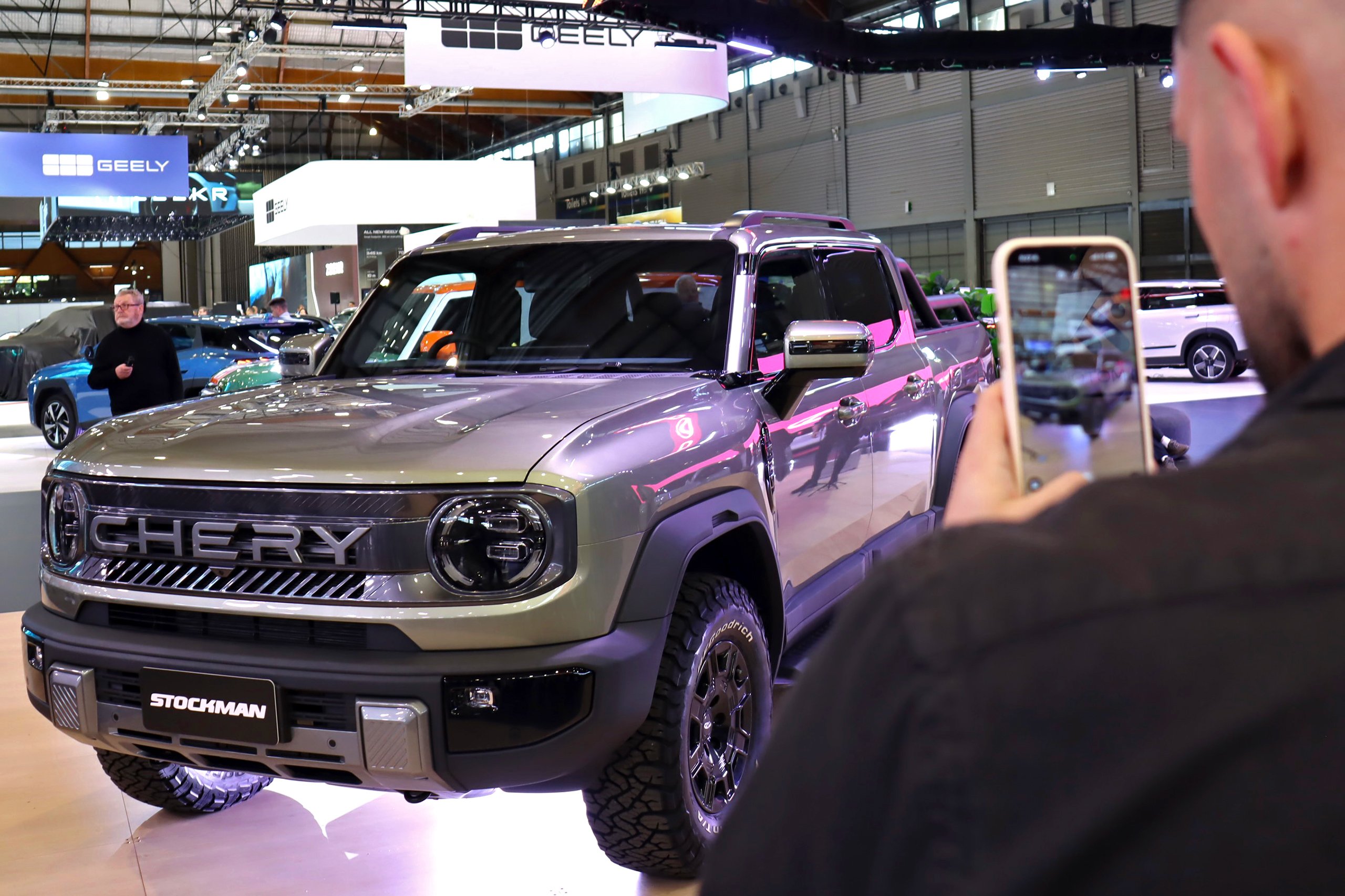


Chinese automaker Chery isn’t waiting for an invitation. Charlie Zhang, the company’s vice president, told Reuters this week that Chery is “very open to different options, even a potential partnership with American automakers,” and that the company believes it can engineer around any legislative barrier Washington throws up.
“Definitely from a technical point of view, we will be able to find a China-free solution in terms of hardware and software,” Zhang said.
That’s a bold claim from a company that hasn’t sold a single car in the United States. Chery is currently preparing to enter the Canadian market in 2027, positioning itself just across the border from the world’s most lucrative vehicle market while U.S. lawmakers work overtime to keep Chinese-built cars out.
The strategy is transparent. Build a beachhead in Canada, strip out Chinese-sourced components, partner with an American OEM if necessary, and present Washington with a product that technically complies with whatever rules Congress writes. It’s the same playbook Japanese and Korean automakers refined decades ago, but with a geopolitical edge that makes it far more combustible.

Whether any American automaker would take the call is another question entirely. Detroit’s Big Three are bleeding cash on their own EV transitions. The political toxicity of a Chinese partnership in the current climate would be severe.
But Chery builds roughly two million vehicles a year and has technology, particularly in affordable EVs, that no American company currently matches at the price points where most of the world actually buys cars.
Zhang’s confidence about a “China-free solution” deserves scrutiny. Chery’s supply chain runs deep into Chinese battery and semiconductor ecosystems. Rebuilding that outside China is not a software patch.
It requires billions in new supplier relationships, factory tooling, and years of qualification testing. Saying you can do it and actually doing it are separated by a canyon of capital and time.
Still, the mere fact that a senior Chery executive is openly discussing American partnerships signals where the company’s ambitions truly lie. Canada is not the destination. It’s the staging area.
Congress passed its latest round of restrictions on Chinese-connected vehicle technology earlier this year, targeting both hardware and software with national security justifications. The rules are designed to be airtight. Chery is essentially telling lawmakers, in public, that it sees seams.
The timing matters. American consumers are frustrated with EV pricing. Chinese automakers like BYD and Chery have demonstrated they can build competent electric vehicles for half or less of what their Western competitors charge. Every month that gap persists, the political calculus shifts slightly.
Voters who can’t afford a $45,000 crossover don’t care much about supply chain purity.
Chery sold zero cars in North America last year. It plans to sell them in Canada starting in 2027. And its vice president is already talking about American factory floors like they’re a foregone conclusion.
Washington has drawn a line. Chery is walking right up to it, smiling, and asking if anyone wants to dance.

Share this Story