
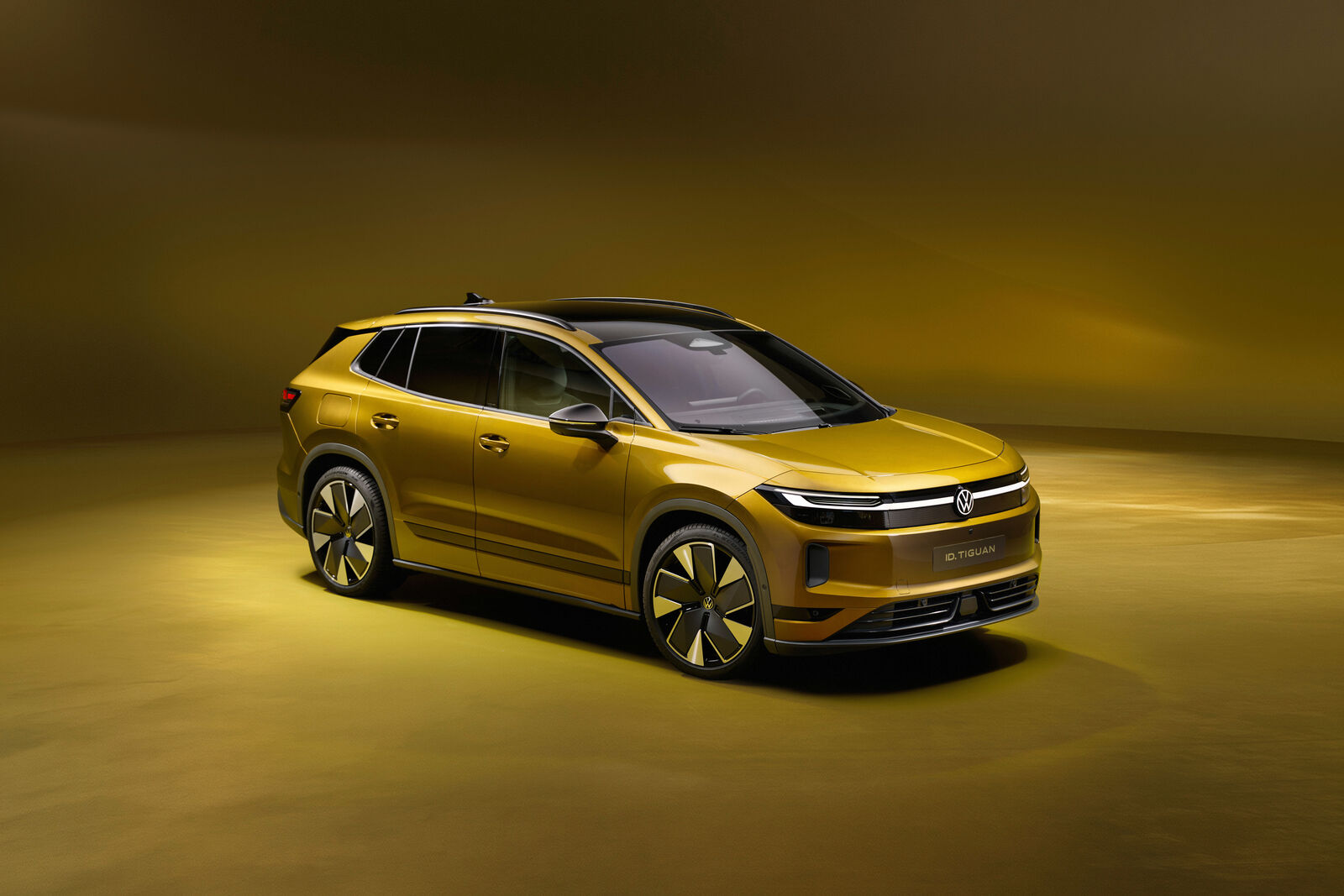


Volkswagen just admitted its electric SUV strategy needed a reset. The ID. Tiguan, revealed this week in Wolfsburg, replaces both the ID.4 and ID.5 starting in early 2027. More than 950,000 units of those predecessors rolled off the line, but the new model arrives with a different name, a different face, and a not-so-subtle upmarket ambition.
The rebranding alone tells you everything about where VW thinks it went wrong. The ID.4 launched as a clean-sheet electric crossover with soft lines and a tech-forward interior that frustrated owners with its touch-sensitive controls. The ID. Tiguan borrows the name of VW’s best-selling model worldwide, the combustion-powered Tiguan, and will sell alongside it.
Two Tiguans, one electric, one not, built in two different German factories. Emden gets the EV. Wolfsburg keeps the gas burner.
VW CEO Thomas Schäfer called it “one of the strongest SUV duos in Europe.” That framing is deliberate. The company is no longer pretending electric will replace combustion overnight.
Under the skin, the ID. Tiguan rides on the updated MEB+ platform with three powertrain options. The entry-level rear-drive version makes 140 kW (190 PS) with a 58 kWh battery. A mid-range rear-drive variant bumps output to 210 kW (286 PS) with a 77 kWh pack.
The top-spec 4MOTION all-wheel-drive model delivers 220 kW (299 PS), also on 77 kWh. VW claims a WLTP range of up to 600 kilometers on the larger battery, which translates to roughly 373 miles.
Towing capacity reaches 2,000 kg with the bigger battery. That is a real number for European buyers who haul caravans, and it puts the ID. Tiguan in territory the ID.4 never convincingly occupied.
The interior is where VW seems to have listened hardest. Physical buttons are back on the steering wheel, replacing the touch sliders that drove owners to distraction. Climate controls sit on a real button bar in the center console.
Volume adjustment happens through a physical knob. These sound like small things. They are not. They were among the loudest complaints about every MEB-based VW since the ID.3 launched in 2020.
A 15-inch central infotainment screen anchors the dash, flanked by a 10-inch digital cockpit for the driver and, for the first time in a European Volkswagen, a 12-inch passenger display. That co-driver screen includes a privacy mode so the passenger can watch content or game without the image bleeding into the driver’s peripheral vision.
Then there is the nostalgia play. VW developed a “Retro” display mode that renders Golf IV-era blue-and-red instrument graphics on the digital cockpit. It is a wink at the generation that grew up with those cars and now has the income for a 40,000-euro-plus electric SUV.
VW also added a 32-liter frunk, classic pull-style door handles instead of the flush units on previous ID. models, and available seat massage and ventilation. The luggage compartment holds up to 534 liters. Four trim levels will be offered at launch: Trend, Life, Style, and R-Line.
The ID. Tiguan will be built at VW’s Emden plant, which has been transitioning from Passat production to electric vehicle assembly. That factory’s future depends heavily on this car finding buyers in a European EV market that has been choppy at best.
VW is betting that the Tiguan name carries weight the ID.4 badge never quite earned. Whether slapping a familiar nameplate on an electric platform is strategy or desperation depends entirely on what happens when order books open.
Share this Story