
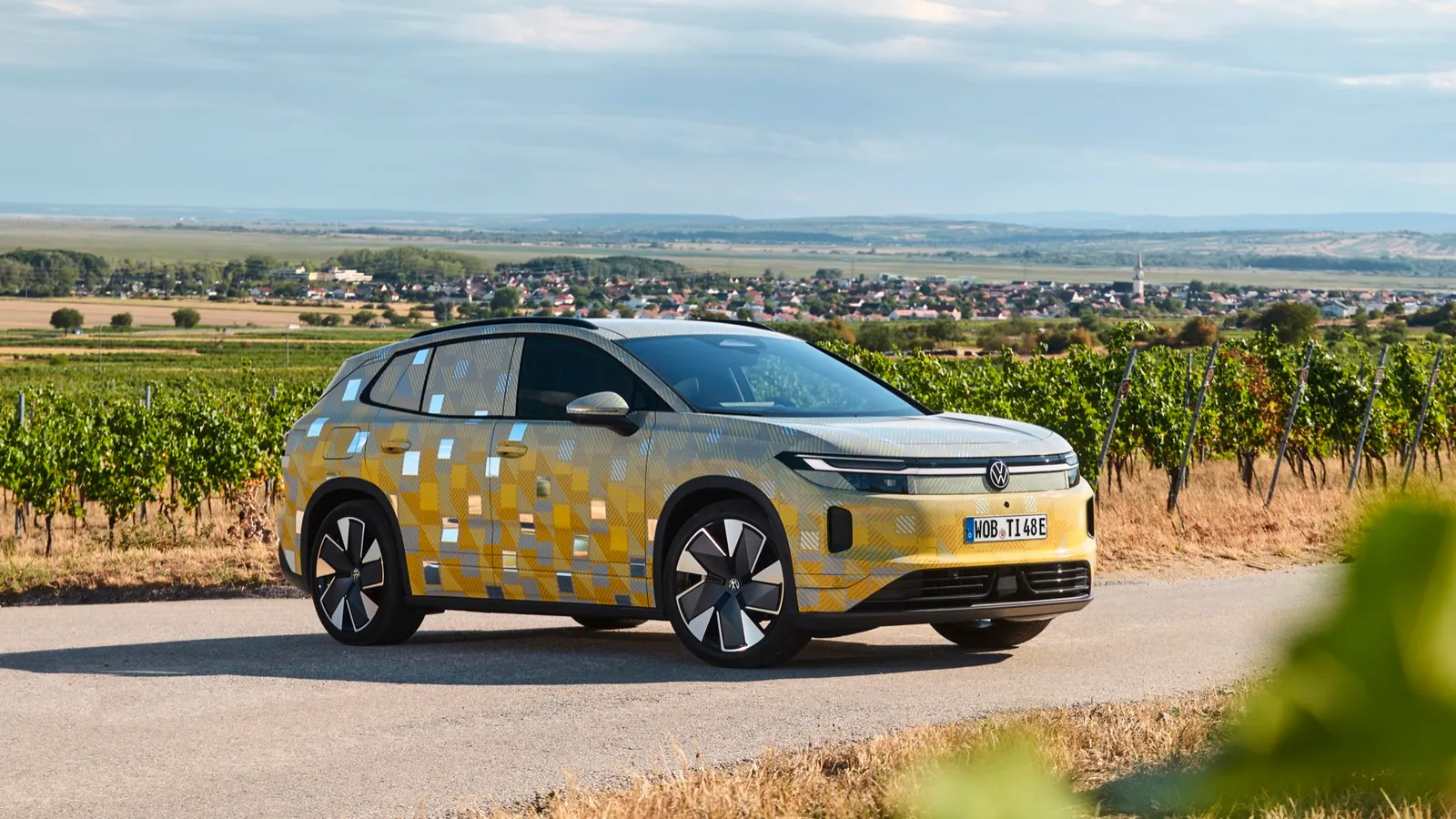


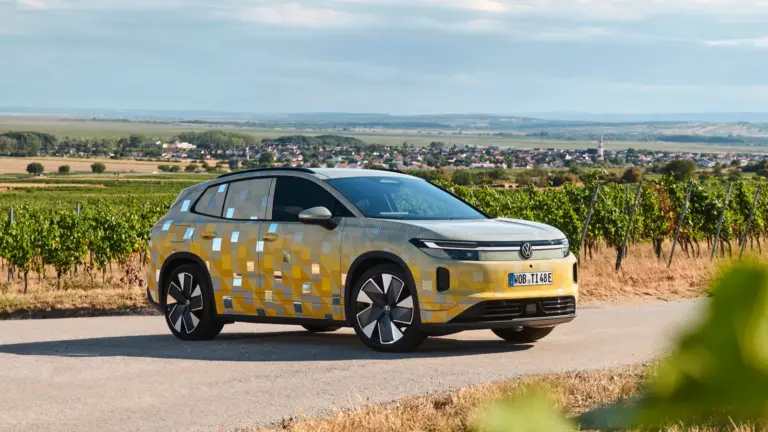
Volkswagen’s troubled ID.4 is getting a new life and a new name. The automaker announced Monday that its next-generation electric SUV will be called the ID. Tiguan, folding the EV into the family of its bestselling nameplate worldwide.
The move is more than cosmetic. It’s an admission that the ID sub-brand experiment, launched with great fanfare in 2021, failed to connect with buyers the way VW hoped.
Martin Sander, VW’s board member for sales and marketing, said earlier this year that the automaker had “lost its way” with its ID lineup. The numbered naming convention, from ID.3 to ID.7, confused customers who already knew and trusted names like Golf, Polo, and Tiguan. Now those legacy names are being grafted back onto VW’s electric future.
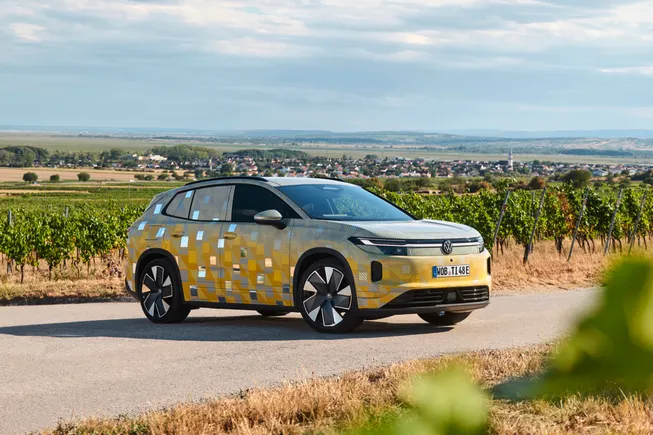
The ID. Tiguan follows the recently revealed ID. Polo and ID. Cross in adopting familiar model names with the “ID” prefix retained as a signifier for electric. Volkswagen described the new model as a “completely new design,” and camouflaged prototype photos show heavily reworked front, rear, and lower-body styling.
VW brand CEO Thomas Schäfer positioned the electric and combustion Tiguans as complementary. With a gasoline Tiguan, a confirmed Tiguan Hybrid bound for the U.S., and now the ID. Tiguan, Volkswagen is assembling a three-powertrain family to compete directly against the Toyota RAV4 and Honda CR-V. Those two models have dominated the compact SUV segment for years with exactly that kind of breadth.
The Tiguan nameplate carries weight. VW has produced 8.3 million of them cumulatively. The ID.4 and its ID.5 fastback sibling managed about 950,000 deliveries since 2021.
In the U.S., the ID.4 peaked at 37,789 units in 2023, a respectable number for an EV but far short of mass-market territory. Buggy software, recalls, soft demand, and an onslaught of competition all took their toll.
European deliveries of the ID. Tiguan begin in early 2027. For the U.S. market, Volkswagen of America confirmed only that the model “is planned to succeed the ID.4 in the North American market” and that timing would come later.
One open question is where the American-market version will be built. VW assembled the ID.4 at its Chattanooga, Tennessee, plant starting in 2022, but announced in April that it would end production there to make room for higher-volume models like the second-generation Atlas. The company hasn’t said whether the ID. Tiguan will be imported or sourced from a different North American facility.
The naming shuffle sits inside a much larger upheaval. Earlier this month, VW laid out a massive restructuring plan across all its brands that could eliminate 50,000 jobs and halve its global model lineup. The stated goal is greater economies of scale, with a “clear focus” in North America on SUVs, pickups, and rugged vehicles.
Renaming an underperforming EV after your best-known SUV is a bet that brand familiarity can do what technology alone could not. Whether Americans will walk into a VW dealership and see the ID. Tiguan as a real Tiguan, rather than a rebranded also-ran, is a question Wolfsburg can’t answer with a press release.
Production timelines, pricing, and U.S. sourcing are all still pending. The car doesn’t exist in showrooms yet. The restructuring that surrounds it is still taking shape.
Share this Story