
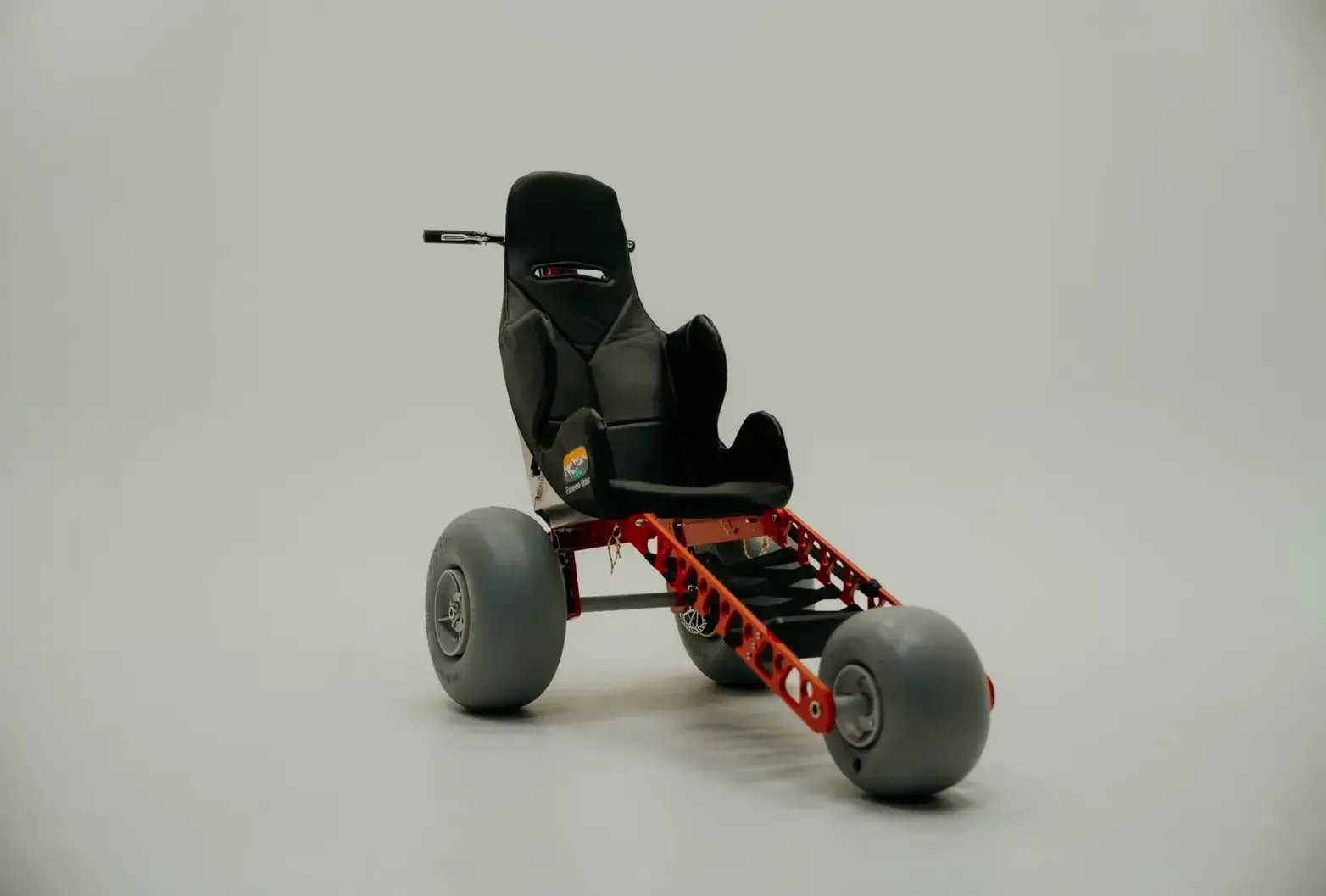


Zion National Park started renting all-terrain wheelchairs last August, and Arches National Park has followed. Both sit in Utah’s rugged backcountry, terrain that has effectively locked out visitors who use wheelchairs since these parks were established.
The chairs come from Extreme Motus, a Utah-based manufacturer, and they look like something lifted from a desert rally. Fat knobby tires, a reclined seat reminiscent of a Baja race truck, and a 47-inch wheelbase designed for stability on uneven ground. They fold down to 30 inches with two quick-release pins and weigh 55 pounds, which the company says is light enough to float in shallow water.
The National Park Service is offering them first-come, first-served. Users or their assistants need ID, proof of insurance, and a brief training session from a ranger. No reservations. Show up and hope one is available.
Here is where reality tempers the enthusiasm. These chairs are entirely unpowered. No motor, no push rings on the wheels. Someone else has to push the occupant, gripping handlebars mounted on the back.
Fifty-five pounds of chair plus up to 250 pounds of rider on unpaved trails through Utah canyon country is not a casual stroll. It is a workout that demands a fit companion willing to do serious physical labor on loose rock and dirt.
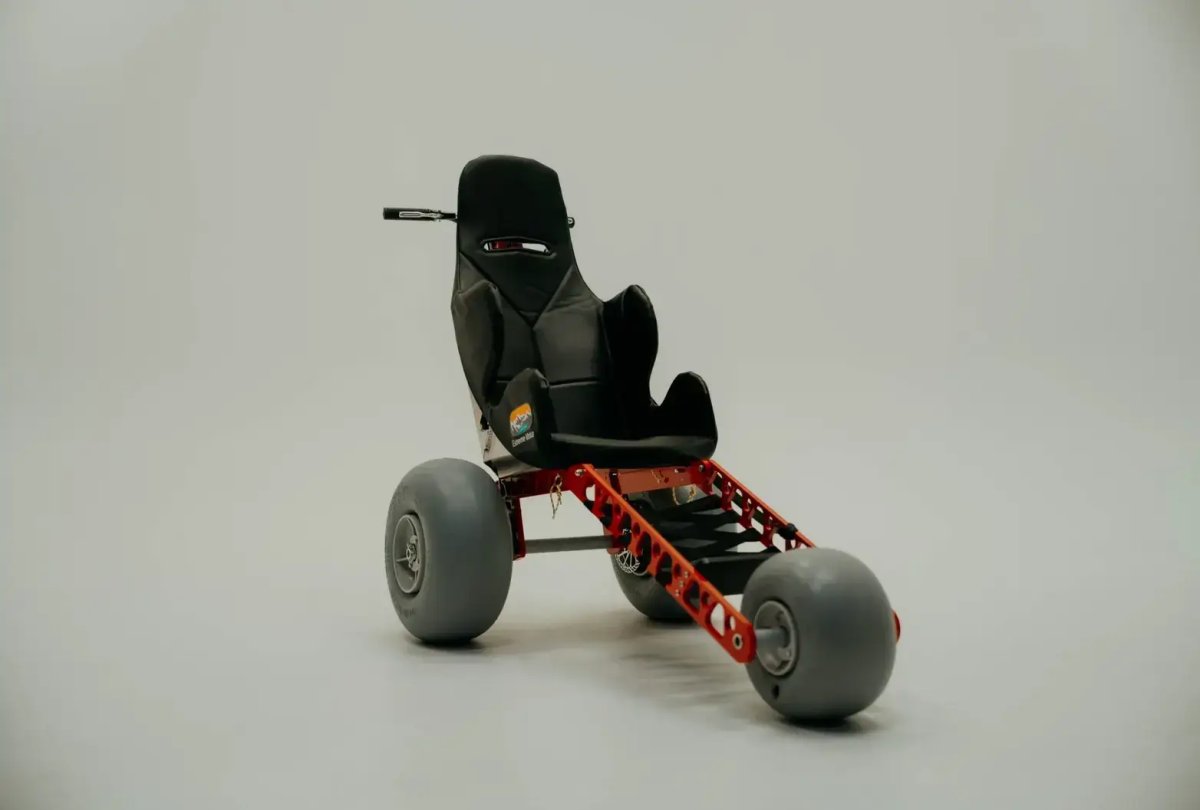
That limits who can actually use them. A solo wheelchair user without a strong companion is out of luck. So is anyone whose disability requires powered mobility. The chairs solve one problem, access to rough terrain, while creating another, total dependence on someone else’s muscle.
Powered alternatives exist. Tracked power chairs have been deployed at Michigan state parks since 2021. A nonprofit in New York State has paired them with hand-controlled XJ Cherokees for off-road adventures. Those solutions carry their own complications, mainly cost and mechanical complexity, but they don’t require a second person to function.
At $4,500 retail per chair, the Extreme Motus units are not cheap, though that price sits squarely within the range of conventional wheelchairs purchased without insurance coverage. Few people would buy one for occasional trail use alongside their everyday chair, which is precisely why a rental program makes sense.
The deeper tension is between intention and execution. National parks exist, at least on paper, for everyone. The Organic Act of 1916 says so. But a century of trail design built around able-bodied hikers created an infrastructure deficit that a handful of manual off-road wheelchairs at two Utah parks cannot close.
The Park Service has not announced plans to expand the program beyond Zion and Arches. Whether other parks with similarly demanding terrain, think Grand Canyon, Yellowstone, or Glacier, will follow remains an open question. Budget constraints, staffing for the required training sessions, and the sheer geography of the 423-unit national park system all stand between a pilot program and a national standard.
Two parks in one state, a few chairs, no motors, and a requirement that someone strong enough be willing to push. The access gap in America’s public lands is narrowing, but it is narrowing slowly and unevenly.

Share this Story