


The new Chevy Bolt moved just 2,318 units in the U.S. this year. Nissan’s redesigned Leaf has been even quieter. Two affordable EVs that were supposed to democratize electric ownership landed with all the fanfare of a parking ticket.
Kia thinks it can do better.
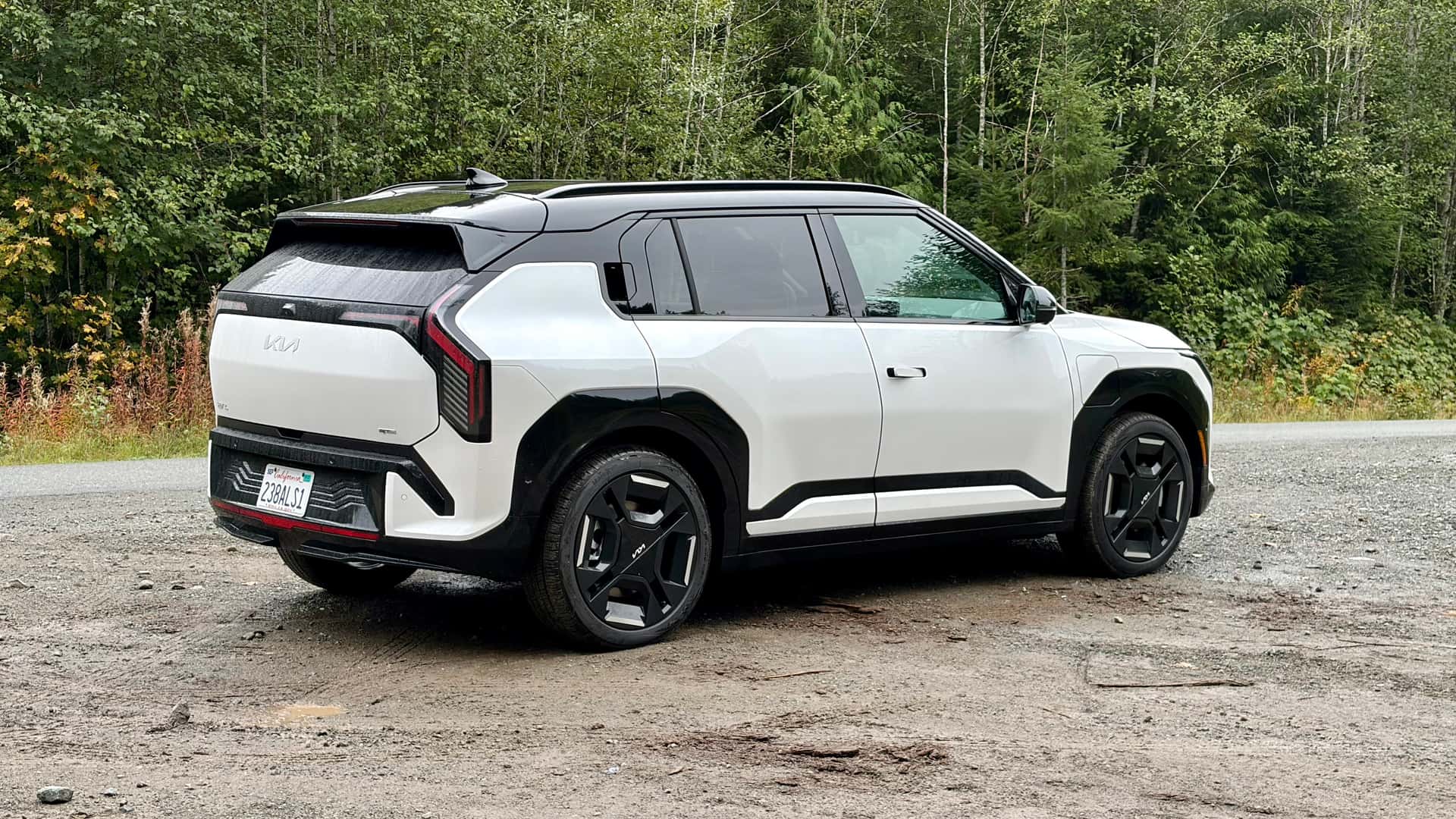
The Korean automaker expects its $30,000 EV3 crossover, which went on sale in August, to become its best-selling electric vehicle in the United States. Young Kim, the senior product planning manager for the car, made that claim at the EV3’s press drive last week, though he stopped short of putting a timeline on it.
The ambition isn’t baseless. In Europe, where the EV3 has been available for two years, it became the Hyundai Motor Group’s top-selling EV in the first half of 2026, moving roughly 27,000 units. But Europe and the U.S. are different planets when it comes to small cars, and Kia knows it.
The company once projected 70,000 to 80,000 annual U.S. sales for the EV3. That number, floated back in 2024, now looks like a relic from a different political and economic era. No EV outside of Tesla’s lineup has ever hit those volumes here, and the loss of the $7,500 federal tax credit makes the climb steeper.
Kia’s own EV sales tell a mixed story. The EV6 is down 45% year-to-date, sitting at just 6,264 units. But the larger, pricier EV9 has held steady at 12,429 sales, making it Kia’s current electric bestseller. That resilience in a hostile market seems to be fueling Kia’s confidence that there’s still oxygen for another EV in the lineup.
Christine Bagnard, Kia America’s director of sales and field operations, said she expects the EV3 to perform well in EV-friendly states like California and is already seeing traction in less obvious markets. “I think with this particular vehicle, we’re going to do very, very well given its entry price point,” she said. She added that while the company doesn’t have a high-volume plan in place yet, that could shift if demand materializes.
The EV3’s pitch boils down to one thing the Bolt and Leaf never quite pulled off: not feeling cheap. The boxy little crossover, a shrunken EV9 in spirit, offers up to 321 miles of range with the larger battery pack. Reviewers who drove it last week described it as surprisingly refined for its size and price.
It doesn’t wear its affordability on its sleeve the way an egg-shaped hatchback does.
Kia isn’t alone in betting on the small, affordable EV segment. Ford is reportedly targeting 100,000 annual sales for its roughly $30,000 Fathom pickup, due next fall. Startup Slate says its Illinois factory will eventually produce 150,000 vehicles a year.
The appetite for cheap electric transportation clearly exists somewhere in the industry’s collective imagination.
The obstacles are obvious. No tax credit. A buyer base that gravitates toward larger vehicles. A flood of lightly used EVs hitting the market at bargain prices. And a sticker that, even at $30,000, sits well above the gas-powered subcompact crossovers most shoppers in this segment are cross-shopping.
Kia projects the mainstream electric SUV market will grow beyond 400,000 units by 2030, with entry-level models capturing 35% of that pie. That’s the long game. The short game is proving that Americans will buy a small EV that happens to look and feel like something they’d actually want to drive, not something they’d settle for.
The Bolt and the Leaf already demonstrated that a low price tag alone isn’t enough. Whether good design and a little brand momentum can change that equation is a question Kia is now staking real production capacity on answering.

Share this Story