


Volkswagen sold 78,000 ID.3 hatchbacks across Europe last year with an interior most owners quietly resented. Now the company is fixing what never should have been broken.
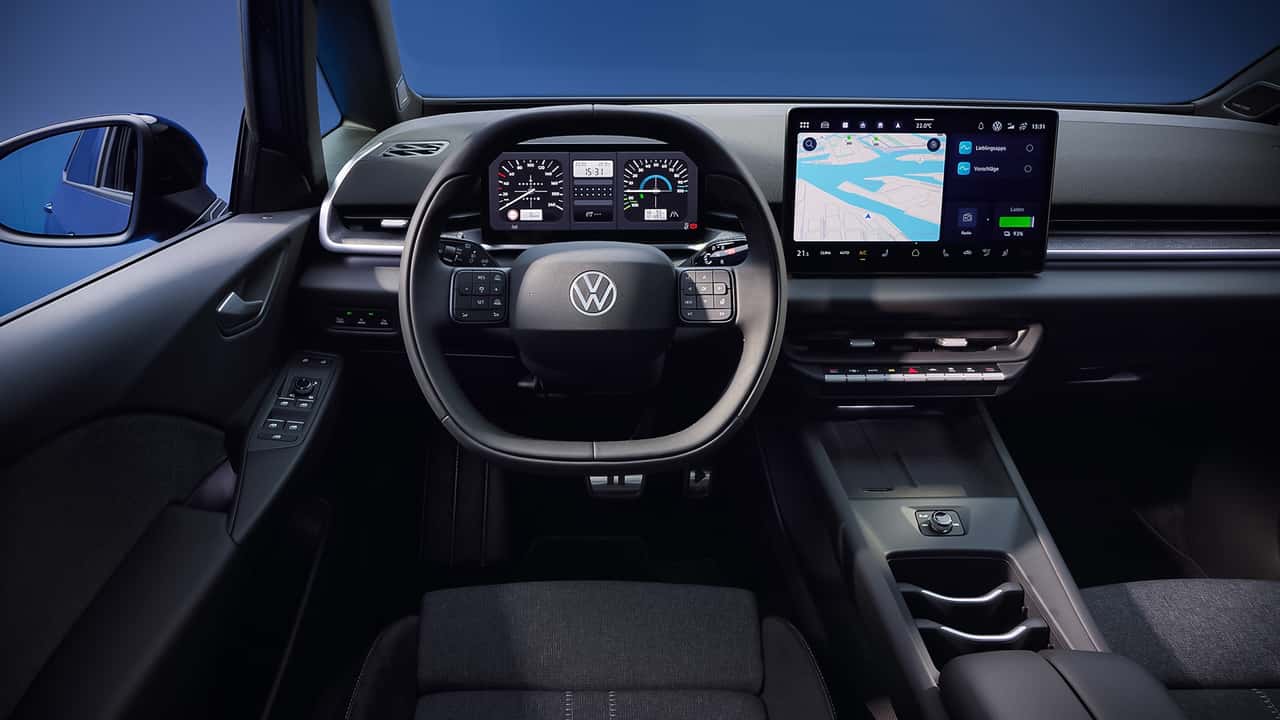
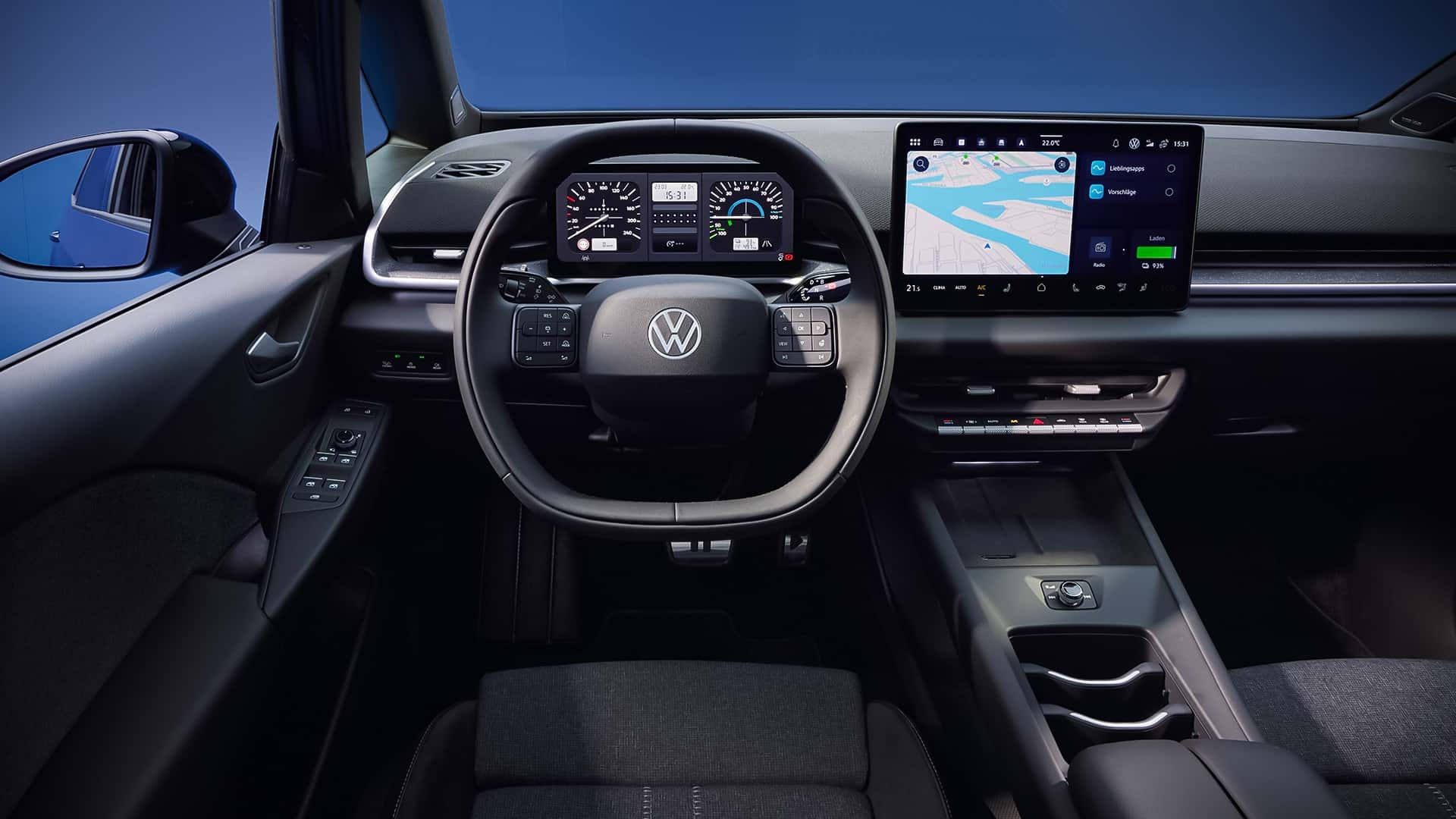
The 2026 ID.3 Neo, revealed this week and heading to European showrooms in July, rips out the capacitive touch slider that controlled volume and temperature — a design choice so universally loathed that even VW’s own CEO publicly admitted he didn’t like it. In its place: a strip of physical buttons below the air vents for climate control, a rotary knob between the seats for volume and track selection, and real click-action buttons on the steering wheel.
It shouldn’t be news that a car company put buttons back in a car. But here we are.
The driver’s door panel gets the same treatment. The original ID.3 had no dedicated switches for the rear windows — an omission that felt less like minimalism and more like an oversight. The Neo corrects this with a conventional four-switch layout plus separate lock and unlock buttons.
Everything where your hand expects it to be. Revolutionary stuff, apparently.
Behind the steering wheel, the miserly 5.3-inch instrument cluster has been replaced by a 10.25-inch display that offers retro-inspired graphics mimicking the original Golf Mk1’s analog gauges. The tachometer now shows energy output and regeneration instead of engine revs. It’s a nice touch — a nod to heritage that the ID.3 has desperately needed to feel like a proper Volkswagen rather than a consumer electronics product on wheels.
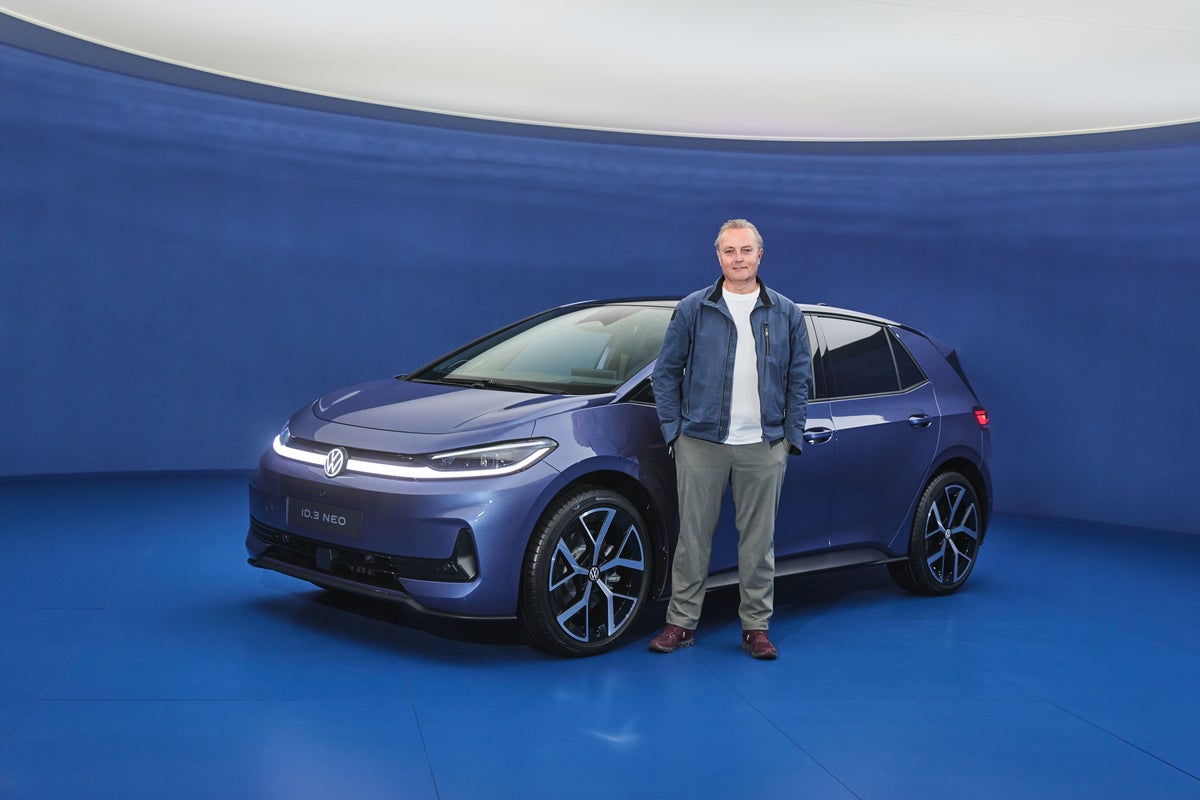
The exterior changes are subtler, as facelifts tend to be. Slimmer LED headlights, a thicker illuminated light bar bisected by VW’s logo, and a body-colored tailgate replacing the old black panel. The contrasting dark trim elements that made the original look like it was assembled from two different parts bins are largely gone. VW’s design chief Andreas Mindt says the new face gives the car “a smile.
Underneath the cosmetic work, the Neo moves to VW’s updated MEB+ platform with a more efficient electric motor. Three battery options span the range: a 50-kWh pack producing 168 horsepower and 259 miles of WLTP range, a 58-kWh unit making 188 hp and 307 miles, and a 79-kWh flagship delivering 228 hp and 391 miles. DC charging tops out at 183 kW on the big battery, 105 kW on the smaller two.
Ten to eighty percent takes 26 to 29 minutes regardless of pack size.
New features include one-pedal driving — now standard — and a vehicle-to-load function that turns the car into a mobile power bank, though you’ll need an optional adapter. Connected Travel Assist adds the ability to automatically stop for red lights, pushing VW’s semi-autonomous driving a step further. A digital key lets owners unlock the car with a smartphone or smartwatch, and connected services come bundled for up to ten years.
None of this changes the fact that the ID.3 Neo is living on borrowed time. VW has already teased an electric-only ninth-generation Golf — reportedly called the ID. Golf — arriving before the decade is out to replace the ID.3 entirely. The Neo is a bridge, and VW knows it.
But it’s a bridge that finally admits the industry’s obsession with touchscreens and haptic surfaces was a wrong turn. Volkswagen spent years stripping tactile controls out of its cabins in the name of modernity and cost savings, then watched customers punish them for it. The Neo is a correction dressed up as an upgrade.
The question now is whether European buyers will reward the honesty, or whether Chinese competitors offering more car for less money have already moved the goalposts too far.
Share this Story