
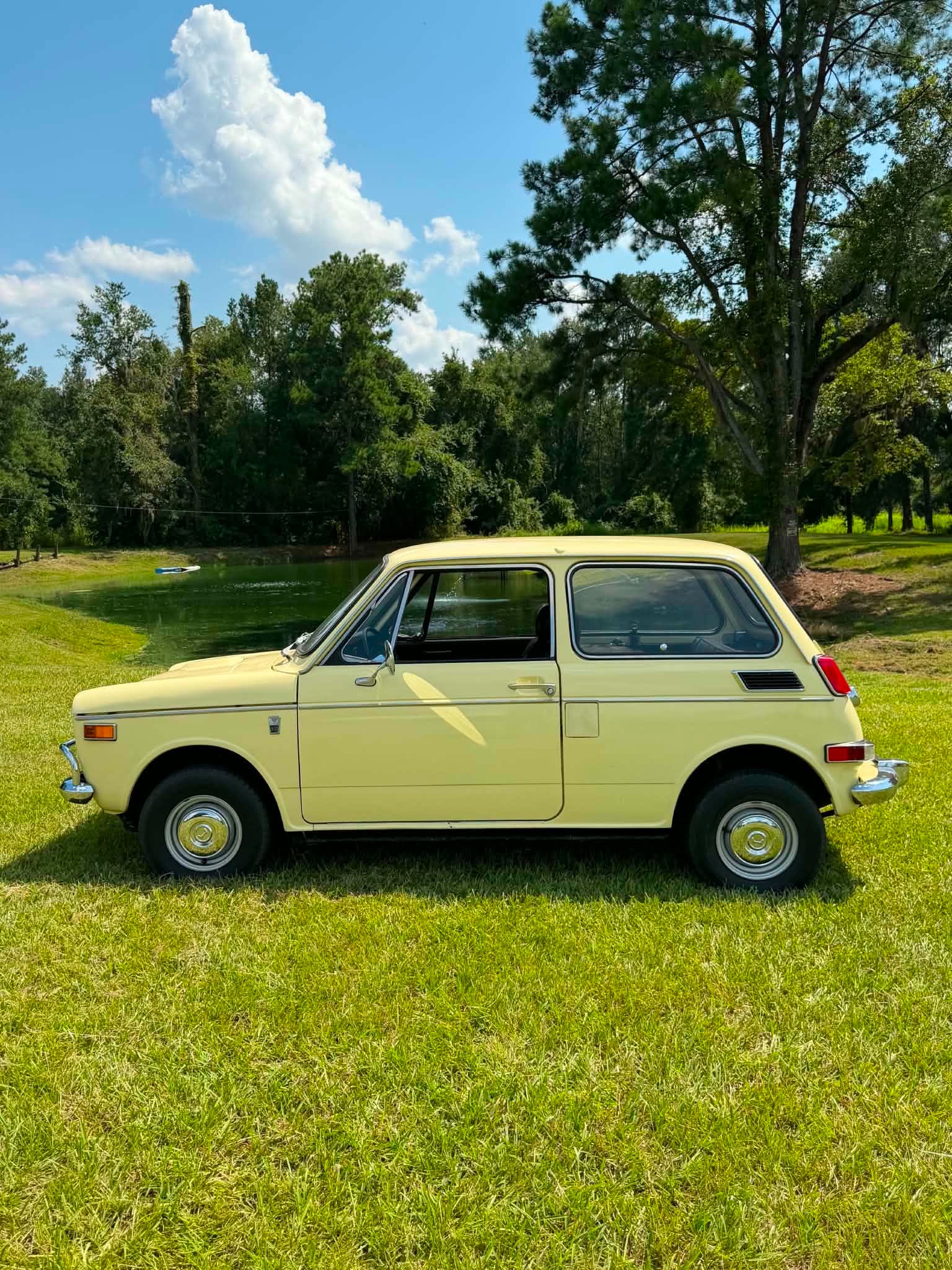


A bright yellow 1971 Honda N600 is sitting on Bring a Trailer right now, looking like a jelly bean with headlights. It weighs about as much as two scooters. It makes 35 horsepower from a 600-cc parallel-twin engine, and it is, without exaggeration, the reason your neighbor drives an Accord.
Before the Civic, before the Accord, before Honda became the default sensible car choice for half of America, there was this. A kei-car derivative smaller than an original Austin Mini, sold through motorcycle dealerships that Honda forced to build separate showrooms if they wanted the privilege.
That was the deal. You already sell our bikes? Great. Now build a proper car dealership or don’t bother. Several took the gamble, and when the Civic landed a few years later, those dealers struck gold.
The N600 wasn’t even Honda’s first four-wheeler on North American soil. A handful of S600 coupes and roadsters had trickled in privately, and Canadian motorcycle shops moved hundreds of them. But the N600 was the first car Honda officially stood behind in the U.S., the one with factory support and a real strategy behind it.
That strategy started with 50 prototype cars. Honda was already selling the N360 in Japan, but its smaller engine couldn’t handle American highways. So engineers dropped in a 600-cc twin, shipped 50 cars across the Pacific, and ran them through California heat and Midwest winters. They survived, and production started for the 1970 model year.
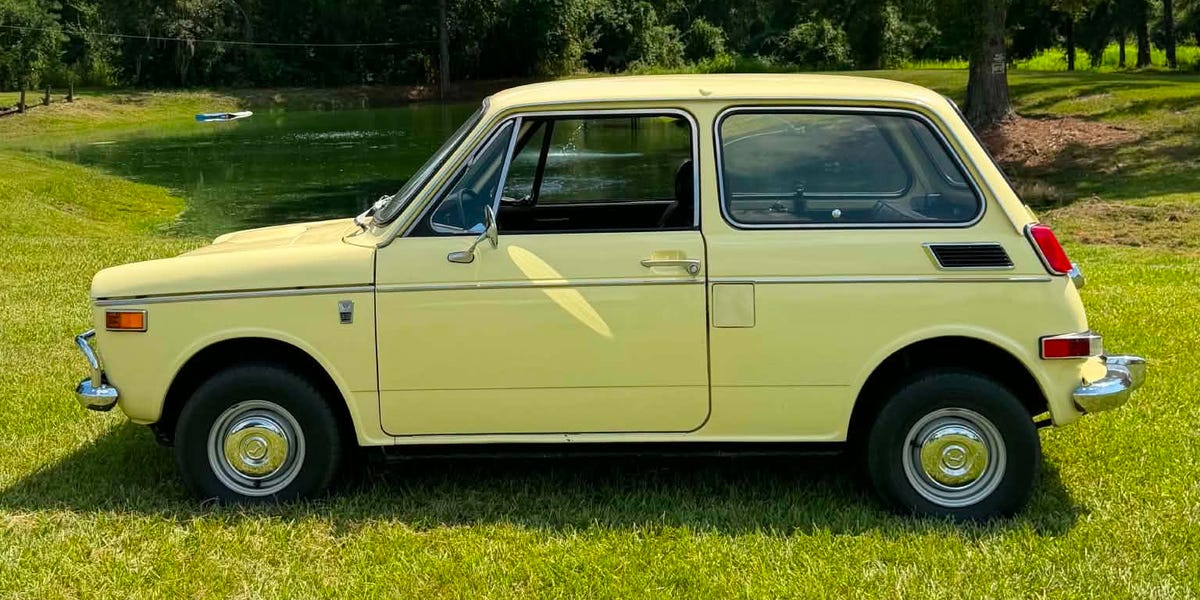
This particular car is a 1971, finished in Spring Yellow over black vinyl. It spent its life in Florida, which matters enormously for a car this small and this old. Rust would have eaten an Ohio example decades ago.
The engine has been freshly rebuilt, and the four-speed manual gearbox is still there to keep things interesting, assuming 35 horsepower at full scream counts as interesting. Honda sometimes quotes 45 horsepower for the N600 engine, but that figure applied to prototypes and European variants. American buyers got 35, and in a car this light it was enough to maintain highway speeds, though “maintain” is doing some heavy lifting in that sentence.
The Beach Boys released a song about riding Hondas back in 1964, two years before the company even had a production car ready for America. The brand recognition was already baked in. Soichiro Honda understood something his competitors didn’t: you could build loyalty on two wheels and then cash it in on four.
The auction closes September 30. Bidding will likely stay modest. These are not six-figure collector cars, just curiosities and conversation pieces, the kind of thing you park at a cars-and-coffee and spend more time explaining than driving.
But every CR-V in a suburban driveway, every Civic in a college parking lot, every Accord racking up 300,000 miles on an original powertrain traces its lineage back to a car exactly like this one. A two-cylinder city car with the footprint of a shopping cart and the ambition of a company that refused to stay in the motorcycle business.
Honda bet its American future on convincing dealers to build new showrooms for a car most people had never heard of, powered by an engine most people would laugh at. The dealers who said yes never regretted it. The ones who passed have been kicking themselves for 55 years.
Share this Story