
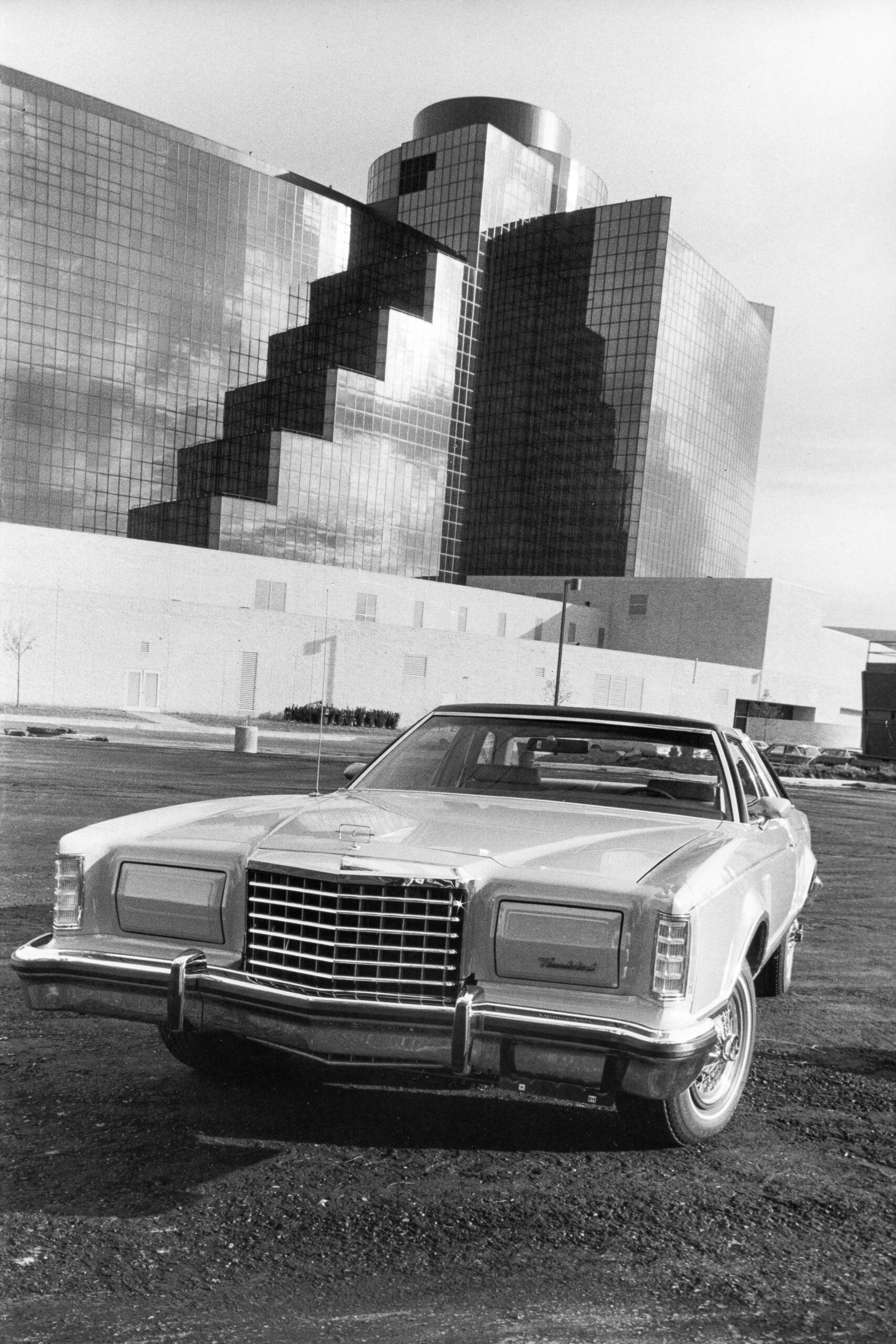


Ford lopped $2,727 off the Thunderbird’s sticker price for 1977 and shed 630 pounds in the process. That combination, announced with a marketing blitz that began in September 1976, was not subtle. It was a concession.
The previous Thunderbird had drifted so far upmarket, sharing its bones with Lincoln’s Mark IV, that its base price floated near $8,000. Buyers who aspired to Ford’s flagship but flinched at the order form went shopping elsewhere. They bought Chevy Monte Carlos. Ford’s mid-range Elite coupe was supposed to catch that overflow, but it got steamrolled.
So Ford did something radical. It pulled its most prestigious nameplate down from the penthouse and dropped it into the middleweight class, rebuilding it on the Torino platform, now rebranded LTD II. The wheelbase shrank 6.4 inches. Overall length lost 10.3 inches. The base price landed at $5,063.
The result, as Car and Driver found when they tested one in late 1976, was a fundamentally different car.
Gone was the padded, insulated barge that felt, in the magazine’s words, “slow, lethargic, cushioned to the point of insensitivity.” In its place sat a coupe that actually responded to driver inputs. Ford fitted what it called a “stabul” suspension with front and rear anti-roll bars as standard. The optional handling package added wider 6.5-inch wheels, stiffer rear springs, and recalibrated shocks.
Body roll was tight. The nose didn’t dive and recoil through corners. It set and tracked.
Quarter-mile numbers came in at 17.9 seconds at 75.4 mph with the 400-cubic-inch two-barrel V-8, an engine putting out 173 horsepower and 326 pound-feet of torque. Nobody was going to confuse it with a muscle car, but the air cleaner howled enough to remind you there was a big V-8 up front. Braking from 70 mph required 222 feet, and the car pulled 0.74 g on the skidpad, respectable for a 4,343-pound coupe wearing bias-ply Goodyears.
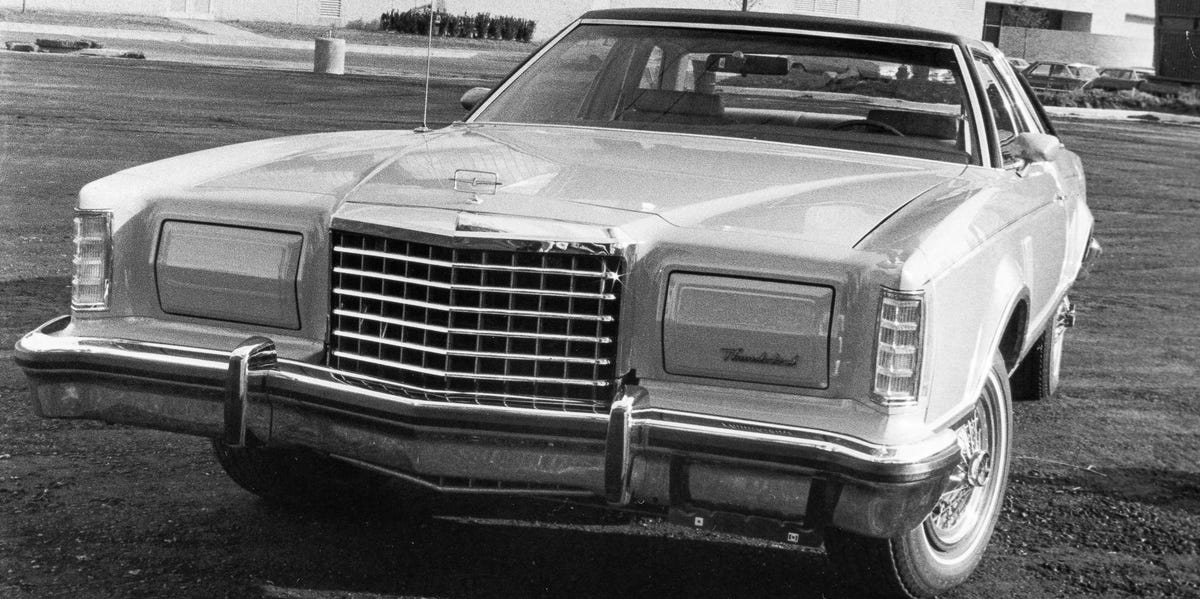
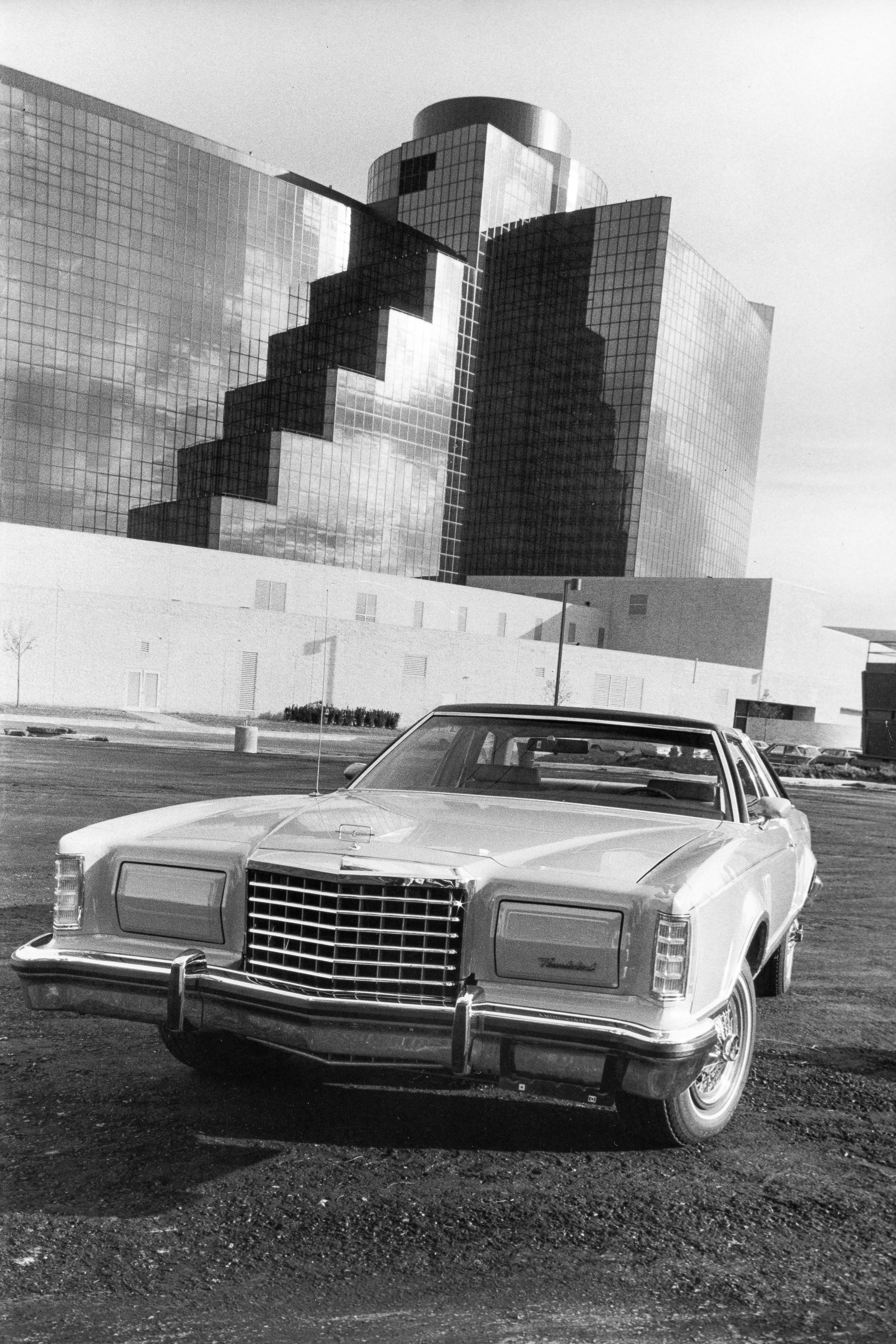
The styling broke from two decades of Thunderbird tradition. Since 1956, the nameplate had worn increasingly massive rear pillars, formal and fashionable but terrible for visibility. The 1977 car threw all of that away.
Thin roof pillars, a broad basket-handle B-pillar reminiscent of the 1955-56 Crown Victoria, and genuinely good sightlines in every direction. It looked like a show car. It drove like a car someone actually wanted to steer.
Inside, Ford traded the thick padding for clean, straightforward surfaces that gave passengers room to breathe. Six adults could fit, at least by the generous measurement standards of the era. Round gauges replaced the square instruments used in Ford’s sedans, though the quartz day-date clock reportedly sounded like an electric pencil sharpener grinding through No. 4 Eberhard Fabers.
The engine choices were absurdly complicated. A 302 two-barrel was standard. You could step up to a 351 two-barrel, a 400 two-barrel, or a 400 four-barrel, depending on whether you lived in California, a federally designated high-altitude zone, or the remaining 49 states at sea level. Everyone got an automatic. Nobody got a manual.
What Ford pulled off was a rare trick in Detroit. The company admitted its prestige car had priced itself into irrelevance, gutted the formula, and rebuilt it as something faster, lighter, cheaper, and more honest to drive. The old Thunderbird was a car for being chauffeured. The new one was a car for driving yourself.
The fully loaded test car, stacked with air conditioning, AM/FM stereo with tape, power everything, and the handling suspension, still came in under $8,000. That put a genuine Thunderbird back within reach of the Monte Carlo buyer Ford had been losing for years. Whether those buyers would actually cross the showroom floor was a question the sales charts hadn’t answered yet.
Share this Story