
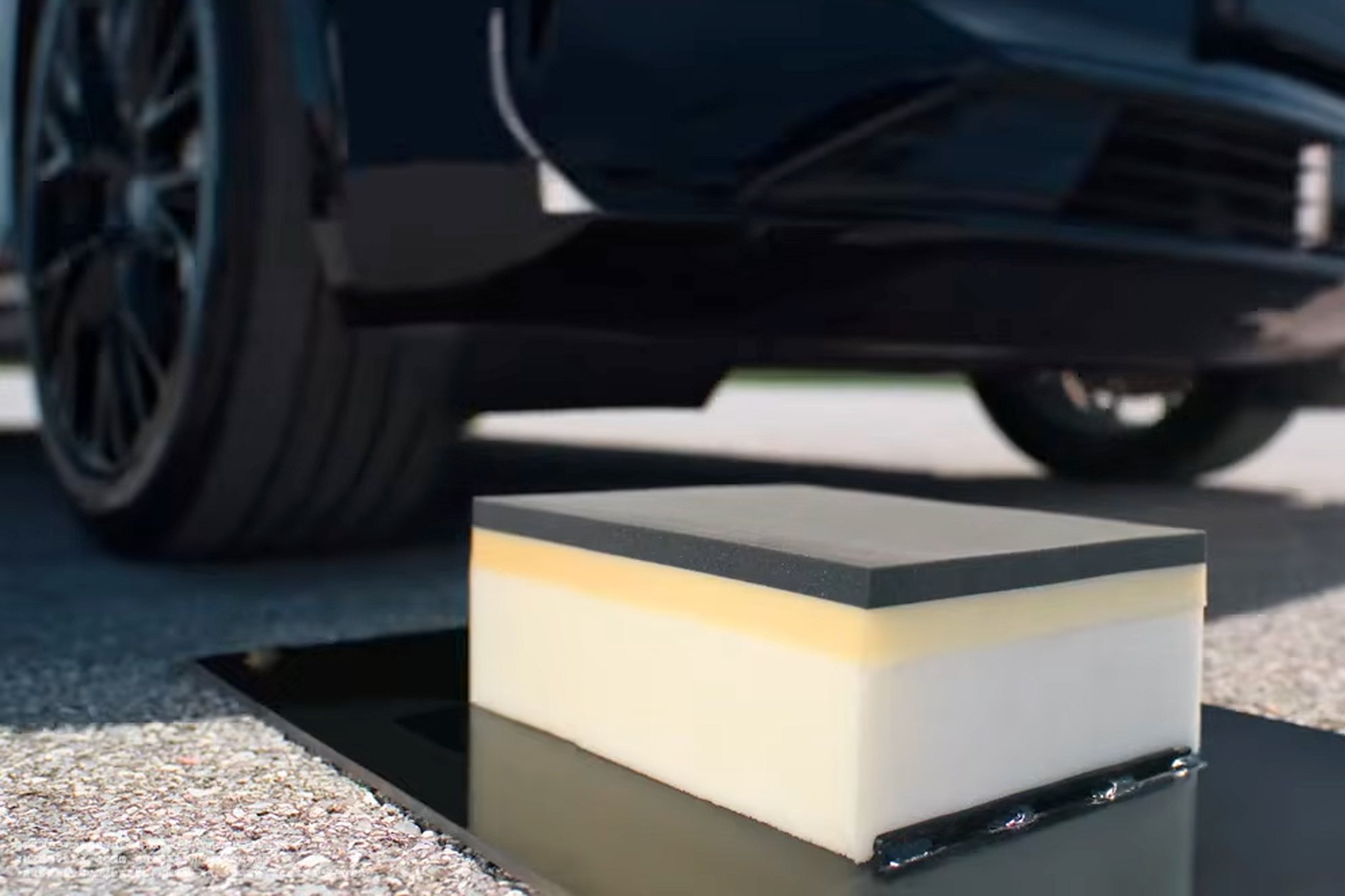


A block of seat foam, a parade of nine electric vehicles, and a 20-ton semi-truck. That was the setup for Zeekr’s latest publicity stunt, and it worked exactly as the company planned.
The Chinese automaker, which shares corporate parentage with Volvo through Geely, designed a new three-layer foam for the seats of its 009 minivan. Then it decided the best way to prove the material’s resilience was to flatten it under roughly 40 tons of rolling stock and see what happened next.
The foam is a sandwich of three distinct materials. A highly resilient layer sits on top, a denser quick-response material lives in the middle, and a thick cushion of soft foam forms the base. Zeekr claims the combination dampens vibration 1.5 times better than conventional seat foam, according to details reported by CarNewsChina.
To back up that claim, the company placed a block of the stuff on the ground and ran over it with nine of its own battery-electric vehicles. Those aren’t lightweight machines. EV curb weights routinely push well past two tons thanks to their battery packs. After the nine-car procession, a 20-ton tractor-trailer rolled over the same block for the finale.
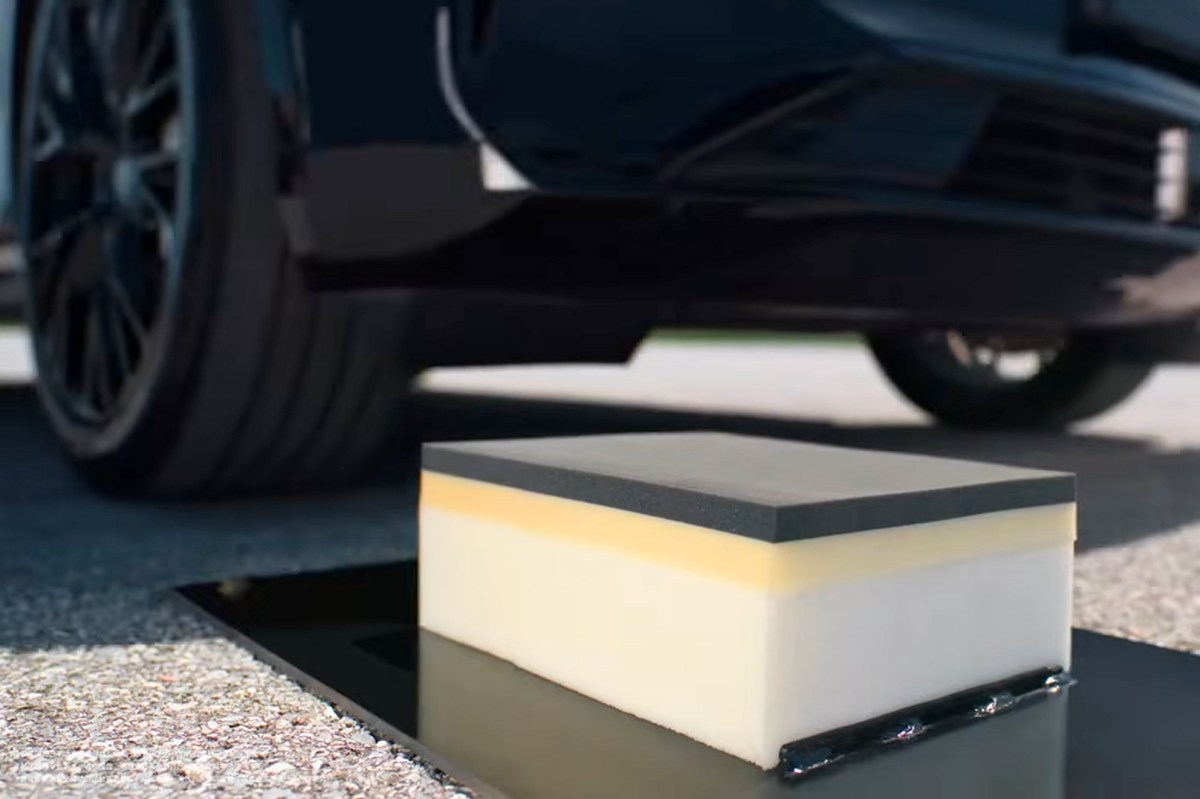
The foam came out dirty, streaked with tire residue and road grit. But it bounced back to its original shape. A glass of water placed on top of the crushed block showed it still absorbed vibration better than a piece of off-the-shelf foam tested alongside it. Zeekr would not have released the video if the result had gone any other way, but the visual is hard to argue with.
Does crushing foam with a semi prove that the 009’s seats will hold up after years of daily use? Not remotely. The forces involved in a truck rolling over a foam block once are completely different from the slow, repetitive compression of a human body settling into the same spot thousands of times over a decade. Material fatigue and long-term deformation are different problems entirely, and this stunt addresses neither.
But the exercise reveals something about the competitive pressure inside China’s EV market. Zeekr is not a scrappy startup anymore. It sells vehicles in Europe and has ambitions well beyond its home turf. When your competitors are BYD, NIO, and Li Auto, all fighting over the same premium buyers, the margins of differentiation shrink to things like seat foam chemistry and ride comfort tuning.
That obsession with granular detail has become a pattern among Chinese automakers. Battery innovation gets the headlines, but companies like Zeekr are pouring engineering hours into the tactile, analog experience of sitting in the car. Seats, NVH, interior materials. The stuff that European and Japanese brands built their reputations on over decades.
Volvo might want to take notes. Its corporate sibling is out here running publicity stunts over seat cushions while the Swedish brand navigates an awkward transition between its legacy identity and an electrified future still finding its footing.
Whether the 009’s seats actually feel better than the competition remains a subjective question no truck stunt can answer. But Zeekr has clearly decided that the fight for premium credibility happens one foam layer at a time.
Share this Story