
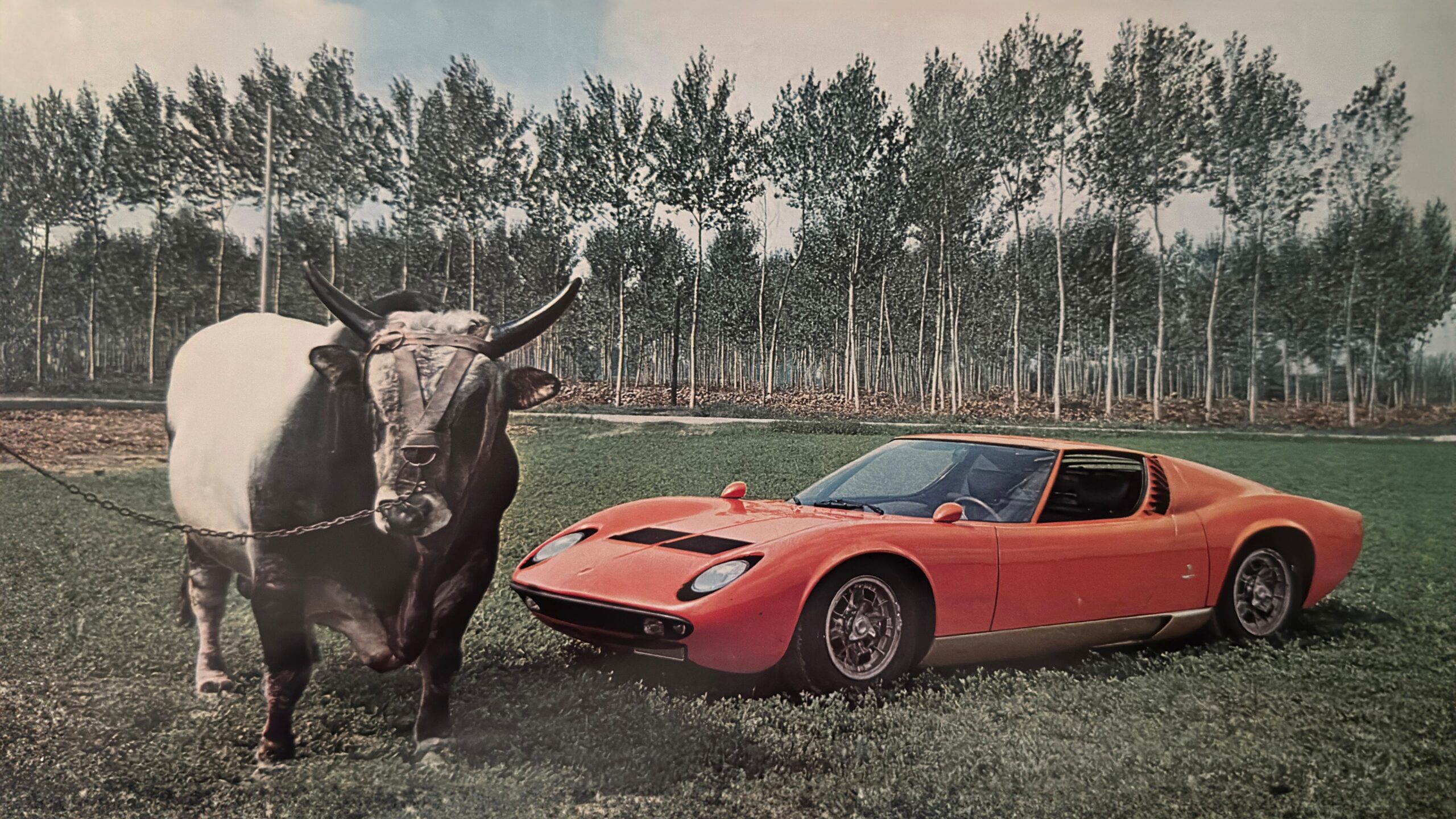


Ferruccio Lamborghini liked to say he was “tamugno come un toro,” strong as a bull. That phrase, combined with his Taurus zodiac sign, gave birth to the most enduring naming convention in automotive history. But the deeper story behind Lamborghini’s bull obsession is darker, funnier, and more petty than most people realize.
Car and Driver’s Greg Fink went digging into the two reference books that Lamborghini’s naming committee actually consults when a new model needs a badge. One is Barnaby Conrad’s Encyclopedia of Bullfighting, published in 1961. The other is José María de Cossío’s multivolume Spanish-language epic, Los Toros: Tratado Técnico e Histórico. Between them, they catalog more than a thousand famous fighting bulls by name and deed.
The pattern Fink found is delicious. The bulls Lamborghini tends to pick didn’t just gore matadors. They killed horses, lots of horses.
It started with the Miura, named not after a single bull but after the Spanish ranch that bred entire bloodlines of arena fighters. The Islero that followed was the first Lamborghini named for a specific famous toro, a bull remembered for killing the celebrated matador Manolete in 1947. From there, the tradition stuck. Diablo, Murciélago, Reventón, Aventador, all traced back to real bulls with real body counts in the ring.
The popular origin story says Ferruccio started building supercars because Enzo Ferrari dismissed his complaint about a clutch in his Ferrari 250 GT. Whether that confrontation happened exactly as legend tells it is debatable. What is not debatable is that Ferruccio chose a symbol that, by its very nature in the bullfighting tradition, was a destroyer of horses. Ferrari’s prancing horse never stood a chance against this kind of branding.
Fink suggests that Lamborghini’s naming team should look at 19th-century bulls from Cossío’s volumes, specifically ones with body counts of at least nine horses each. The suggestion is only half a joke. The company has been mining these books for six decades, and there are still hundreds of candidates left.
The naming ritual reveals something about how Lamborghini sees itself. This is not a company that picks names from a marketing brainstorm or a consumer focus group. It pulls from leather-bound encyclopedias of blood sport, choosing animals celebrated for their refusal to submit.
Every badge on every car carries a small act of defiance, a bull that would not be tamed, that took horses down with it. Cossío’s Los Toros runs to multiple volumes and covers the full sweep of bullfighting history. It is, by any measure, an obscure resource for an automobile manufacturer.
But obscurity is part of the point. Lamborghini has never been interested in being understood by everyone. It builds cars for people who already know, or who are willing to learn.
Ferruccio died in 1993. He had sold his stake in the company two decades earlier. But the naming tradition he set in motion continues to carry his particular blend of pride and antagonism forward, one dead horse at a time.
The books still sit in Sant’Agata Bolognese. There are plenty of bulls left.





Share this Story