
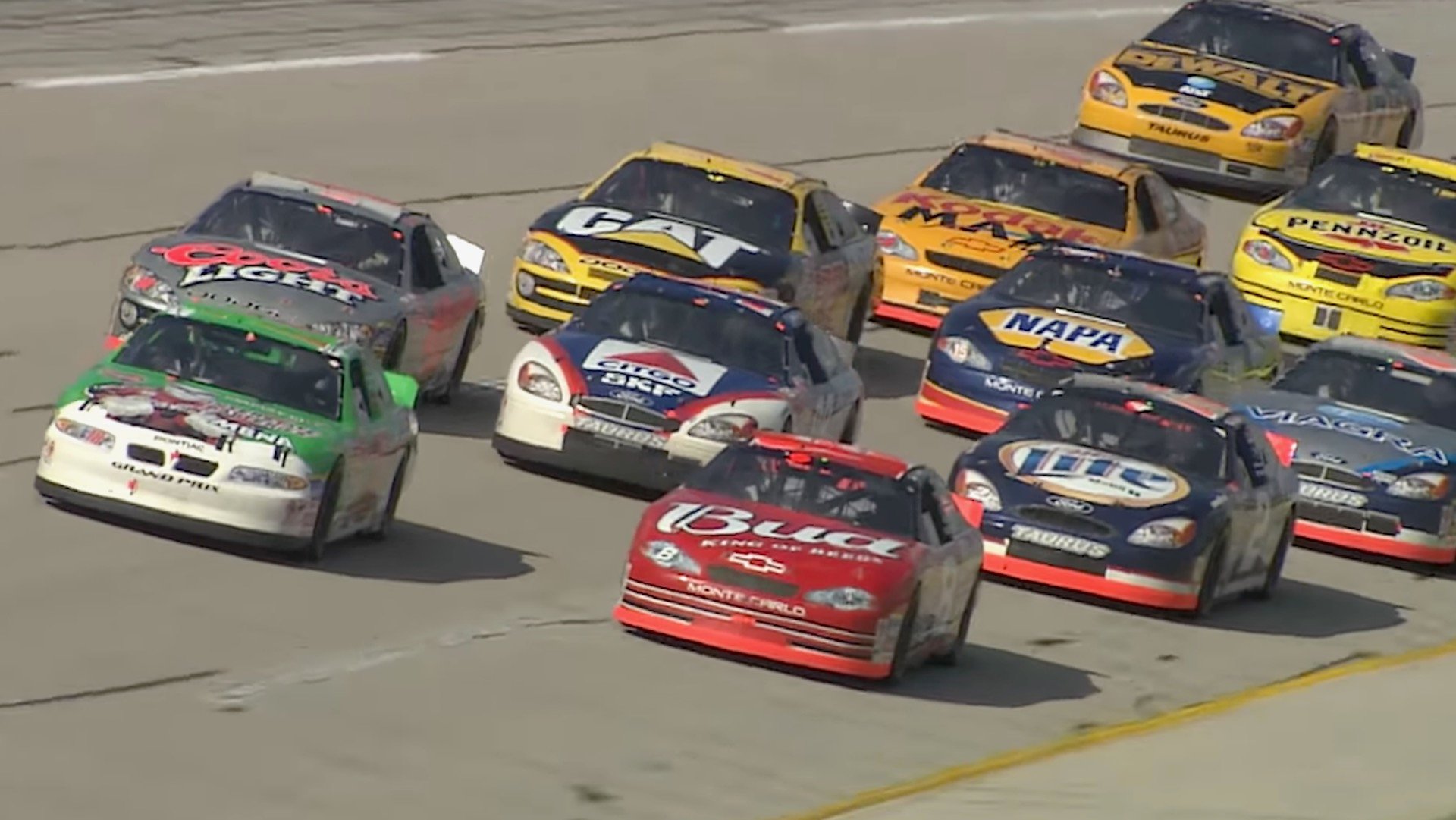


Twenty-five years is a long time in any sport. In NASCAR, it’s practically a different universe. The NASCAR Classics YouTube channel just dropped widescreen HD footage from the 2001 EA Sports 500 at Talladega, and it feels less like archival material and more like opening a window into a parallel world where the sport still made complete sense.
The channel has been uploading races and clips spanning nearly eight decades of stock car history. But the recent “Sights & Sounds” series takes a different approach, pulling trackside camera footage with zero commentary or narration. No booth chatter, no manufactured drama. Just cars, engines, and crowd noise in quality that exceeds what most fans actually saw on their cathode-ray tubes back in 2001.
That particular Talladega race carried weight far beyond what the points standings showed. The 2001 season opened with Dale Earnhardt Sr. dying on the last turn of the Daytona 500, moments after Michael Waltrip and Dale Earnhardt Jr. crossed the line 1-2 for his own team. Junior became the emotional center of gravity for the entire year, and you can hear the crowd in this footage respond accordingly when he takes the checkered flag.
It was one of several wins that season that felt like something larger than motorsport. Junior had already won the Pepsi 400, the first race back at Daytona after his father’s death, and the first race after September 11th at Dover. Every victory carried a narrative that no scriptwriter could have manufactured.
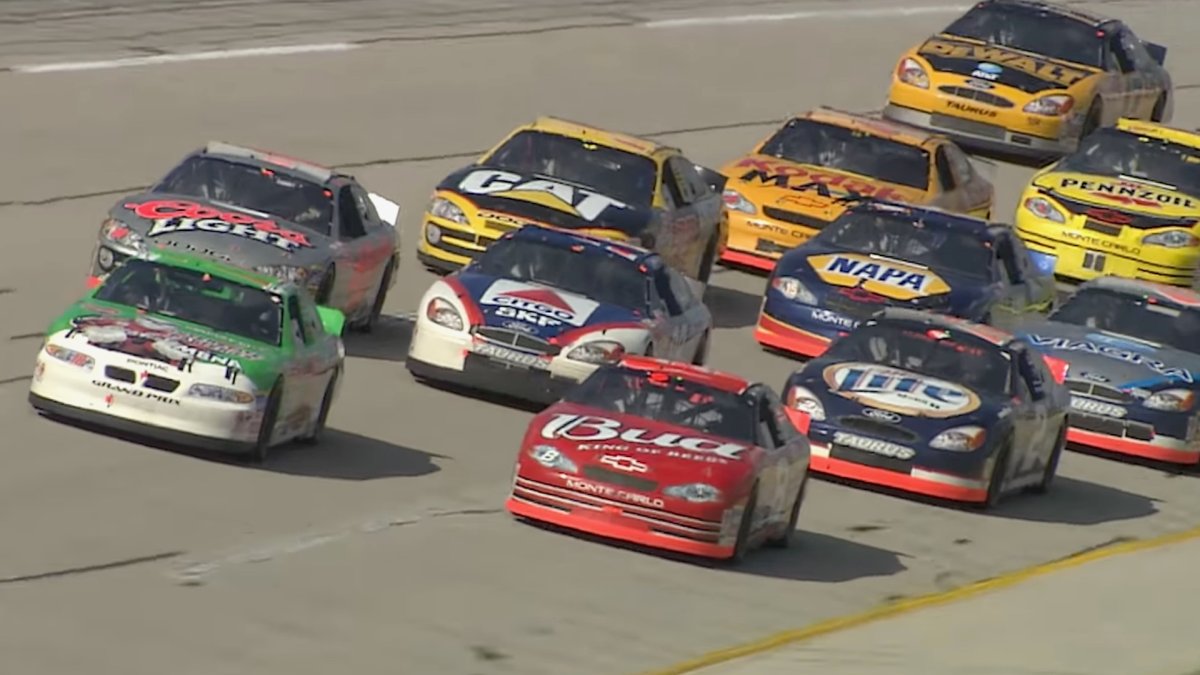
Jeff Gordon won the championship that year, which tends to get lost in the emotional fog surrounding Earnhardt’s death. The field was stacked. Tony Stewart was in it.
Mark Martin, then 42 years old, was running around Talladega in a Viagra-liveried Ford, which tells you everything about the era’s sponsorship landscape. Companies that people had actually heard of, selling products that didn’t require a PhD to understand, plastered across cars that still looked like they belonged on a showroom floor if you squinted hard enough.
The cars sounded like fury. The racing was tight, pack-style Talladega chaos that made restrictor-plate events either terrifying or thrilling depending on which seat you occupied. The liveries were bold and instantly recognizable from 200 yards away, a detail that seems quaint now when half the current grid runs cryptocurrency schemes and energy drink subsidiaries most fans couldn’t name at gunpoint.
NASCAR was sitting near the peak of its cultural relevance in 2001. The bootlegger mythology had long since given way to corporate polish, but the sport hadn’t yet tipped into the overcorrection that would slowly bleed its audience through the following two decades. The racing product worked. The personalities were authentic.
Watching this footage without commentary strips away the broadcast veneer and leaves you with something raw. You hear the draft pull cars together. You hear 200,000 people react in real time.
You hear engines that sound like they’re trying to break free from the chassis holding them. The NASCAR Classics channel keeps uploading, and each new clip quietly asks a question the sport’s current leadership probably doesn’t love hearing.

Share this Story