
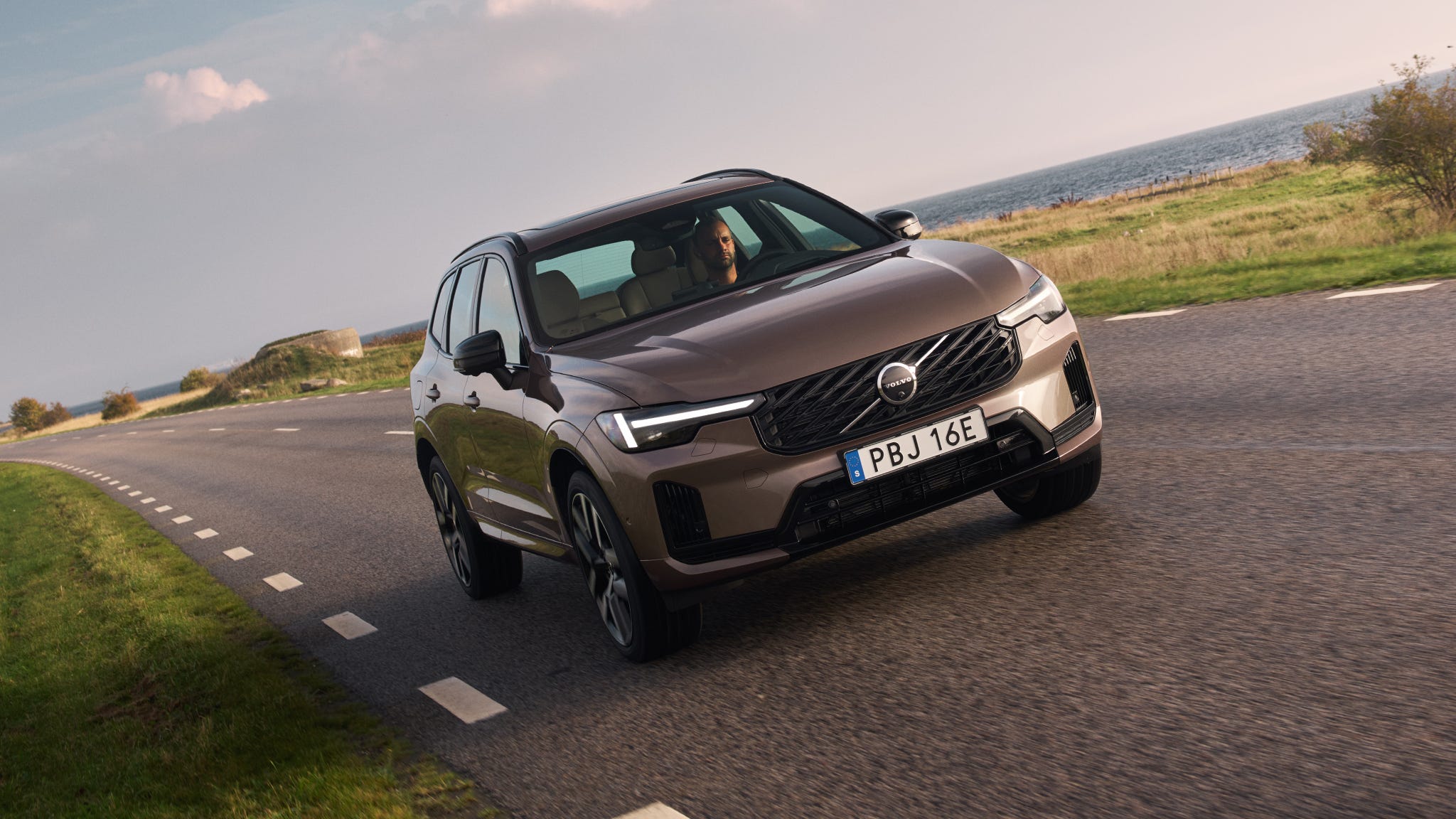


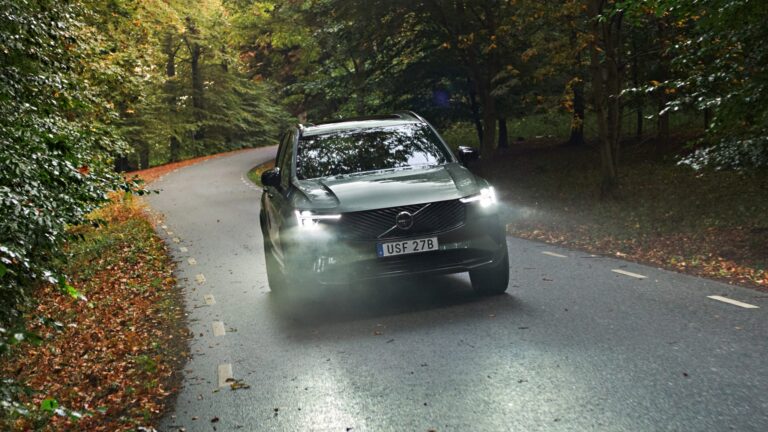
Seventy-eight miles. That’s how far the 2028 Volvo XC60 T8 will go on electricity alone, more than double the 36 miles of the model it replaces.
It’s also the clearest sign yet that Volvo’s all-electric deadline has slipped out the back door.
The company once promised a fully electric lineup by 2030. That plan has been walked back, and the consequences land on the XC60, Volvo’s bestseller, which now has to keep earning its keep on an architecture that’s roughly a decade old.
The SPA platform underneath has carried Volvo’s larger cars for years. The 2028 refresh brings exterior tweaks, interior trim updates, Google Gemini built into the infotainment, more power, and a much bigger battery.
The T8 plug-in hybrid got the most money and the most attention. MotorTrend drove it from Denmark into Sweden, and the logic behind the spending is easy to see.
Volvo needs the T8 to act as training wheels. The brand still wants customers headed toward an electric future, just not on the original schedule.
Plug-in hybrids carry a familiar knock: too many owners never plug them in. A PHEV run on gas alone hauls extra weight that hurts efficiency, wears tires and brakes faster, and can cost more to run than a conventional hybrid.
Volvo says its buyers are different. According to the company’s own research, 69 percent of current T8 owners plug in at least daily.
The new hardware is meant to push that number higher. Usable battery capacity jumps from 14.9 kWh to 37.9 kWh.
That bigger pack is aimed at the roughly 35 percent of owners whose daily driving already runs past the current car’s electric range. For them, the old T8 was a gas car with a long warmup.
At 78 miles, the XC60 T8 now leads its class. The next closest rival, the Mercedes-Benz GLC350e, manages 54.
Range is the sensible-shoes part of the pitch. Silent commuting, optional one-pedal driving, and skipping the gas station on school runs are real benefits, but nobody buys a car for its errand-running manners alone.
The outgoing XC60 T8 never delivered the shove that makes EVs addictive. In Pure electric mode, it offered 143 hp and 228 lb-ft of torque to move roughly 4,700 pounds.
That’s thin for a vehicle that heavy, and it undercuts the idea that a plug-in can sell someone on electric driving. If the training wheels feel sluggish, the rider has little reason to take them off.
Volvo says the 2028 model brings more power. How much of it shows up in electric-only driving will decide whether this lesson plan actually works.
The same upgrades are headed to the XC90 T8. That tells you Volvo sees plug-ins as a bridge across its whole large-SUV range, not a one-off patch.
There’s an irony here. The company that set one of the industry’s boldest electric deadlines is now pouring its biggest investment into a gas-assisted SUV on an aging platform.
Volvo calls it a new lease on life for the XC60. The real test is how many of those leases end with the owner signing for a fully electric Volvo next time.
Share this Story