
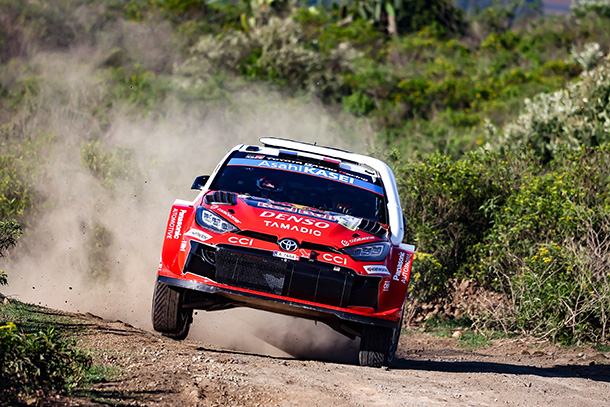


Five races into the 2026 World Rally Championship season, Toyota Gazoo Racing has won every single one. The 1-2-3-4 lockout at Rally Islas Canarias last week pushed the manufacturers’ championship lead to a staggering 98 points. Now comes Rally de Portugal, May 7-10, and the question nobody at rival camps wants to hear: Can anybody stop this?
The short answer, based on recent history, is probably not here. Toyota has won the last six editions of Rally de Portugal, stretching back to 2019. Sébastien Ogier alone owns seven career victories on these roads, more than any driver in WRC history on this event.
He arrives fresh off winning in the Canaries and will benefit from a favorable start position further back in the road order, where the gravel is pre-swept and faster. That road-cleaning dynamic is the rally’s built-in plot device.
Championship leader Elfyn Evans, ahead of teammate Takamoto Katsuta by just two points, will sweep the loose, sandy surface first on Thursday and Friday. It’s a penalty for success. Evans knows it, and he’s done it before, but knowing it doesn’t make the time loss disappear.
Katsuta, running second on the road, won’t have it much easier. He acknowledged as much, noting that the route now includes proper gravel stages on Thursday, not just a ceremonial start and a super special, making the disadvantage bite earlier. Sami Pajari, third in the standings and riding four consecutive podiums, faces front-running gravel duties for the first time in his Rally1 career.
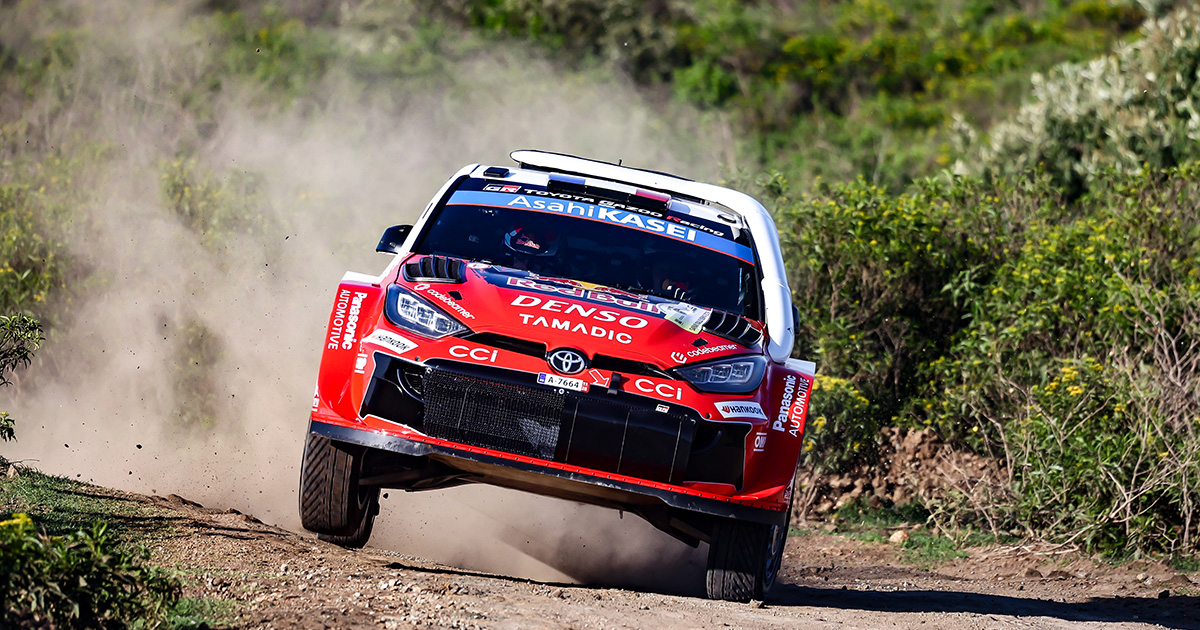
Oliver Solberg, a 2025 WRC2 winner in Portugal, will tackle rough European gravel in the top-tier car for the first time. Four Toyota drivers occupying the top four championship positions. Four Toyota drivers sweeping the road while Ogier lurks behind them.
The competitive tension in this championship isn’t Toyota versus Hyundai or Toyota versus M-Sport. It’s Toyota versus Toyota.
The rally itself remains one of the WRC’s crown jewels. Based around Porto in northern Portugal, the stages start soft and sandy before degrading into rocky, rutted moonscapes on second passes. Fafe, the legendary hillclimb lined with tens of thousands of fans, closes the event on Sunday as the Power Stage.
Vieira do Minho moves to the final day to join it, reshuffling the usual rhythm. The entry list is deep. Forty-five Rally2 cars line up, eleven of them GR Yaris Rally2 machines.
Roope Korhonen leads that contingent, joined by proven hands like Gus Greensmith, Teemu Suninen, and Alejandro Cachón. Australian champion Harry Bates makes his first European WRC appearance. TGR WRC Challenge Program driver Yuki Yamamoto returns to gravel and admitted the Portuguese surface, slippery with a narrow optimal line, doesn’t play to his strengths.
Deputy Team Principal Juha Kankkunen, the four-time world champion now steering operations, framed the weekend with characteristic Finnish understatement: the roads are enjoyable but rough, and Ogier running further back “has been more successful on this rally than anybody else.” Read between those lines.
Weather could be the only wildcard. Evans reported changeable conditions during pre-event testing. Rain would level the road-order playing field, compressing gaps and introducing the chaos Toyota’s rivals desperately need.
Sunshine favors Ogier and the later starters. Either way, the GR Yaris Rally1 has been untouchable in 2026.
Portugal’s passionate crowds will pack the stages. The competition, though, looks like it has one possible outcome and four possible winners, all wearing the same team colors. That’s dominance, and it’s a problem the WRC would rather not talk about.

Share this Story