
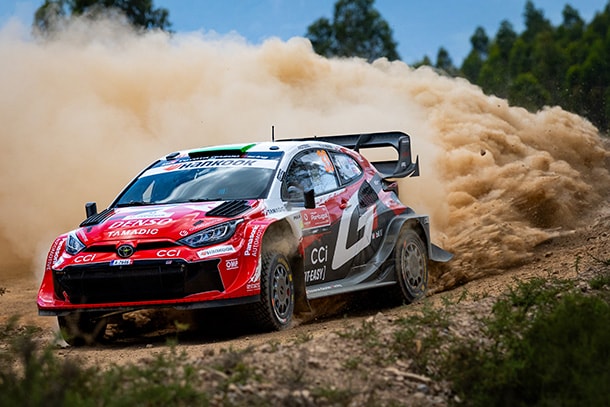


Five Toyota drivers hold the top five spots in the 2026 WRC standings. All five will sweep the roads clean in Greece this week, running first on loose gravel where the advantage of a clear line evaporates into dust. The Acropolis Rally, round eight, is where dominance gets stress-tested.
Elfyn Evans arrives with a 20-point championship lead after a perfect 1-2-3-4 team sweep at Rally Japan three weeks ago. Takamoto Katsuta sits second. Oliver Solberg and Sami Pajari are third and fourth. Sébastien Ogier, running a partial schedule, is fifth — 61 points back but dangerous on any surface.
Toyota’s manufacturers’ lead stands at 127 points. On paper, the title fight is over. On Greek gravel, paper means nothing.
The Acropolis has always been the great equalizer. Rocky mountain roads shred tires and suspensions. Temperatures climb into punishing territory. Deputy team principal Juha Kankkunen, who knows a thing or two about surviving Greek stages from his driving days, didn’t sugarcoat it: “It’s still a rally where anything can happen, and where it can pay to be smart.”
Smart will matter because the competitive order puts all five Toyota crews at the sharp end of the road order, sweeping the loose surface for everyone behind them. Evans acknowledged the difficulty directly. Greece can be one of the more difficult rallies to open the road, particularly with most of the Friday stages being run only once,” he said. Friday’s leg is the longest at 129.22 competitive kilometers across six stages, with a remote service in Livadia and no second pass to learn from mistakes.
The rally returns to the coastal resort of Loutraki, situated near the Corinth Canal about 80 kilometers west of Athens. The town last hosted WRC service in 2013, which means several stages are either brand-new or haven’t been driven competitively in over a decade. That neutralizes experience advantages.
Even Ogier, who won the Acropolis back in 2011, admitted the route resets the playing field. “There will be stages that are new or that nobody including myself has driven for a very long time,” he said.
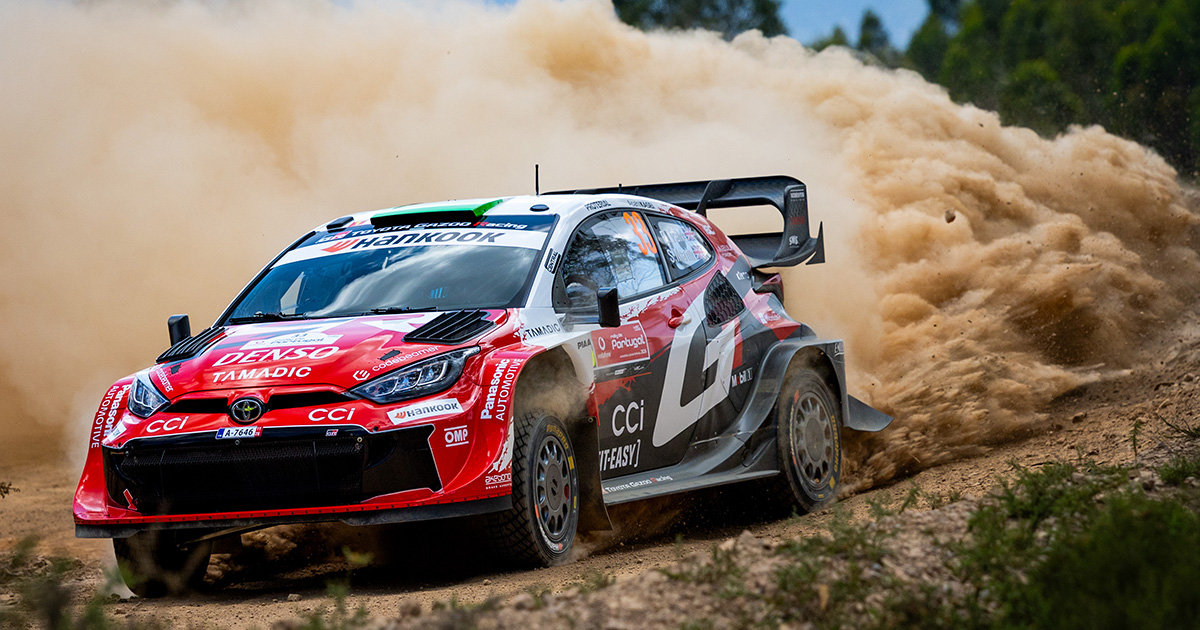
A new super special in the Ellinikon district of Athens opens proceedings Thursday evening. Then cars travel by sea through the Gulf of Corinth to Itea for Friday’s grueling loop through central Greece. Saturday shifts to the Peloponnesian peninsula with four stages — two never used before, two resurrected from 2013. Sunday wraps up with two passes of two revised stages above Loutraki.
The real tension heading into Greece isn’t whether Toyota can win. It’s which Toyota wins, and whether the team’s internal battle costs them something on roads that punish aggression. Portugal, the last gravel round, showed the competition closing in.
Solberg finished second there. Pajari had strong pace but no result to show for it. Both are hungry, both are young, and both know that seven consecutive gravel rallies will define the second half of their seasons.
Pajari was blunt about his prospects. “If we can have a clean run this time, I think we can do well.” Survival language, not victory language. That’s the Acropolis talking.
In WRC2, eleven GR Yaris Rally2 cars line up, including Yuki Yamamoto fresh off his maiden podium in Japan. Roope Korhonen, Gus Greensmith, and Alejandro Cachón bring category experience, while Alejandro Galanti and Luis Arceluz make their first appearances of the season.
Toyota’s stranglehold on the 2026 championship is real. But the Acropolis has never cared about points tables or press releases. It cares about rocks, heat, and who’s still running on Sunday afternoon. Seven gravel rounds start here. The season truly begins now.


Share this Story