
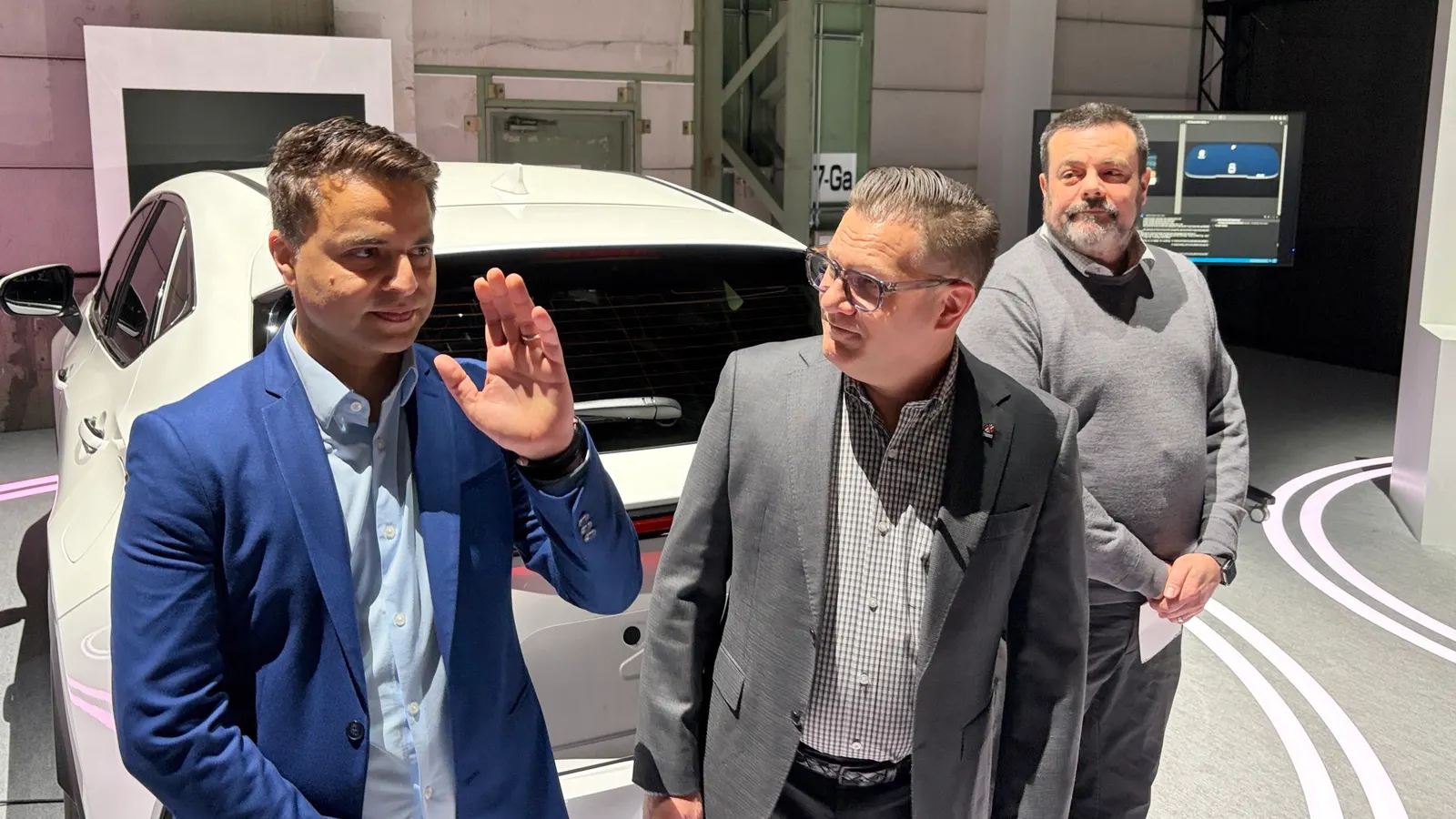


Toyota just opened the doors to Woven City, its purpose-built mobility laboratory at the base of Mount Fuji, and the centerpiece wasn’t a new car. It was a foundational AI vision-language model called the AI Vision Engine. Built entirely in-house by Woven by Toyota, the automaker’s software subsidiary, it’s designed to become the nervous system for every vehicle the company builds.
The timing is deliberate. With more than 100 million Toyotas on roads worldwide across dozens of markets, hardware configurations and regulatory environments, the company faces a software problem of staggering scale. Tesla has been training its autonomous systems on fleet data for years. Chinese automakers are racing ahead with integrated AI stacks.
Toyota, the world’s largest automaker by volume, is only now publicly articulating its answer.
That answer hinges on what Dushyant Wadivkar, Toyota’s global head of AD/ADAS at Woven, calls an “active learning loop.” The concept: extract driving data from millions of vehicles, feed it into machine learning models, validate the results, and push improvements back to customers over the air. Rinse, repeat, forever.
“For us, autonomous driving is actually a learning problem,” Wadivkar said. “It’s less about the algorithm that is specifically programmed for specific scenarios, rather a system that is able to learn.”
The AI Vision Engine processes camera video to understand the behavior of people, objects and vehicles in real time. Toyota says it ranks among the world’s leading vision-language models on the MVBench Leaderboard. It does not use facial recognition.
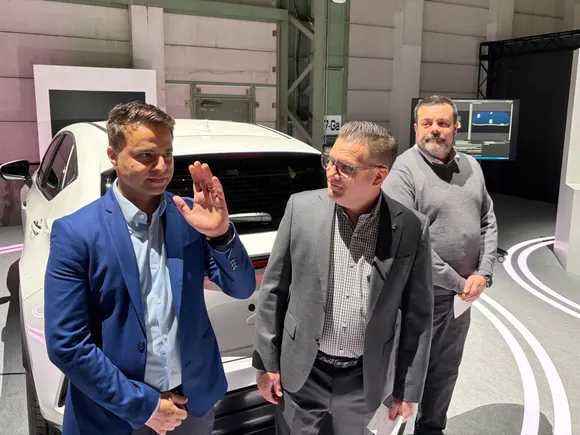
What it does, according to Woven executives, is summarize what’s happening, report what has happened, and anticipate what will happen next. Toyota intends to feed those capabilities directly into its next-generation Anzen safety systems. The company also sees commercial applications in retail, airports and offices — an ambitious pivot for an automaker that spent decades defining itself through mechanical excellence, not software platforms.
The software backbone is called Arene, and it already made its production debut in the 2026 RAV4’s infotainment and safety systems. The Lexus ES gets it later this year. Toyota’s next-generation EVs will be built on it entirely.
CTO John Absmeier said Arene will eventually run on everything from “very, very low-end cars to very, very high-end cars, and in every region of the world.”
Easier said than done. Jean-François Campeau, head of Arene and vice president of Woven, acknowledged the sheer complexity. Toyota doesn’t sell one car with one sensor suite in one market.
It sells dozens of models in dozens of configurations across dozens of regulatory regimes. “This creates a tremendous challenge for us to try to provide software to those millions of units that we have to improve over time,” he said.
To cope, Arene operates in what Absmeier calls a “post-domain era” — software tools that are hardware-agnostic, capable of being tested and developed independently of whatever sensors or processors sit underneath. Wadivkar emphasized the machine-learning stack is generic. You don’t redesign it because one vehicle has five sensors and another has six, or because the lidar supplier changed.
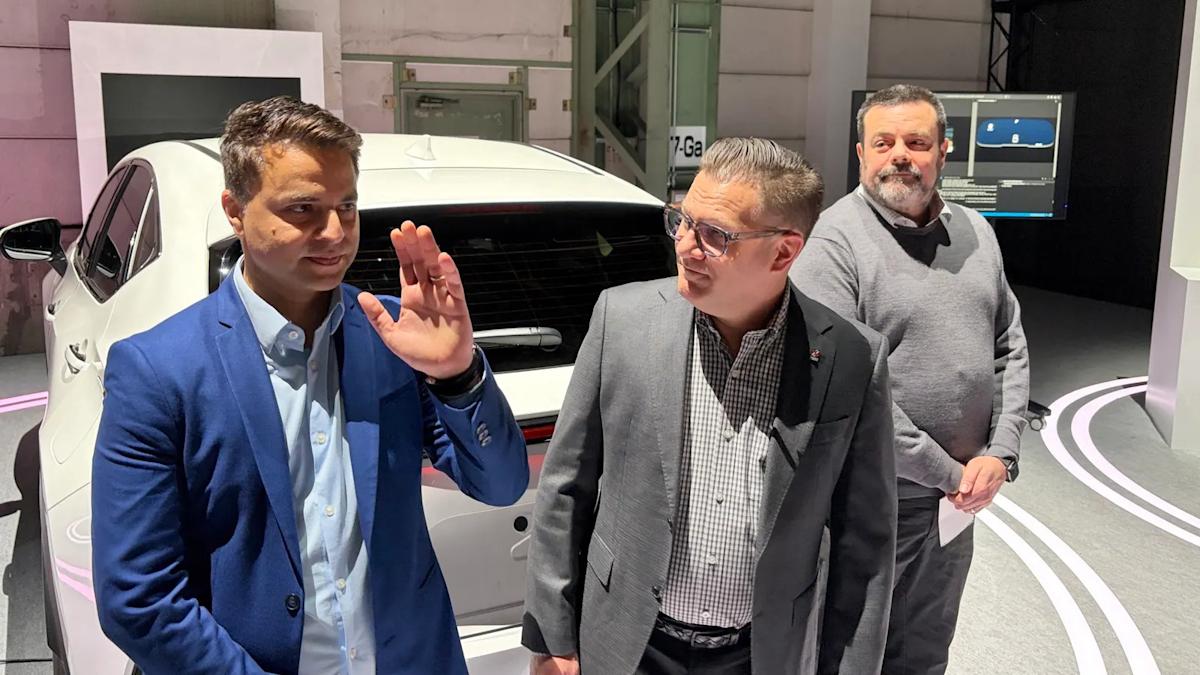
Toyota is also deploying its professional master drivers — the elite testers who tune vehicles for production — to help define what “good driving” actually means for an AI system. Wadivkar conceded the question is deceptively hard.
Meanwhile, at Woven City itself, volunteer residents called “weavers” live and work alongside Toyota engineers, serving as real-world test subjects. The active learning loop will eventually be fully automated, but for now a human developer always supervises.
The strategy is classic Toyota: methodical, incremental, controlled. Start with infotainment and ADAS — the hardest pieces, Absmeier said — then expand. No reckless promises of Level 5 autonomy next quarter. No flashy robotaxi launch dates.
Whether that patient approach is prudent discipline or a dangerous lack of urgency depends entirely on how fast the competition moves while Toyota is still building its loop.
Share this Story