
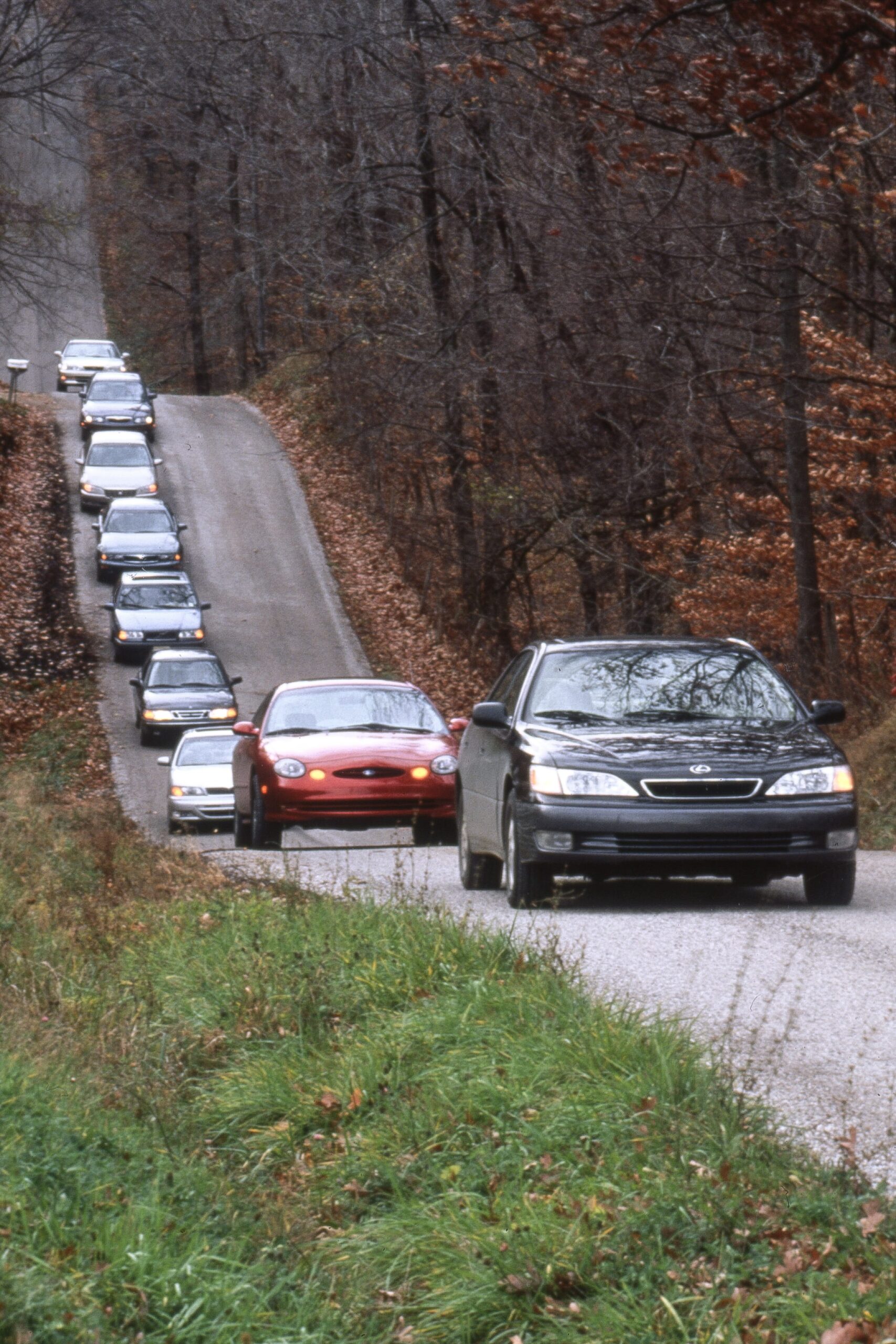


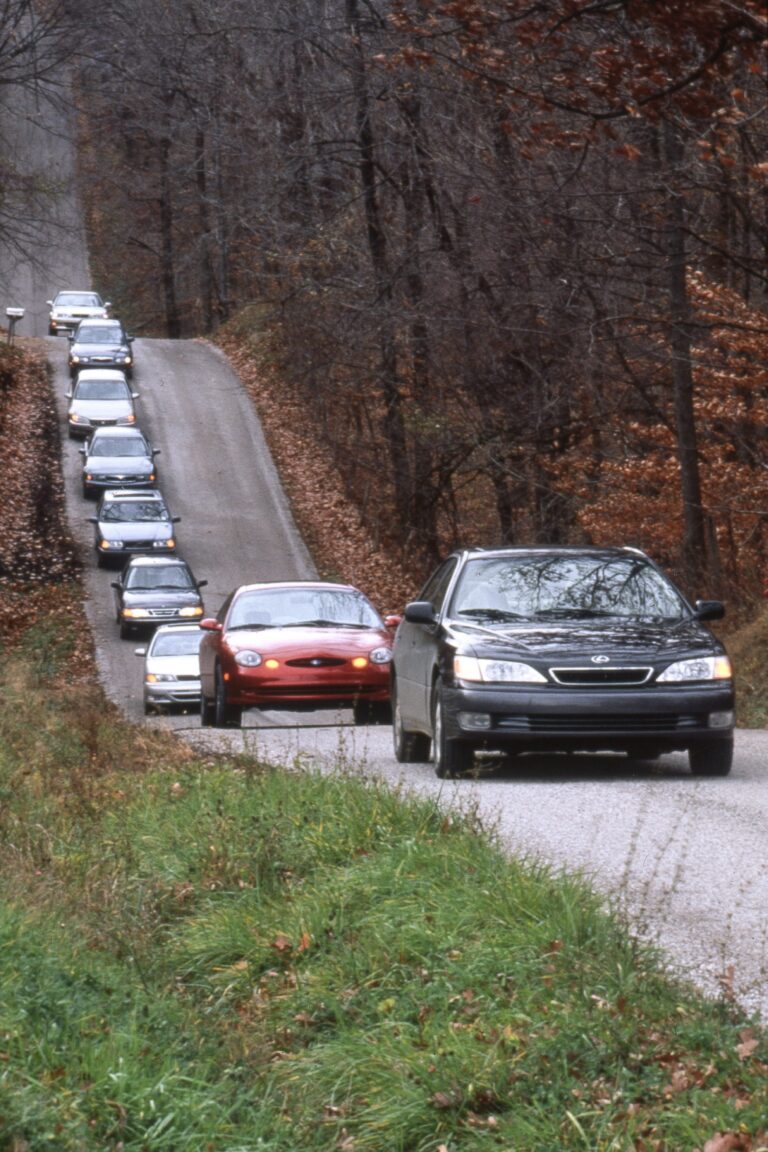
The cheapest car in the field cost $30,585, finished tied for sixth, and returned 18 mpg, the worst of nine. That was the Ford Taurus SHO. It opened one of Car and Driver’s sharper comparison tests, now resurfaced from the February 1997 issue.
The premise was corporate theater. A newly minted six-figure manager needs a sedan for a personalized parking space, one that won’t outshine the boss or trip the $34,000 luxury-tax threshold.
Seventeen sedans fit the price window. Car and Driver cut it to nine: Acura 3.2TL, Cadillac Catera, Ford Taurus SHO, Infiniti I30, Lexus ES300, Mazda Millenia, Mitsubishi Diamante, Saab 900SE, and Volvo 850GLT.
The BMW 3-series and Mercedes C-class didn’t make it. Equipped sensibly, they only dodged the tax as four-cylinders, and their cabins were too tight for four executives. The Audi A4 fell to the same argument.
What’s left tells you something about the era. Much of this “near luxury” class was built from promotions, not pedigrees.
The I30 was a Nissan Maxima with gathered leather, a Bose stereo, softer springs, and chrome. The Catera was an Opel wearing a Cadillac badge. The SHO had traded its manual gearbox and hard-nosed V-6 for a V-8, then got pitched by Ford as an “executive express.”
On paper, the field was nearly identical. Seven of the nine ran within 0.3 second of the group average to 60 mph and through the quarter-mile. Every one offered a four-speed automatic, and only Infiniti offered a stick.
The equipment lists were thinner than the prices suggested. Not one car had traction control, a CD player, remote keyless entry, and variable intermittent wipers all at once.
Three had heated seats. Two had dual-zone climate control.
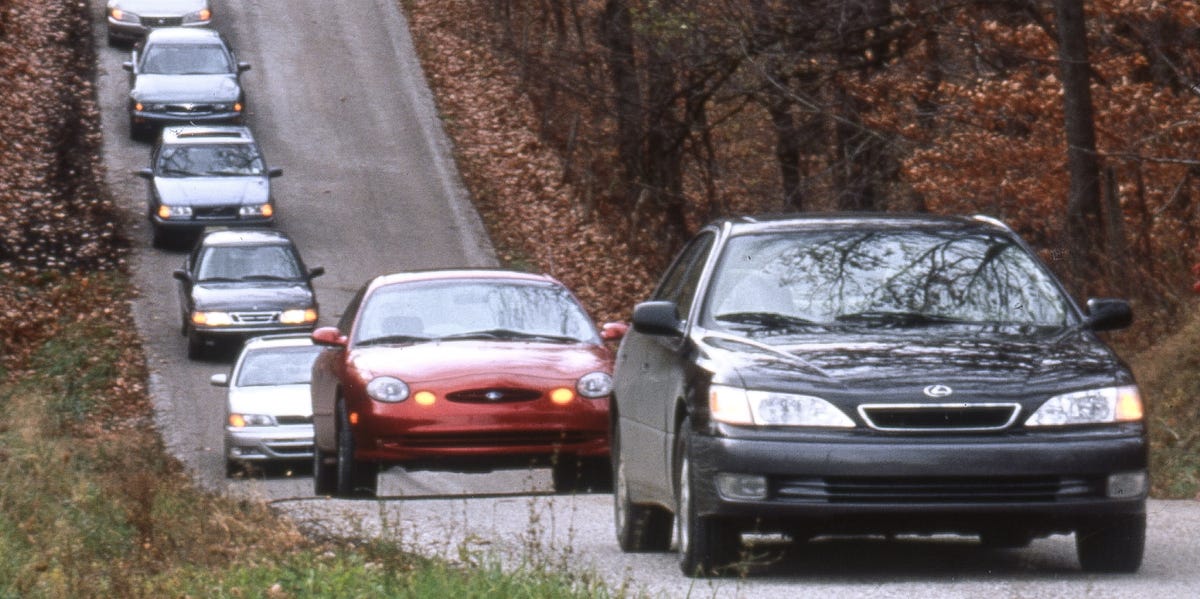
The Saab 900SE finished last despite owning the best numbers in two disciplines. It stopped from 70 mph in 168 feet and tied the Mazda for top skidpad grip at 0.81 g.
None of that mattered against numb steering, heavy understeer, a soft-bottomed V-6, the loudest cabin, and a plasticky interior. The editors suggested Saab’s formula made more sense on 900s priced in the twenties.
The Acura TL earned a nickname: the Waylon Smithers of the group, eager to please and short on spine. It offered a smooth freeway ride and a gated shifter that promised sport. Its dead pedal sat more than four inches out of reach, though, and its tires managed only 0.76 g.
The SHO got it worse. Rock-hard bushings, a monochrome cabin whose plastic looked like plastic, and a “Rice Krispies-like chorus” of squeaks drowned out the V-8’s burble. A five-cylinder Volvo beat it in almost every acceleration test.
Then came the I30, the most pointed indictment. Its suspension handled single bumps but shook the wheel and seat over expansion joints, exposing the family car underneath. It finished last in the lane-change test.
Car and Driver concluded a loaded Maxima SE was the better buy. Then it asked whether the Maxima’s elevation to this class was “a textbook example of the Peter Principle at work.”
Those three cars tied for sixth. Above them, the Mazda Millenia took fifth, the Catera fourth, and the Diamante third.
The Volvo 850GLT, armed with a new light-pressure turbo five, claimed second.
The Lexus ES300 won, and it wasn’t close in spirit. It was the one car in the group that felt designed for the job rather than promoted into it.
Share this Story