
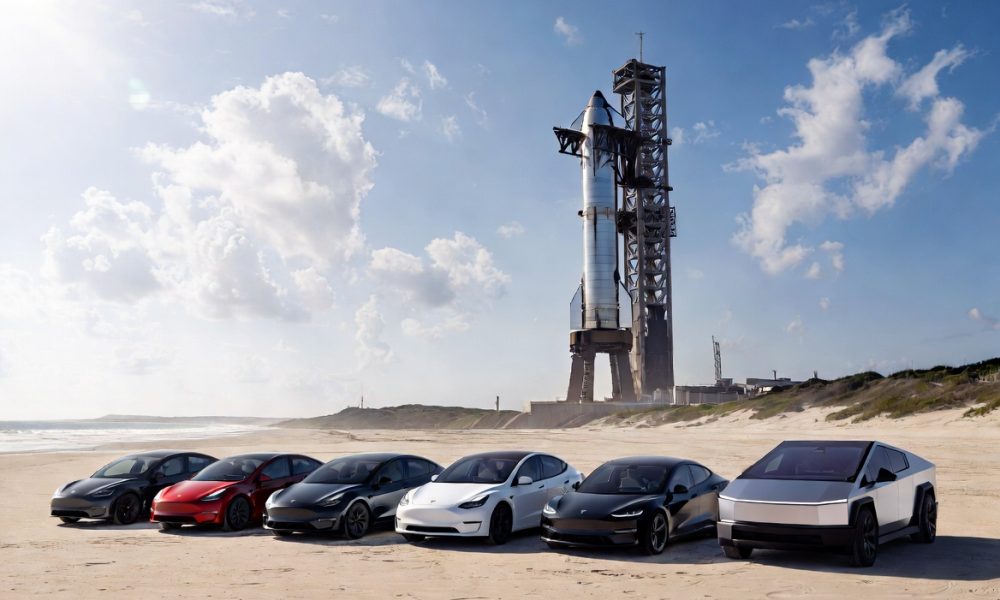


Elon Musk has been discussing a merger between Tesla and SpaceX with people in his inner circle, CNBC reported this week, citing sources familiar with the conversations. Tesla employees say the topic is openly discussed internally. With SpaceX days away from launching a Wall Street roadshow for what could be the largest IPO in history, the financial plumbing to make it happen is falling into place.
A stock-for-stock deal becomes possible only when SpaceX has publicly traded shares to offer. The S-1 filing changed the game.
The combined entity would span rockets, satellites, electric vehicles, AI infrastructure, and energy storage, valued somewhere between $3.35 trillion and $3.6 trillion. Wedbush analyst Dan Ives puts the odds of a merger at 80 to 90 percent, with a target completion in the first half of 2027.
Here’s the part that should make every institutional investor uncomfortable. Musk holds about 20 percent of Tesla’s equity but controls 85.1 percent of SpaceX’s voting power through a super-voting share class. He would be negotiating with himself.
The two companies are already functioning like subsidiaries of a single organism. SpaceX purchased $697 million in Tesla Megapack systems for xAI data centers and $131 million in Cybertrucks. Tesla invested $2 billion in xAI, which then merged into SpaceX.
Solar equipment, parts, Cybertruck materials — the supply chains overlap so deeply that drawing a clean line between them takes effort.
Then came Terafab, the joint semiconductor fabrication facility announced for the Gigafactory Texas campus in Austin. Two advanced chip factories under one roof — one serving Tesla’s AI needs for vehicles and Optimus robots, the other targeting space-based data centers under SpaceX’s infrastructure vision. That is not a partnership. That is integration.
Musk telegraphed this himself in November 2025, posting on X that his companies were “trending towards convergence.” Nobody should have been surprised. The xAI merger into SpaceX was the proof of concept.
SpaceX just locked in a $2.29 billion Space Force contract to build the military’s Space Data Network backbone — a hardened, low-Earth-orbit satellite constellation for battlefield communications. That deal, combined with SpaceX’s NASA Human Landing System contract for Artemis IV and its growing role in missile defense, makes the company less a rocket builder and more a defense-industrial utility. Merging that with Tesla’s manufacturing scale and energy business creates something Wall Street has never had to price before.
Not everyone buys the timeline. Prediction market Kalshi shows only 33 percent odds of a merger before May 2027. Legal experts say antitrust risk is low, but shareholder governance questions are enormous.
Which entity becomes the parent? How do you fairly price a swap when one man controls both sides of the table?
The more pressing worry for Tesla shareholders right now is simpler: does the SpaceX IPO vacuum up capital and executive bandwidth before any merger locks in upside for both investor bases? Musk’s attention has always been the scarcest resource in his empire. He is currently running Tesla, SpaceX, xAI, and maintaining his role in the federal government’s cost-cutting apparatus.
The structural foundation — shared facilities, intertwined balance sheets, overlapping technology roadmaps, a joint chip fab — already exists. The merger, whenever it arrives, will look less like a bold corporate move and more like paperwork catching up to reality. Two companies that already share a CEO, a campus, a supply chain, and increasingly a balance sheet don’t need a merger announcement. They need a filing.
The question was never whether Musk would try to consolidate his empire. It was whether anyone on either board had the leverage to stop him. With 85 percent voting control of SpaceX and a loyalist board at Tesla, the answer appears to be no.

Share this Story