
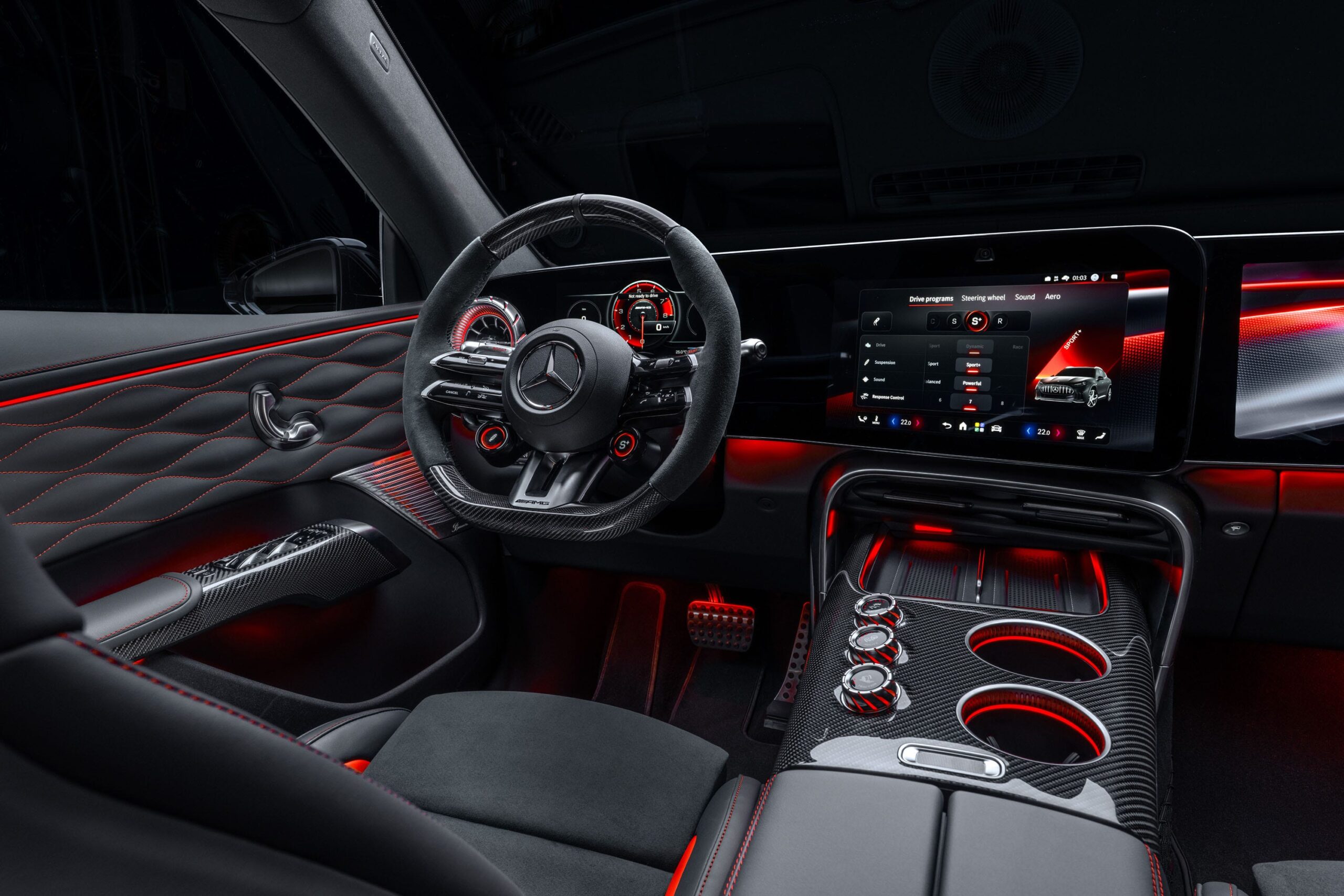


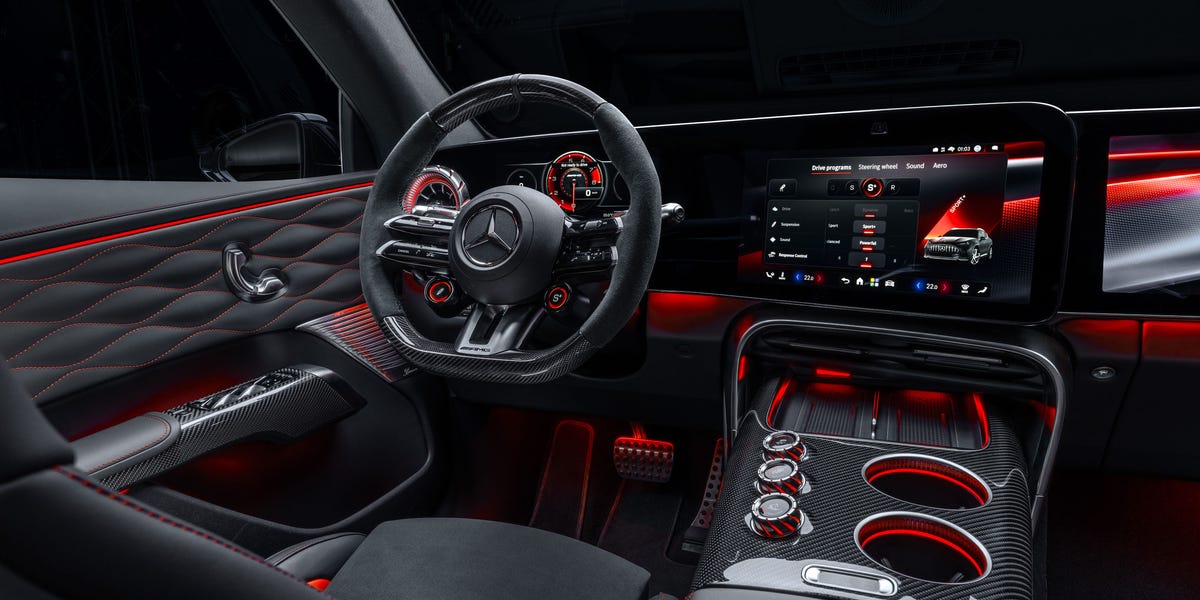
Mercedes-AMG has pulled the wraps off the cabin of its 2028 GT SUV, and the interior reads like a carbon fiber catalog with a few seats thrown in for good measure.
Every surface that could be wrapped in the woven composite material has been. The steering wheel, the center console, the trim panels. If you find that a bit much, Mercedes will sell you a steering wheel without it, which is a tacit admission that maybe they overdid it.
The dashboard is loaded with screens, following the current Mercedes playbook of digitizing every possible surface. Quilted door panels try to inject some old-school luxury into the proceedings, but the overall vibe leans hard toward track-day cosplay.
Three physical dials on the center console control driving modes, a welcome analog touch in a sea of glass. The cupholders light up, because apparently that is where the engineering budget went. Even the air vents get their own integrated lighting elements.
Whether any of this theater translates to a better driving experience remains an open question.
Up front, the sport bucket seats look genuinely aggressive, sculpted with deep bolsters designed to pin occupants during hard cornering. These are not executive lounge chairs. They are a promise that AMG still means something behind the wheel, even when the vehicle sits tall enough to qualify for school carpool duty.
The rear seat is where the GT SUV makes its pragmatic case. Mercedes says it is surprisingly spacious, and the photos back that up. A fold-down center armrest gives rear passengers some comfort when the middle position goes unused.
Cargo space tells a less flattering story. The trunk looks adequate but unremarkable, and smaller electric SUVs already offer more room back there. For a vehicle wearing the GT badge and carrying what will almost certainly be a six-figure price tag, “adequate” is a tough sell to buyers cross-shopping the Porsche Cayenne or BMW XM.
Production is slated for late 2027, with the GT SUV arriving at dealerships as a 2028 model. Mercedes-AMG is clearly betting that the GT nameplate, long associated with low-slung coupes and brutal power, can stretch credibly into SUV territory. Porsche proved the concept years ago with the Cayenne, Lamborghini did it with the Urus, and Aston Martin tried with the DBX.
The pattern is familiar by now. Take a storied sports car name, bolt it onto a high-riding body, drape the interior in expensive materials, and hope the brand equity carries the weight. Sometimes it works brilliantly. Sometimes you end up with a very expensive truck wearing a costume.
What the photos cannot convey is whether the GT SUV drives with enough fury to justify borrowing the name from one of the best grand tourers Mercedes has ever built. Three driving mode dials, race-ready seats, and enough carbon fiber to build a small airplane say the right things.
But the real test comes when the first journalist plants a right foot on a mountain road and finds out whether the GT SUV is a genuine AMG or just an expensive GLE in better clothes. Late 2027 is not that far away.



Share this Story