
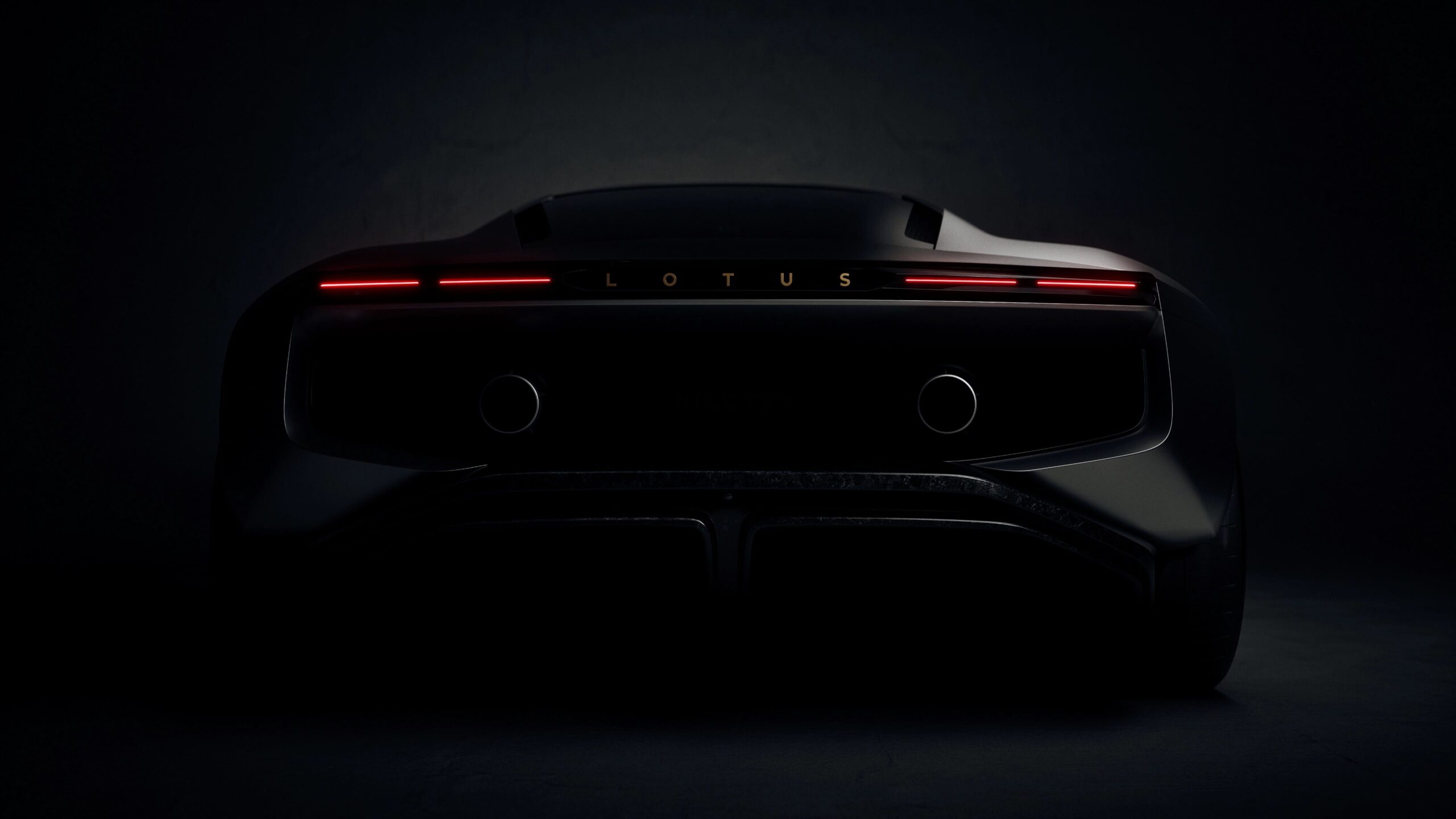


The first hard numbers on Lotus’s next supercar didn’t come from Lotus. They came from the company building its engine.
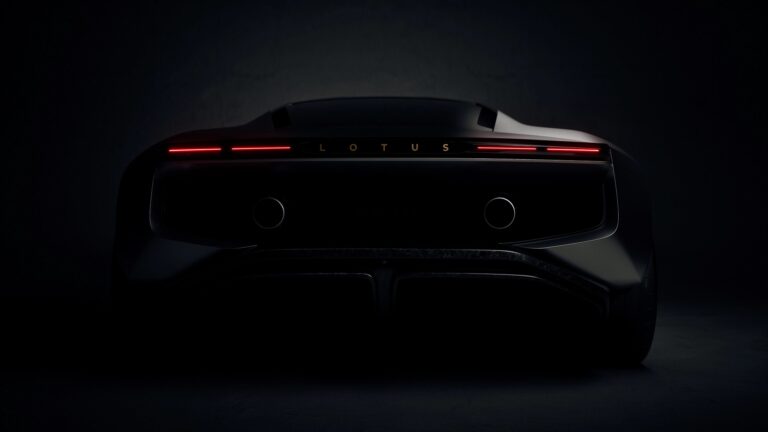
Horse Powertrain has confirmed that the car codenamed Type 135 will run a twin-turbocharged 4.0-liter V-8 making 670 horsepower and 590 pound-feet of torque. Most of the industry expects it to wear the Esprit name.
Don’t hold your breath. Lotus plans to reveal and launch the model in 2028, so the engine has a public identity long before the car does.
It’s called the Horse W40. It uses a hot-V layout, tucking the turbochargers between the cylinder banks rather than hanging them off the outside.
That layout usually points to two goals: shorter exhaust paths for quicker turbo response, and a compact engine that packages well behind the driver. Horse hasn’t said which mattered more here.
It did say the V-8 weighs 441 pounds. For a twin-turbo eight making 670 horsepower, that’s lean, and it’s exactly the kind of number a brand built on lightness will want to repeat.
But the V-8 isn’t working alone. Lotus says the full hybrid system will produce at least 986 horsepower combined.
Do the math and the electric side adds more than 300 horsepower. Neither company has detailed the motors, the battery, or how much weight that hardware piles back on after the engine saves it.
That’s the real question. A 441-pound engine makes a nice headline, but the finished car’s curb weight is the verdict, and nobody’s offering it yet.
Horse says the V-8 was designed around hybrid assistance from day one rather than having electrification bolted on later. It hasn’t explained what that meant in practice.
Horse is supplying the gearbox, too. Instead of buying a transmission elsewhere, it built its own eight-speed dual-clutch, the Horse 8LDCT.
The spec sheet sounds like it belongs in a race paddock. There’s a wet dual clutch rated for sports car duty and claimed shift times under 20 milliseconds.
It also gets a silicon-carbide control system and a variable-displacement mechanical pump. Silicon carbide is normally found in high-efficiency power electronics, which suggests this gearbox is meant to work hand in glove with the hybrid system.
So the heart of the next Lotus flagship, engine and transmission both, will be designed and built outside Lotus. Horse says both components debut in the Type 135.
That makes a supplier the first company to put real numbers on a car Lotus has kept hidden behind a codename. Lotus has committed to the 986-horsepower floor, and almost everything else has come from Horse.
Plenty is still missing. There’s no confirmed price, weight, official name, or performance figures beyond output.
What we have is an engine, a gearbox, a horsepower target, and a two-year wait for the car built around them. Lotus now has until 2028 to prove its chassis, the part it still builds itself, deserves nearly 1,000 horsepower.
Share this Story