
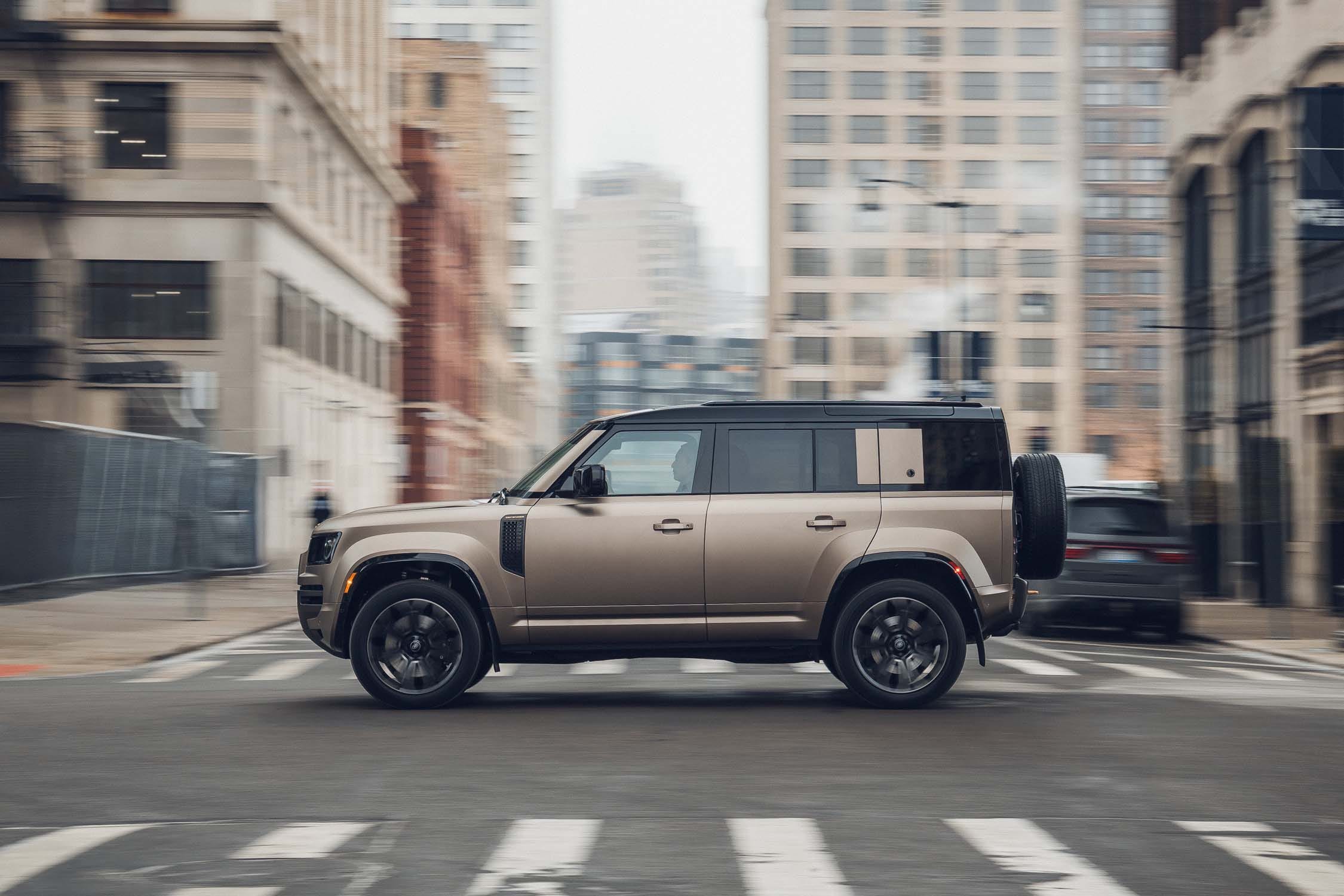


Jaguar Land Rover wants to build a Defender on a Stellantis platform, designed and manufactured specifically for the American market. CEO PB Balaji confirmed the plan during an investor relations presentation, framing it as the centerpiece of JLR’s push to make North America its growth engine.
The logic is straightforward, even if the execution will be anything but. The current Defender is built in Slovakia and faces a 15 percent tariff under the Trump administration’s trade regime. Bolting a Defender body and brand identity onto Stellantis underpinnings, and presumably Stellantis factory capacity somewhere in North America, sidesteps that pain.
But tariff avoidance is only half the story.
JLR is pulling back from China. The company is reorienting its entire global strategy around the United States, which already accounts for roughly 30 percent of group sales. Balaji didn’t mince words about the scale of ambition: “Our aspiration, in the coming years, is to grow our U.S. business to the size of the entire JLR business as it exists today.”
That’s not incremental growth. That’s a doubling of the American operation.
The Stellantis partnership, announced earlier, now has a concrete product attached to it. A Defender. Not a Range Rover. Not a Discovery. The Defender — the nameplate that has become JLR’s volume workhorse and cultural touchstone, the truck that rescued Land Rover’s relevance when it launched in 2020.
Details beyond the announcement are thin. JLR offered no timeline, no factory location, no powertrain specifics, and no clarity on which Stellantis platform would underpin the vehicle. The company said only that the new Defender would be “designed specifically for the United States,” which in corporate-speak could mean anything from a longer wheelbase to a lifted ride height to a fundamentally different price positioning.
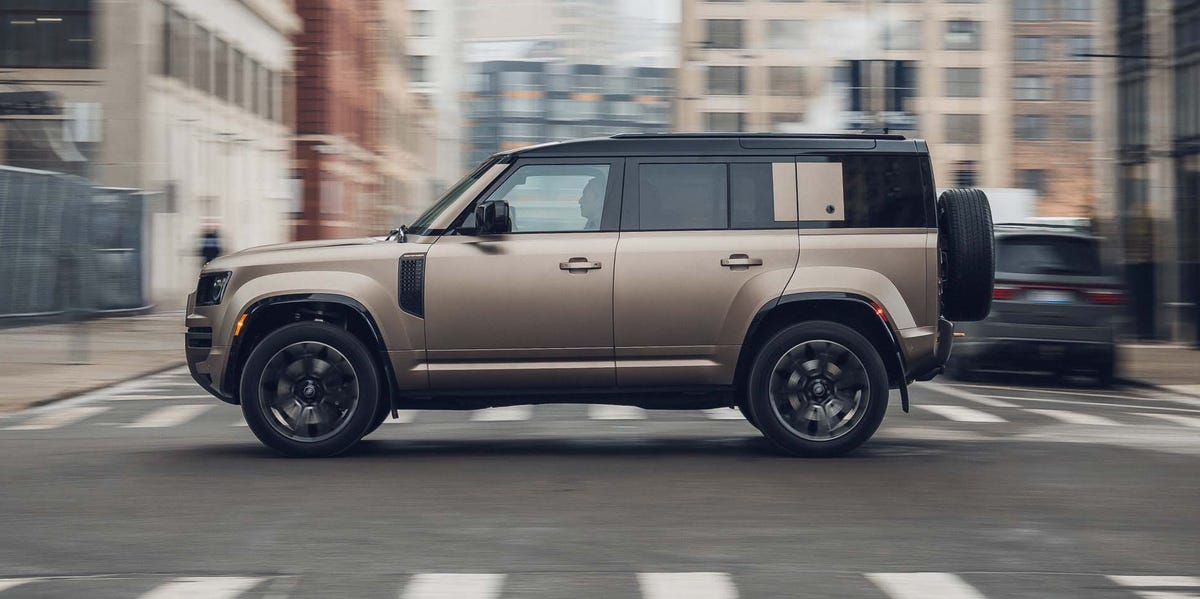
There were hints. Balaji pointed to the relatively high transaction prices Americans pay for vehicles and cited “rising demand for luxury products” alongside “strong preference” for JLR’s brands. Read between the lines and this U.S.-spec Defender could be aimed upmarket — a more premium truck than the current model, which already starts north of $58,000.
That would make strategic sense. The existing Defender competes in a brutal segment against the Bronco, Wrangler, 4Runner, and now the Jeep Grand Cherokee Trailhawk revival. Moving further upscale gives Land Rover breathing room. It also justifies the Stellantis partnership; if you’re borrowing a platform, you’d better build something distinctive enough to warrant the badge.
The risk is obvious. A Defender that doesn’t feel like a Defender — that drives like a Jeep Grand Cherokee or a Dodge underneath — could erode the very brand equity JLR is trying to leverage. Stellantis platforms are competent, not exceptional. Land Rover’s entire appeal rests on the promise that its trucks go places and do things no competitor can match.
There’s also the question of whether Stellantis, itself in the midst of leadership upheaval and product-line rationalization, is the right dance partner for a company making a generational bet on the American market.
JLR clearly believes the math works. Absorb a tariff hit or build locally on borrowed architecture — the choice isn’t hard when the current trade environment shows no signs of softening. And if you’re going to build in America, finding a partner with idle factory capacity and existing supply chains beats starting from scratch.
The Defender name will do heavy lifting. Whether the truck underneath can carry it is the question JLR hasn’t answered yet.
Share this Story