
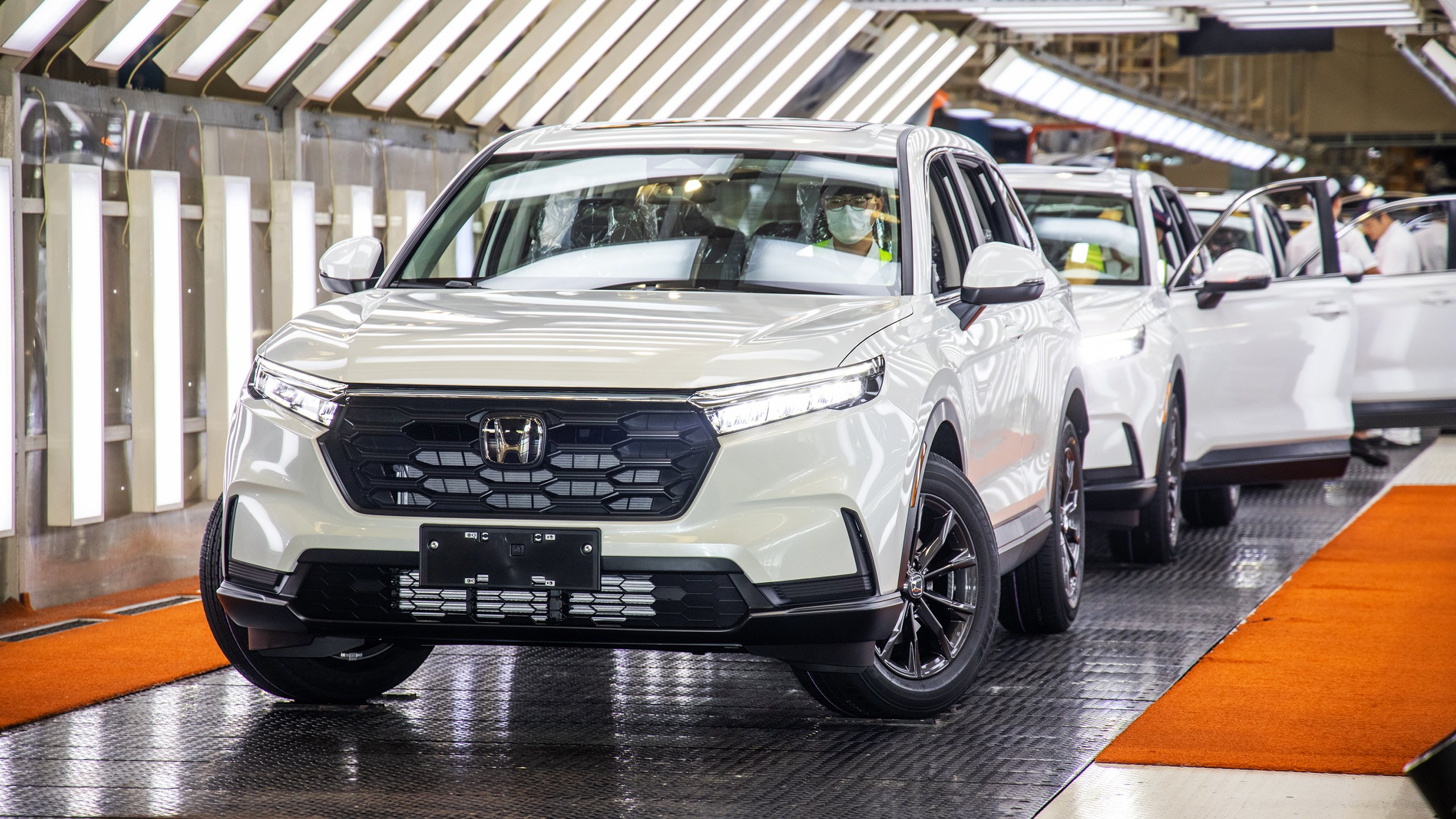


American Honda sold 124,553 vehicles across its Honda and Acura brands last month, a 12.8% jump that marks the company’s best July since 2019. Sedan sales alone surged 35.7%. In a market where everyone is chasing crossover volume, Honda is moving four-doors at a clip that would have seemed impossible two years ago.
But zoom out from Honda’s victory lap and the global auto landscape looks far less tidy.
Volvo is playing both sides of a split personality. Its worldwide sales slid another 4% through May and July, yet U.S. numbers posted a third straight month of double-digit gains. The Swedish automaker is betting on that American momentum by ramping up production at its Charleston, South Carolina plant, where local assembly of the XC60 SUV is expected to push annual output from 30,000 to 50,000 units.
Building where you sell is the oldest trick in the tariff playbook, and Volvo is leaning into it hard.
Tesla’s European story is even more fractured. July registrations climbed 86% in France and 52% in Denmark, numbers any automaker would celebrate. Then you look at Norway, where registrations cratered 97%.
Spain dropped 81%. Italy fell 77%. Portugal lost 69%. Sweden gave back 60%. That is not a mixed bag. That is a continent splitting cleanly down the middle on whether it still wants Teslas.
Aston Martin, meanwhile, is fighting fires on a different front entirely. Some of its creditors are reportedly threatening legal action after learning that a new debt financing deal, led by BlackRock subsidiary HPS, is partly contingent on Aston Martin licensing its name out. Creditors apparently did not sign up for a luxury brand that survives by renting its badge.
The tension between Aston’s aspirational image and its financial reality has never been more exposed.
Then there is Audi, teasing Americans with something they cannot have. The reborn A2, an electric city car, is reportedly the most efficient vehicle Audi has ever built, achieving 4.85 miles per kilowatt-hour in preliminary WLTP testing. That number will shrink under EPA standards, but even with a discount, it signals genuine engineering progress on efficiency rather than brute battery size.
The U.S. will not get it, just as it never got the original A2 two decades ago.
Honda’s July tells one story. The broader picture tells a dozen conflicting ones. An industry that looked like it was consolidating around a few clear trends, electrification, SUV dominance, Chinese expansion, is instead splintering market by market, brand by brand.
Honda is thriving by selling sedans in a truck-obsessed country. Volvo is growing in America while shrinking everywhere else. Tesla is surging in France while nearly vanishing from Norway. Aston Martin’s creditors are discovering their collateral might be a logo on a handbag.
The common thread is that there is no common thread. Every automaker is navigating a different crisis or capitalizing on a different opportunity, and the rules that governed last quarter may not apply to next quarter. Honda’s best July in seven years is real. So is the chaos surrounding it.

Share this Story