
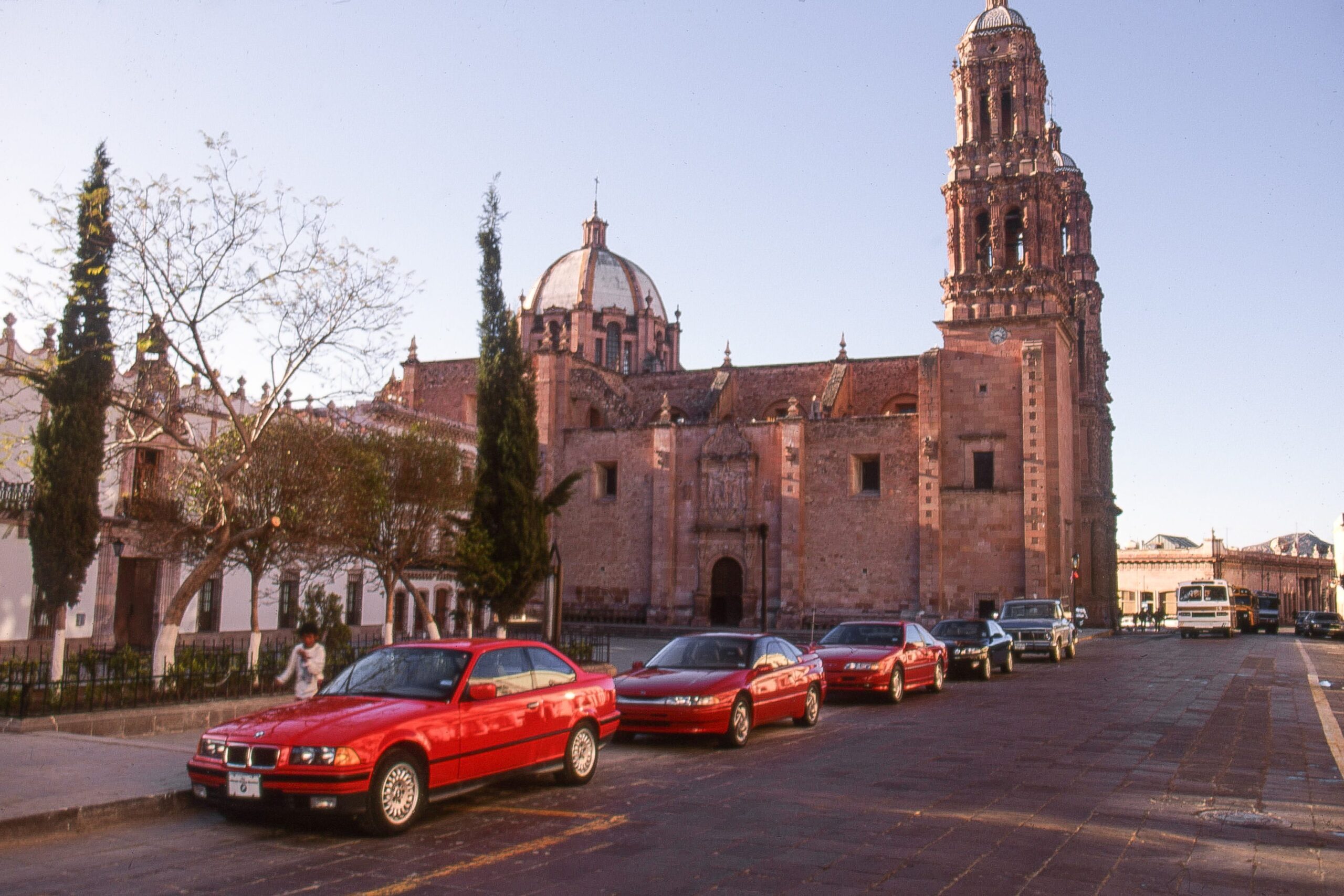


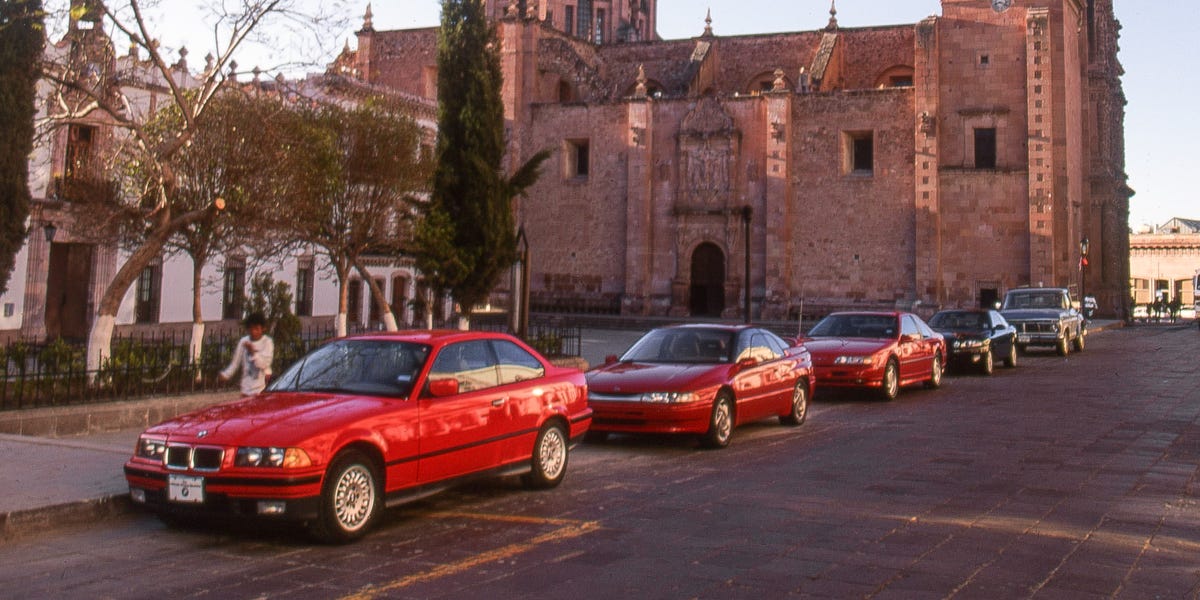
Thirty-one years before anyone cared about over-the-air updates or range anxiety, Car and Driver loaded four coupes with CB radios and pointed them south from San Antonio into the rawest parts of Mexico. The resulting comparison test — BMW 325is, Ford Thunderbird SC, Lexus SC300, Subaru SVX — reads today less like a car review and more like an obituary for a species of automobile that no longer exists.
The setup was gloriously reckless. Seven staffers, zero cell phones, a $21 toll road that amounted to a month’s wages for local farmworkers, and a freelance traffic cop in a VW Beetle shaking them down for $100 after a red-light violation in Monterrey. The cars themselves cost between $26,000 and $38,000, a range that in 2025 dollars barely covers a mid-trim Camry to a base BMW 2 Series.
The Thunderbird SC finished dead last. At 3,894 pounds and nearly 199 inches long, it was the American answer to a question nobody in Stuttgart or Tokyo was asking. Its supercharged 3.8-liter V-6 delivered genuine thrust — 139 mph, a 15.4-second quarter — but the interior plastics screamed rental car, and there wasn’t even a driver’s airbag. Csaba Csere, who wrote the T-Bird section, damned it with the faintest praise available: “Low cost per pound isn’t quite enough in this league.”
The Subaru SVX landed third. A flat-six, all-wheel-drive coupe with Giugiaro styling that still looks like it arrived from 2005 — on paper, it was the dark horse with the best story. But Subaru saddled it with a four-speed automatic and no manual option. That single decision crippled its character. You can forgive weight and you can forgive quirks, but you cannot forgive a sports coupe that won’t let you shift for yourself in 1993.
The Lexus SC300 grabbed second, and it earned every inch of that position through sheer competence. Smooth inline-six, rear-wheel drive, a cabin that made the Thunderbird’s interior look like a break room. It was the car you’d hand the keys to anyone and they’d come back impressed, but impressed isn’t the same as moved.
Which left the BMW 325is on top. The lightest car in the test, the smallest engine, the least powerful on paper, and the one every staffer wanted to drive through the switchbacks climbing toward Zacatecas. It posted the quickest quarter-mile at 15.3 seconds, not because of brute force but because everything — steering weight, shifter action, throttle response, chassis balance — talked to the driver in a single coherent language. The 325is didn’t overwhelm the Mexican mountain roads. It conversed with them.
That result tells you everything about what the early ’90s got right and what we’ve since abandoned. Four coupes from four different countries, each representing a genuinely distinct philosophy of what a two-door car should be. The American brute, the Japanese eccentric, the Japanese-luxury perfectionist, the German purist — no two shared a platform, a powertrain layout, or even a basic theory of driving.
Today, the coupe market is a graveyard. The Thunderbird is long dead. The SVX lasted one generation. The SC morphed into the LC, a gorgeous but rare bird. Even BMW’s coupes have ballooned into 4,400-pound, turbocharged monuments to badge engineering. The idea that four wildly different sub-$40,000 coupes could exist simultaneously — let alone be driven flat-out across northern Mexico with CB radios and no plan — belongs to an era that isn’t coming back.
The roads around Zacatecas haven’t changed much. The cars that might run them have vanished entirely.

Share this Story