
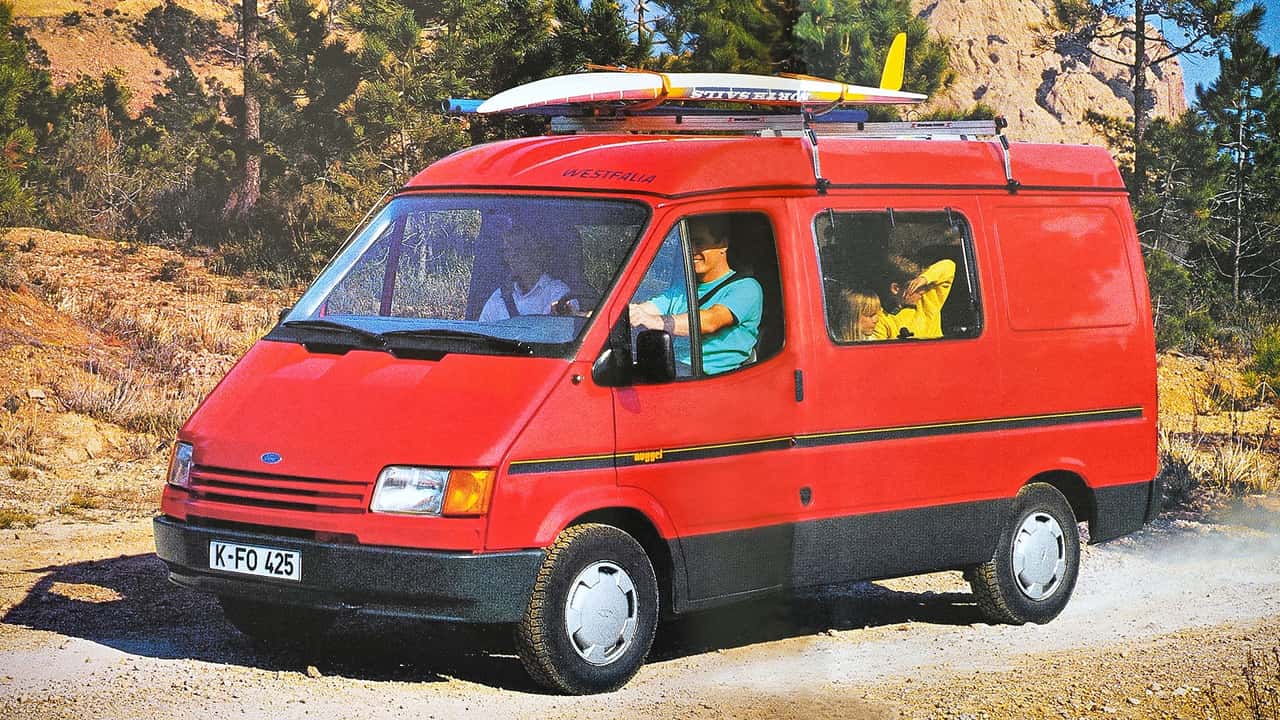


In 1986, Ford and Westfalia bolted a kitchen and a pop-top roof onto a Transit and called it the Nugget. Forty years later, it’s a cult object across Europe and still completely invisible to American buyers.
The anniversary is worth examining not for its nostalgia but for what it reveals about Ford’s split personality. In the United States, the company sells massive Super Duty trucks and is bleeding cash on electric vehicles. In Europe, it has spent four decades refining a compact camper van that inspires the kind of loyalty most brands would kill for.
Owners routinely push their Nuggets past 200,000 miles. Ford knows this. And yet the two worlds never meet.
The original concept was deceptively simple. Take a Transit, add a rear kitchen, flexible sleeping for two or more, and a high roof. Make it narrow enough to parallel park on a Tuesday and capable enough to disappear into the Alps on a Friday.
That formula hasn’t fundamentally changed, which is the point.
The real breakthrough came in 2000 with the fourth-generation Transit platform. Ford’s engineers relocated the kitchen to the middle of the van, creating an L-shaped layout that let one person cook while another slept undisturbed. It sounds trivial. It wasn’t.
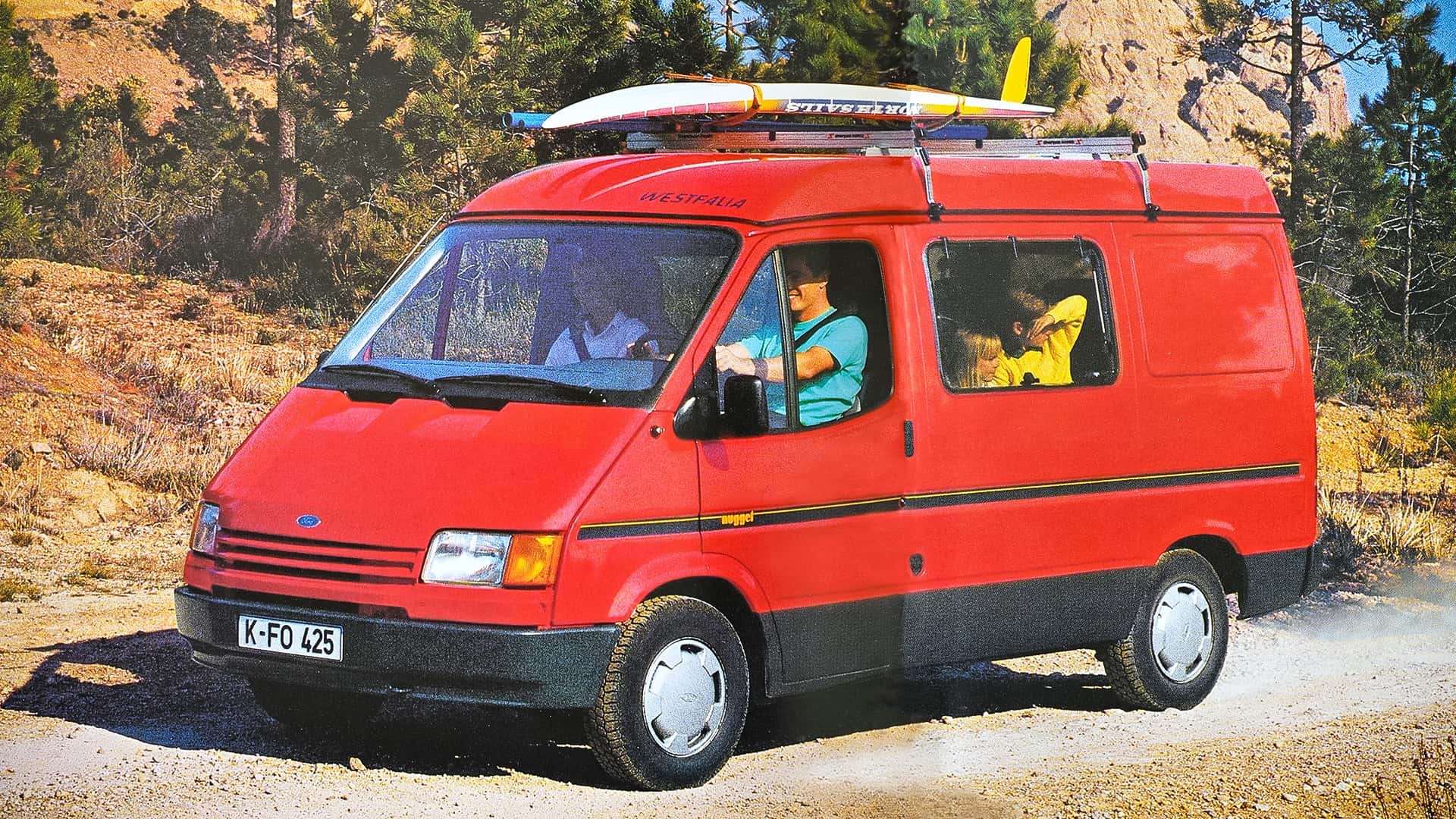
That spatial trick became the Nugget’s defining feature, copied by competitors across the European camper market for the next two decades.
By 2013, the Transit Custom gave the Nugget more car-like road manners and pushed it into additional international markets, though still not North America. The lineup expanded aggressively after that. A Big Nugget with a proper bathroom arrived in 2019.
Active and Trail editions followed in 2021, targeting the festival-and-gravel-road crowd. Ford wasn’t just maintaining the nameplate. It was building a franchise.
The fifth generation, launched in 2023, added a plug-in hybrid powertrain and available all-wheel drive. That’s a camper van with electrified power and real off-pavement capability. It’s the kind of thing that would set American van-life forums on fire if it were ever offered here.
For 2026, the anniversary year, Ford is releasing a limited retro edition wearing the original’s black-and-white livery with a yacht-style floor inside. It’s a greatest-hits package designed to remind European buyers why they fell for the thing in the first place.
Meanwhile, the American camper van market is booming and largely served by aftermarket converters hacking apart Transit and Sprinter cargo vans with varying degrees of professionalism. Ford sells the Transit here. Ford builds the Nugget conversion in Europe. The distance between those two facts is purely a business decision, not an engineering one.
The Nugget’s 40-year run is a quiet rebuke to the idea that automakers need to constantly reinvent themselves. Ford found a formula — compact footprint, clever interior, rugged enough to trust — and then iterated on it methodically, generation after generation. No radical pivots. No identity crises. Just better kitchens, better drivetrains, and the same core promise.
Four decades of continuous production is rare for any vehicle, let alone a niche camper. The Mercedes Marco Polo is the closest competitor, and it arrived much later to the party. Volkswagen’s California has the heritage, but Ford has quietly matched it in capability and arguably surpassed it in interior design.
The Nugget turns 40 as proof that patience and restraint can build something durable. Whether Ford ever lets American customers in on the secret is another question entirely.




Share this Story