
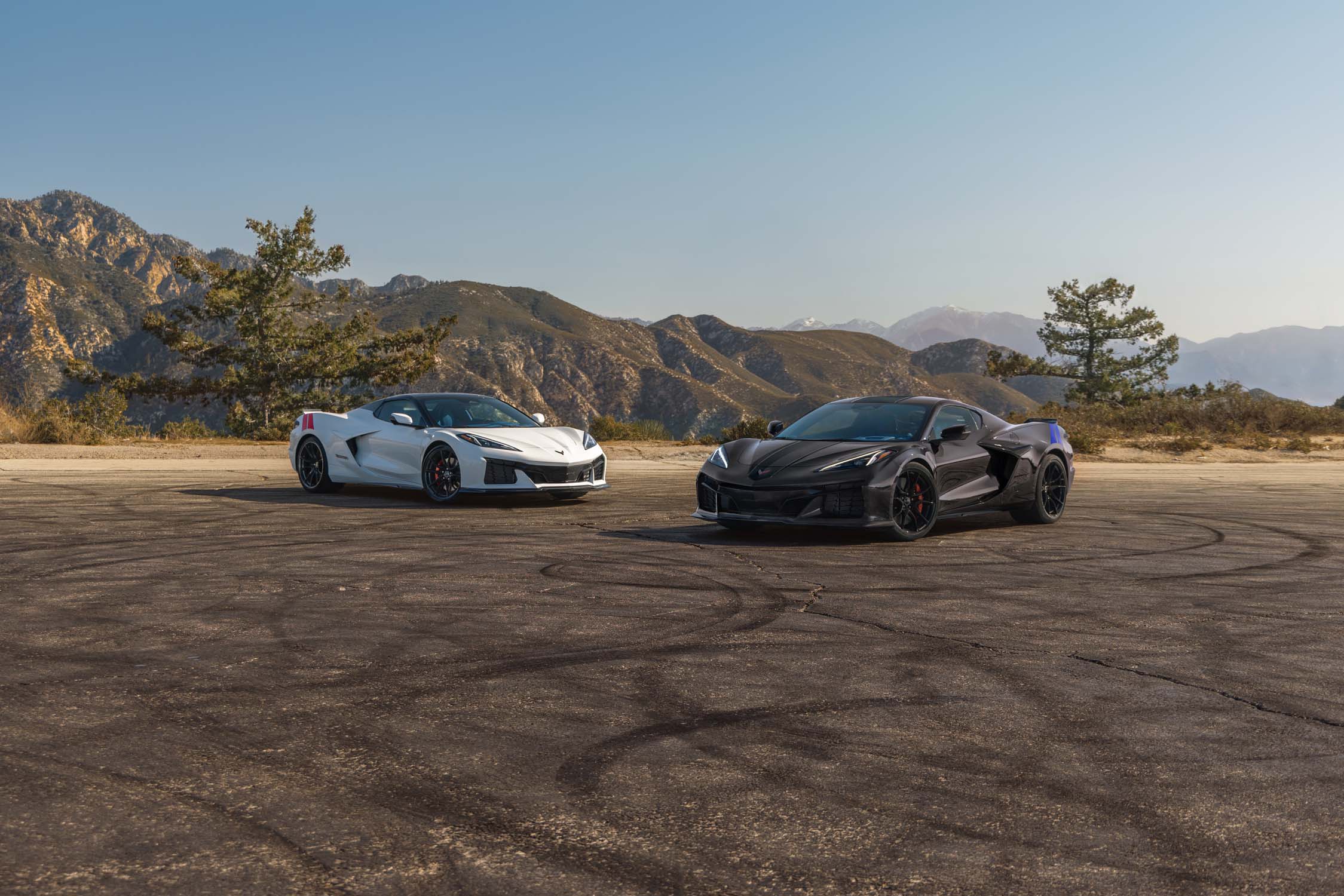


Chevrolet confirmed 2027 Corvette pricing on Monday, and the spread tells a story the automaker probably didn’t intend. The base Stingray climbs a modest $1,000 to $73,495. The ZR1X — the 1,250-horsepower, all-wheel-drive apex predator of the C8 lineup — jumps $17,800 to $227,395. That’s not inflation. That’s repricing for demand.
The full lineup landed on Corvette Forum before Chevrolet confirmed the numbers to multiple outlets. Order banks for most models open April 16, with the Grand Sport X delayed to sometime this summer.
The Grand Sport is the headline act for most buyers. It returns after a generation-long absence at $88,495, slotting $15,000 above the Stingray and more than $20,000 below the now-discontinued E-Ray. Both the Stingray and Grand Sport share the new 6.7-liter LS6 V-8, rated at 535 horsepower — a 40-hp and 50 lb-ft bump over the outgoing small block.
The difference between them is chassis: wider body, stiffer bones, a suspension tune roughly equivalent to the Stingray’s Z51 package as a baseline.
For $3,500, Grand Sport buyers can bolt on Michelin Pilot Sport 4S summer tires and Z06-spec iron brakes. The real money move is the Track Performance Package at $109,190, which layers on Z06-style carbon aero, carbon ceramic brakes, quad center-exit exhaust, unique chassis tuning, and Pilot Sport Cup 2R rubber. That’s a serious track car for Z06 money — or rather, $12,000 less than Z06 money.
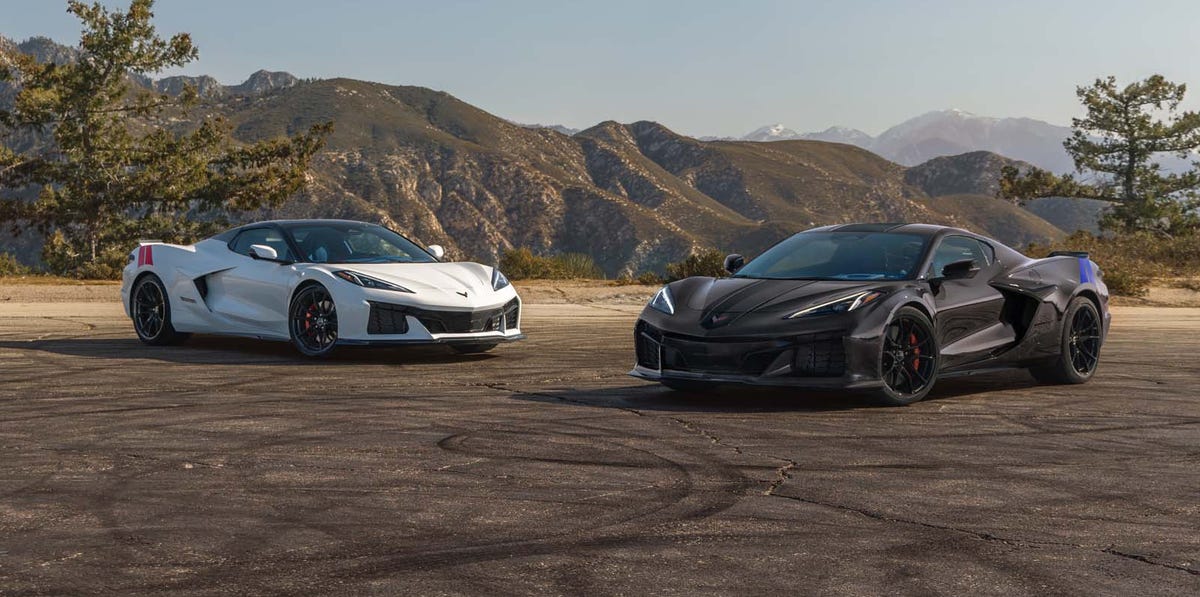
The Grand Sport X, which directly replaces the E-Ray as the hybrid all-wheel-drive Corvette, starts at $112,195. That’s only $1,100 more than the E-Ray it buries, but the GSX brings 721 horsepower to the party — 66 more than its predecessor. Carbon ceramic brakes come standard. There’s no aero package available, which is a curious omission for a car with that much grunt.
The Z06 barely moves, up $1,200 to $121,395. It remains an absurd value proposition for a flat-plane-crank, mid-engine American sports car. But nobody’s talking about the Z06 right now.
They’re talking about the top of the range. The ZR1 rises $9,700 to $197,195, keeping its thousand-plus horsepower just under the $200,000 barrier — for now. The ZR1X makes no such concession. At $227,395, it has climbed nearly $15,200 past that psychological threshold since its introduction.
Chevrolet hasn’t publicly explained the increases, though tariff pressures and component costs are the obvious candidates. The more likely truth is simpler: allocations for the ZR1 and ZR1X have been scarce since launch, and Chevrolet knows exactly what the secondary market has been doing with those cars. Raising MSRP closes the gap between sticker and street price.
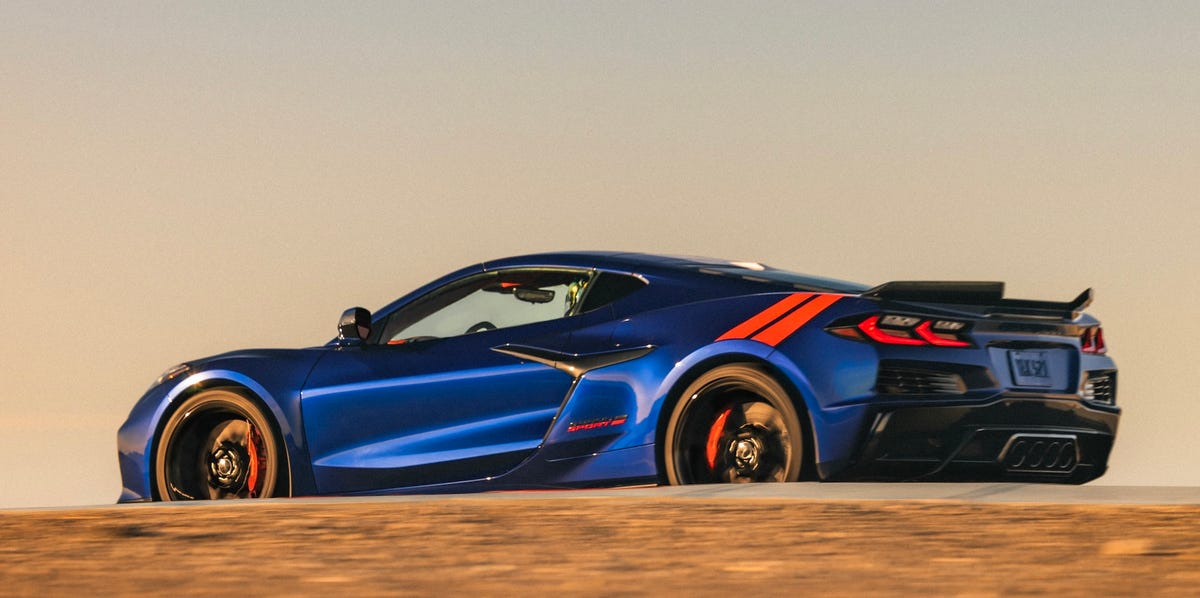
The C7 Grand Sport could be had for under $70,000 less than a decade ago. The C8 Grand Sport now starts nearly $19,000 higher. The economy hasn’t been kind, but Corvette buyers haven’t been deterred — every C8 variant has sold at or above sticker since the car launched in 2020.
What Chevrolet has built with the 2027 lineup is a six-model range stretching from $73,495 to $227,395, covering naturally aspirated, twin-turbocharged, rear-drive, and all-wheel-drive configurations. No other American sports car program comes close to that breadth.
Whether it remains accessible to the enthusiasts who built the nameplate’s identity is another question entirely. The Stingray’s $1,000 bump suggests Chevy still cares about that buyer. The ZR1X’s $17,800 hike suggests it cares about a different one more.

Share this Story