
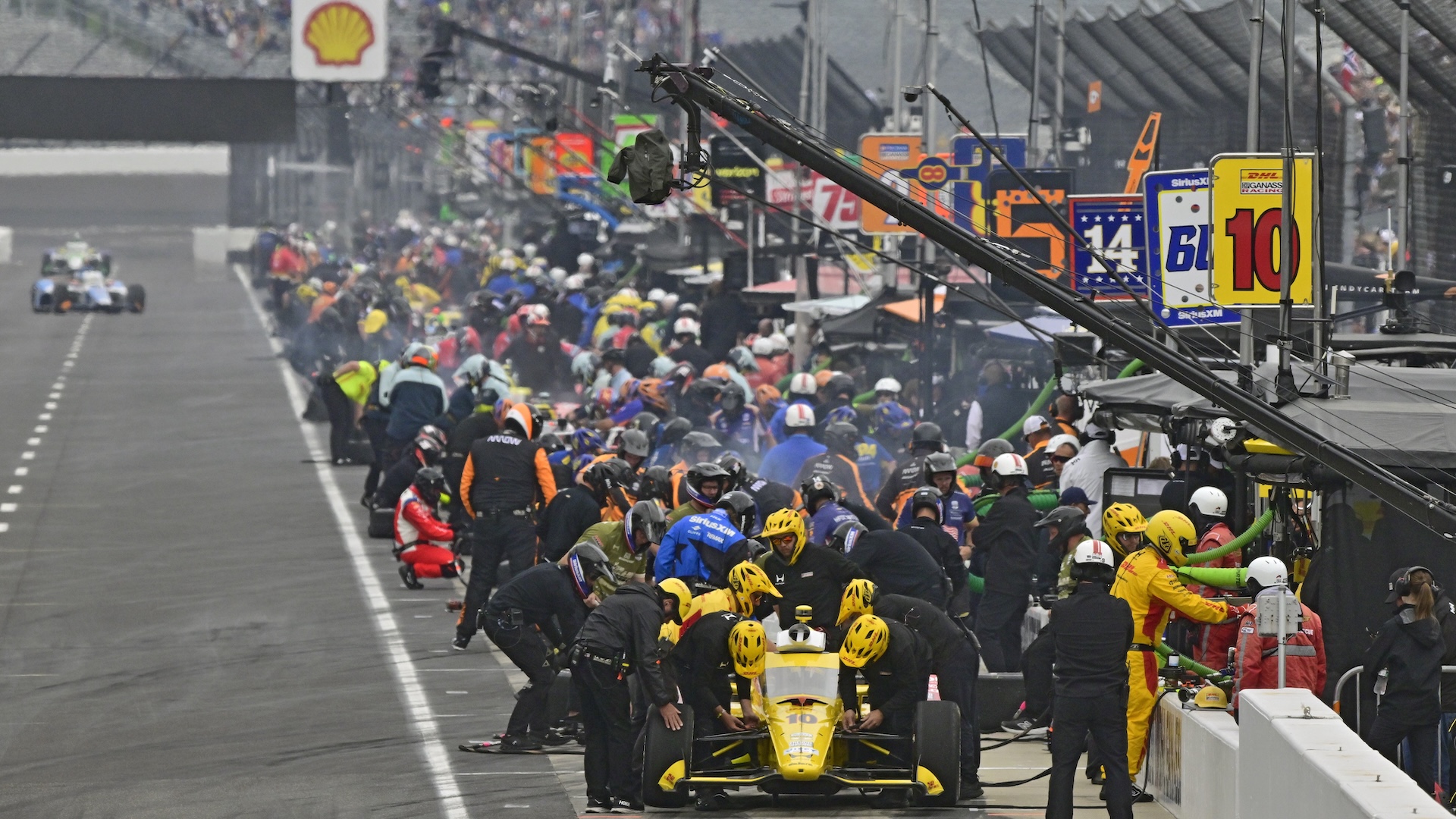


Exactly 33 cars qualified for the 2026 Indianapolis 500. Not 34. Not 35. Thirty-three entries for thirty-three spots, which means nobody got bumped, nobody went home heartbroken, and the drama that has defined the Greatest Spectacle in Racing for over a century simply didn’t exist this year.
Into that vacuum steps Helio Castroneves, four-time winner and now team co-owner, arguing that IndyCar’s chartered teams should be guaranteed a starting slot at Indy. His logic is pure business. “When you have the franchise, it helps the valuation of the team,” he told media ahead of the race. “It’s not only just the toolbox or the shop or the truck. Now, it’s something more.”
He’s not wrong about the math. NASCAR’s charter system turned race entries into tradeable financial instruments, and team valuations have exploded as a result. IndyCar adopted its own version, but deliberately carved out the 500. The right to race at Indianapolis was too sacred, too loaded with history to simply hand out as a perk of ownership.
The scar tissue runs deep. In 1996, Indianapolis Motor Speedway ownership implemented the infamous 25/8 rule, reserving 25 of the 33 starting positions for Indy Racing League teams while leaving the rival CART series to scrap over the remaining eight. CART boycotted. Both sides staged their own races on the same day. American open-wheel racing fractured in a way it still hasn’t fully recovered from, three decades later.
That history makes guaranteed entries radioactive for a huge chunk of the fanbase. And they have a point that goes beyond nostalgia. In 1995, Team Penske, the winningest organization in Indianapolis 500 history, failed to qualify. It remains one of the most stunning moments in motorsport. That kind of jeopardy, the raw possibility that anyone can miss the show, is baked into the race’s DNA.
Castroneves sees it differently because he’s writing checks now, not just cashing them. A charter without guaranteed entry at the sport’s marquee event is a franchise with an asterisk. If you’re trying to attract investors, sell sponsorships, or eventually flip a team for a premium, the inability to promise your car will make the field at Indianapolis is a real liability.
The old guard, fans and traditionalists, view the 500 as a meritocracy where the grid is earned, never granted. The new ownership class sees a business asset that needs protecting. Both positions are defensible. Neither is entirely honest about its motives.
What makes this conversation feel premature is the field itself. IndyCar doesn’t currently have the depth of entries to make bumping a regular occurrence. When 33 cars show up for 33 spots, the guarantee is already in place. The drama everyone wants to protect is largely theoretical right now.
But markets change. If the charter system works as intended and team valuations climb, more owners will want in. More entries will appear. And then the question of who gets a guaranteed seat at the table becomes very real, very fast.
Castroneves knows this. He’s positioning for a future where the 500 field is oversubscribed and his franchise either protects him or it doesn’t. He’d rather lock that door now, while nobody’s pushing on it.
The fans who remember 1995 and 1996 will fight him every step of the way. They should. The tension between financial pragmatism and competitive purity is exactly the argument IndyCar needs to have, loudly, publicly, and before anyone quietly writes guaranteed entries into the next charter agreement when nobody’s paying attention.


Share this Story