
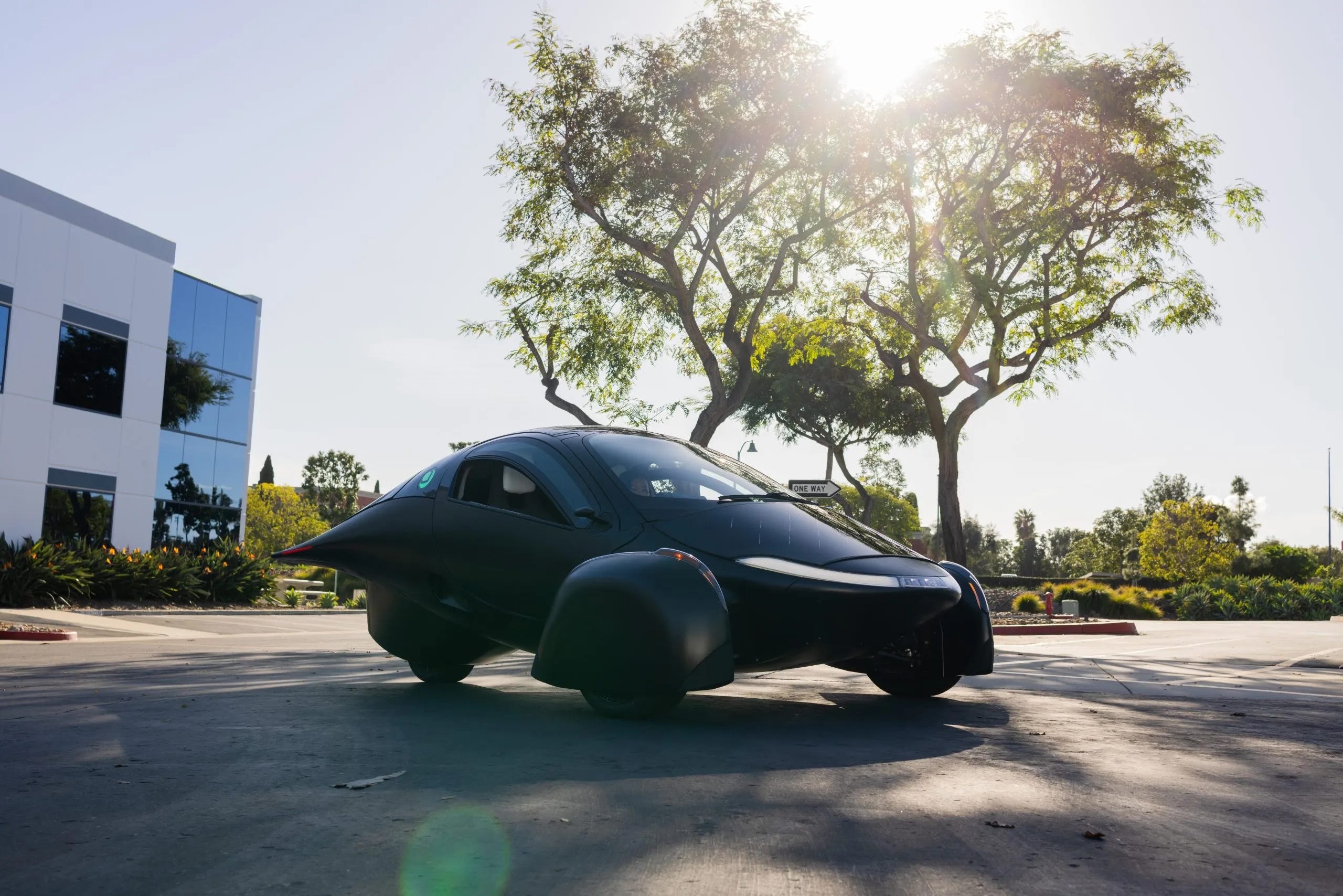


Aptera Motors has delivered its first customer car. The buyer is Martin Hartono, an Indonesian CEO and the company’s largest early investor.
That detail frames everything else. After nearly two decades of concepts, prototypes, name changes and blown deadlines, the first production Aptera went to the man with the most money riding on it.
Hartono’s investment put him at the front of the queue. He has now taken delivery, and the car is reportedly headed overseas, presumably to Indonesia.
So the first Aptera on public roads may never turn a wheel in the sunny American markets the company has courted for years. It may end up in Indonesian traffic instead, where a matte black three-wheeler will draw stares at every intersection.
The matte black finish was Hartono’s choice. It makes the car look like something ejected from a bigger Batmobile, which suits a machine that has always resembled an aircraft more than an automobile.
The hardware sticks to the long-promised formula: two seats, three wheels and a 44-kWh battery pack. A NACS-style charge port lines it up with the plug most of the North American industry has adopted.
Weight has been the engineering obsession. Aptera quotes a curb weight of 2,200 pounds, which puts it in Mazda MX-5 territory rather than anywhere near a Tesla Model 3.
The signature feature remains the onboard solar array. Aptera says the panels can add as much as 40 miles of range per day.
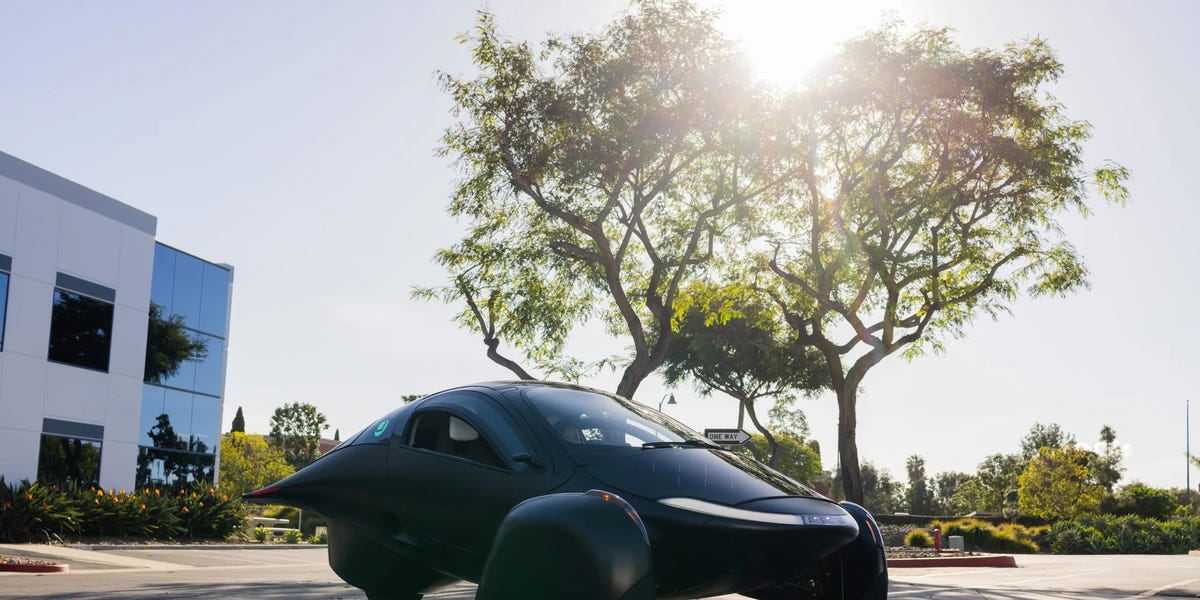
Against a planned total range of 400 miles, that is 10 percent. It isn’t magic, but in California it would cover a real chunk of the daily commute without a cable ever touching the car.
Slippery aerodynamics and low mass are supposed to do the rest. On paper, the Aptera squeezes more distance from every kilowatt-hour than conventional EVs hauling a ton or more of extra metal.
On paper is where Aptera has lived for most of its existence. The company spent two decades showing what it would build, and now it has handed over exactly one.
One car does not make a business. Startups in this segment rarely die for lack of clever engineering; they die between the first delivery and the thousandth, when tooling bills, supplier contracts and warranty obligations all come due at once.
Aptera has not yet shown it can cross that gap. A delivery to its largest investor proves the car exists in customer form, not that anyone outside the cap table is driving one.
Skeptics and believers will read this moment differently. The skeptic sees a showcase transaction, while the believer sees the first physical proof after years of renderings and reservation pages.
Both are looking at the same matte black car, now bound for a port somewhere and leaving its home market behind.
The next number Aptera reports will tell the real story. Forget range, curb weight and solar miles per day; what matters is how many more customers get keys, and how fast.

Share this Story