
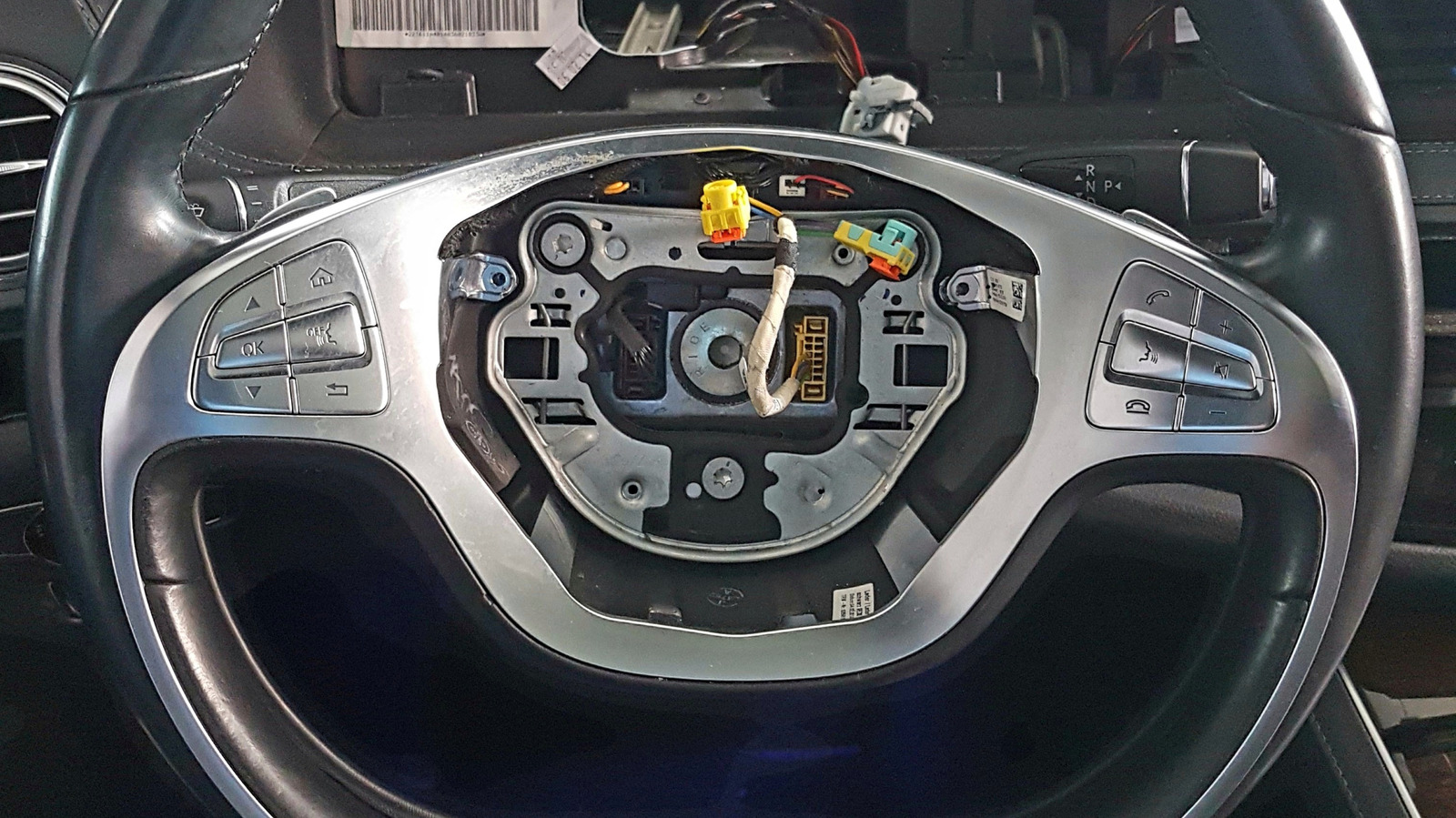


Around 50,000 airbags are stolen every year in the United States. That number, from the National Insurance Crime Bureau, puts airbag theft in the same conversation as catalytic converter heists and wheel jobs — except almost nobody is talking about it.
The root cause traces back years to the massive Takata airbag recall, which affected roughly 100 million vehicles worldwide. That recall created a parts vacuum that has never fully recovered. Replacement airbags from a legitimate dealer can run up to $1,000 each, and many collision repairs require multiple units.
Weeks-long waits are common. In some cases, parts simply aren’t available at all. That gap between supply and demand built a black market practically overnight.
Stolen airbags show up online for a fraction of retail price. The economics are irresistible for thieves: high value, tiny size, and a removal process that borders on laughably simple. According to Sair Arapovic, owner of Royce Auto in Chicago, most modern airbags use a spring-clip system that only requires a pry tool slipped alongside the steering wheel. “Literally, if you get the right position, it just pops out,” he told the Chicago Sun Times.
Break a window, pop the airbag, unplug the connector, walk away. The whole job takes under sixty seconds.
Hondas and Acuras sit at the top of the target list, for the same reasons they’ve always led vehicle theft rankings: they’re everywhere, parts are interchangeable across model years, and the aftermarket demand is bottomless. Honda’s own massive Takata recall involvement only deepened the supply problem for its owners.
But Hondas aren’t uniquely vulnerable. Arapovic pointed out that Honda airbags actually require removing a screw on each side — making them marginally harder to steal than many competitors’ designs. Most other brands made the thief’s job even easier.
The buyer side of this equation carries its own risks. A cheap airbag purchased from a questionable source might be stolen goods. It might also be an older unit, a previously deployed bag repackaged to look new, or a counterfeit.
Installing a defective airbag defeats the entire purpose of having one. You’re paying to feel safe while strapping a potential failure point to a column aimed at your chest.
Prevention options are thin. The City of Takoma Park, Maryland, suggests using a Club-style steering wheel lock to physically cover the airbag. It’s a low-tech deterrent that professional thieves can bypass, but the theory is simple: if your car has a Club and the one parked next to it doesn’t, the thief moves on. It’s not security. It’s relative inconvenience.
Catching airbag thieves in the act is nearly impossible. Catalytic converter theft at least announces itself with the scream of a reciprocating saw. Wheel theft takes several minutes and leaves a car visibly sitting on blocks. An airbag disappears in silence, in seconds, behind tinted glass.
For anyone needing a replacement, the NICB recommends insisting on a reputable shop, inspecting the invoice to verify the airbag was purchased directly from the manufacturer, and confirming it arrived in factory packaging. After installation, no dashboard warning lights should remain illuminated, and all interior trim pieces should match perfectly. Any deviation from that checklist is a red flag.
The uncomfortable truth is that automakers designed airbags for easy servicing, and thieves figured out that easy servicing means easy stealing. Until manufacturers rethink how these modules attach — or law enforcement develops better tools to trace stolen units — the 50,000-a-year figure is only going in one direction.


Share this Story