
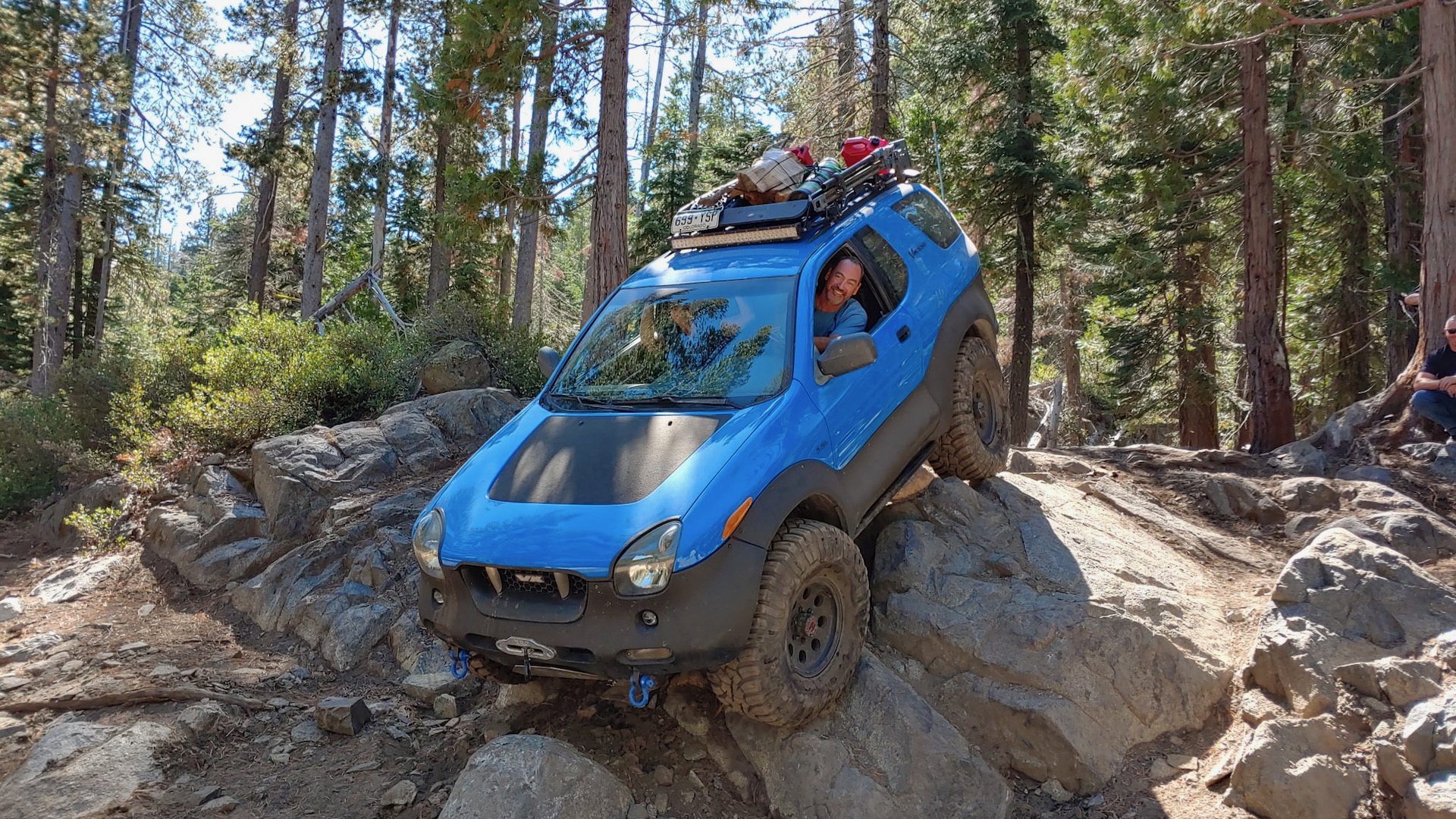


Bidding sits below $10,000 for a Lexus V8-swapped, manual-transmission, locker-equipped 1999 Isuzu VehiCross on Bring a Trailer. That sentence alone should stop you cold.
Under the hood of this aggressively ’90s SUV sits a Toyota 1UZ-FE 4.0-liter V8, the same bulletproof engine that launched the Lexus LS 400 and quietly embarrassed German luxury sedans for a decade. The seller says it’s a JDM-spec unit with no variable valve timing and no EGR, fitted with an aftermarket intake manifold and standalone ECU. Figure somewhere around 250 horsepower and 260 pound-feet of torque, which is a meaningful upgrade over the factory 3.2- or 3.5-liter V6 Isuzu bolted in originally.
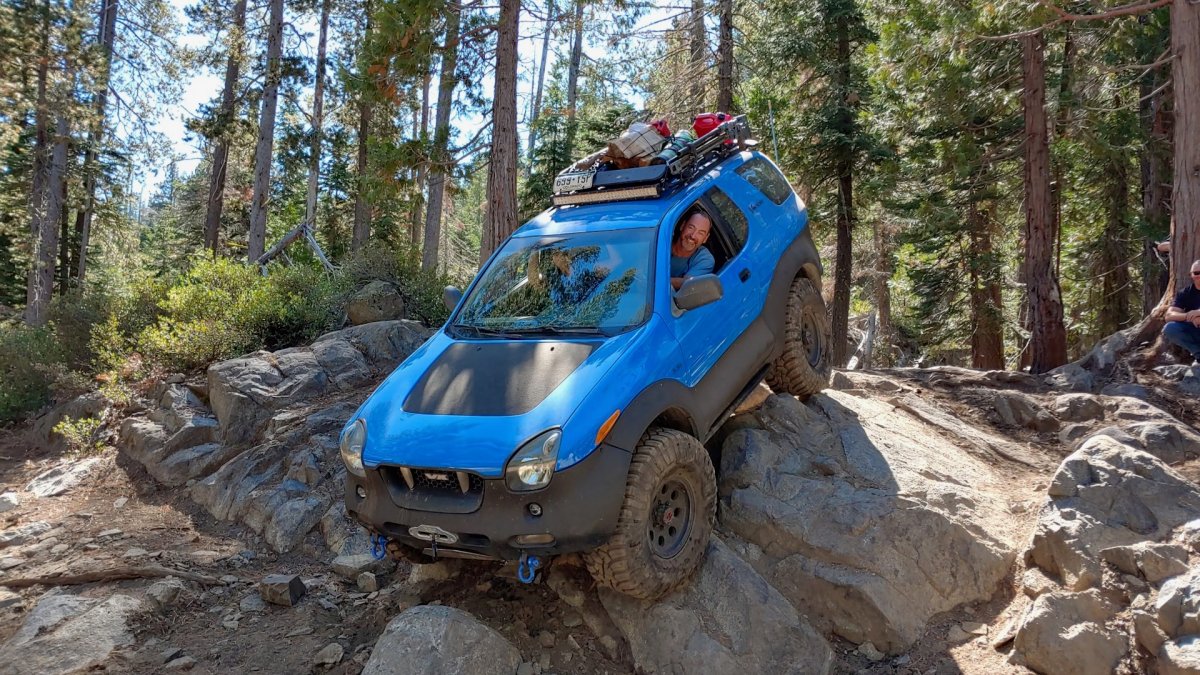
The transmission is the real party trick. It’s a five-speed manual pulled from a Hummer H3, mated to an NR6 two-speed transfer case with a Behemoth Drivetrain manual-shift conversion. Both differentials are the original Isuzu units but now pack air lockers and 4.77:1 gearing. Someone spent real time and real money building this thing right.
The suspension keeps the factory KYB dual-reservoir shocks, hardware that was genuinely exotic for a production SUV in the late 1990s, though they’ve been rebuilt softer. They manage 35-inch General Grabber X3 tires on 15-inch wheels. Custom skid plates, a winch, rocker guards, reinforced bumpers with recovery points, a roof basket, and an LED light bar round out the off-road kit.
The body wears a non-factory blue paint job with Line-X bed liner over the plastic cladding. It looks like it means business because it does.
The VehiCross itself remains one of the great automotive what-ifs. Shiro Nakamura, who later penned the R35 Nissan GT-R, had a hand in its design. Isuzu originally conceived it as a rallying homologation special, which tracks perfectly for a company that was simultaneously selling a Lotus-tuned compact sedan and chasing an F1 engine program.
This was an automaker swinging wildly above its weight class while still moving Troopers and Rodeos off dealer lots. By the time the VehiCross hit American showrooms in 1999, its roughly $30,000 sticker and polarizing looks were a tough sell against the first wave of crossovers. Fewer than 5,000 found buyers before Isuzu pulled the plug in 2002.
The brand itself limped along in the U.S. for a few more years, exiting just before the body-on-frame SUV renaissance that might have saved it. The last V8-swapped VehiCross to surface publicly carried a $7,499 asking price. This one, located in Colorado with a South Dakota title, may not climb much higher.
The market for a hand-built, V8-powered, manual-transmission Japanese off-roader from a dead brand is, charitably, niche. But that’s exactly the point.
Every component of this build reflects someone who understood the VehiCross platform and took it where Isuzu’s engineers probably wished they could have. The 1UZ is among the most reliable V8s ever produced. The H3 manual is a known quantity in the off-road world.
The factory suspension geometry was already sophisticated. This isn’t a hack job bolted together in a weekend. It’s a coherent vision executed with parts that make mechanical sense together.
Whoever built this truck respected the original concept more than Isuzu’s own marketing department ever did. The VehiCross was always supposed to be this, a capable, characterful, slightly unhinged machine that didn’t care about focus groups. Twenty-five years and a V8 swap later, it finally is, and it’s going for less than a set of factory wheels on a new Land Cruiser.

Share this Story