
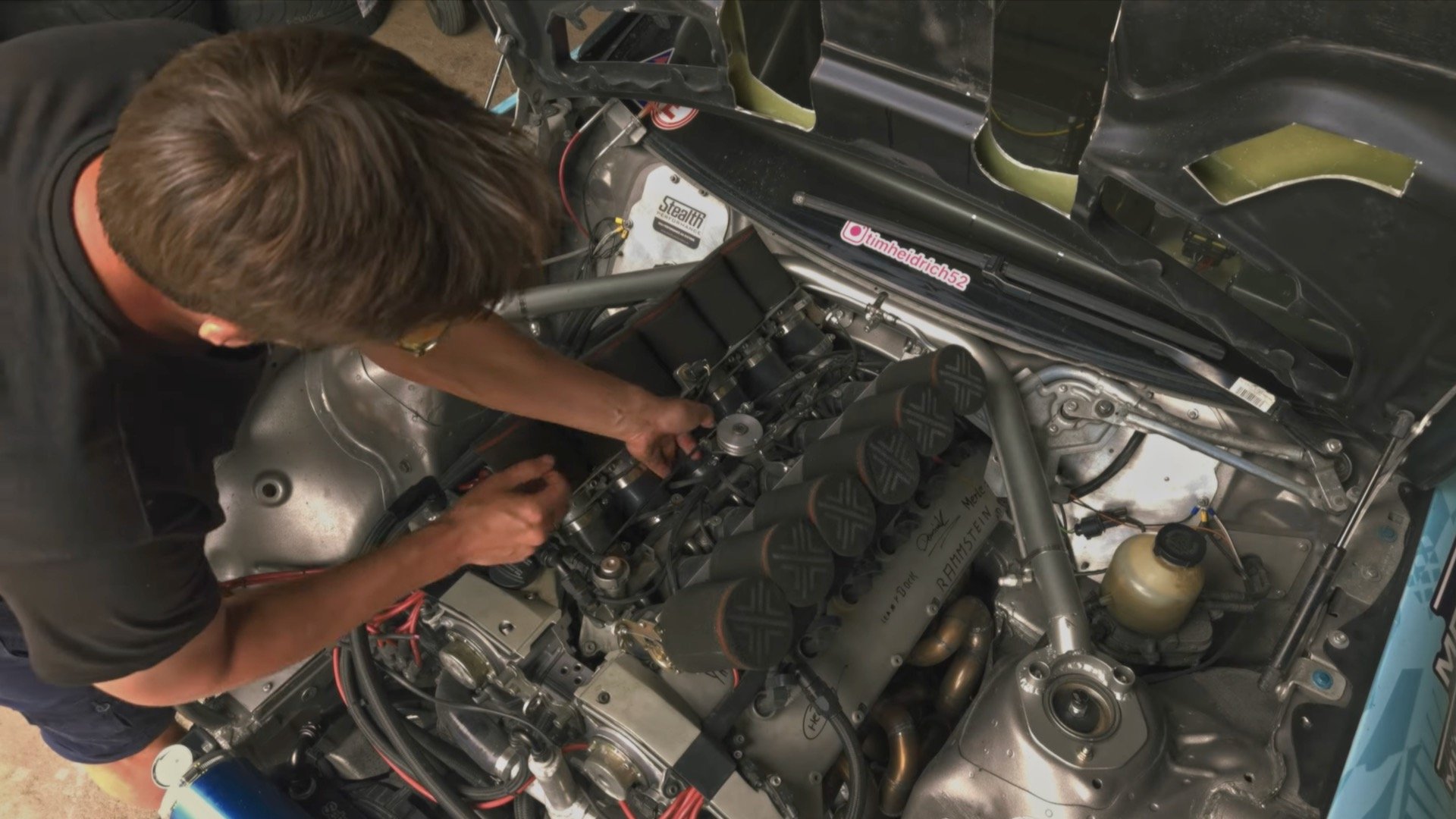


A YouTuber pulled spark plugs on a Mercedes-Benz SL’s 6.0-liter V12 to simulate an engine configuration that physics won’t allow. The result? An 11-cylinder soundtrack that barely registers as different from the 12-cylinder original.
The channel Maisteer, known for exhaust-sound experiments, used a modified R230 SL with a non-stock exhaust to work through the exercise. By deactivating cylinder number three, the V12 became a simulated V11. Then cylinder 10 went dark for a V10, and cylinder six after that for a V9.
One by one, the Mercedes shed cylinders like a snake shedding skin. A true V11 engine is mechanically impossible. An odd cylinder count means unequal banks, which creates balance and packaging problems no production engineer would tolerate.
But pulling a plug on a running V12 gets you close enough to hear what that impossible configuration might sound like at full scream. The answer is anticlimactic, at least to the naked ear. The V11 sounds almost identical to the V12, with only a faint unevenness betraying the dead cylinder.
Frequency meter readouts tell a more precise story, showing clear shifts at both 400 Hz and 800 Hz. But without instrumentation, most listeners would struggle to spot the difference, especially through the wail of that aftermarket exhaust.
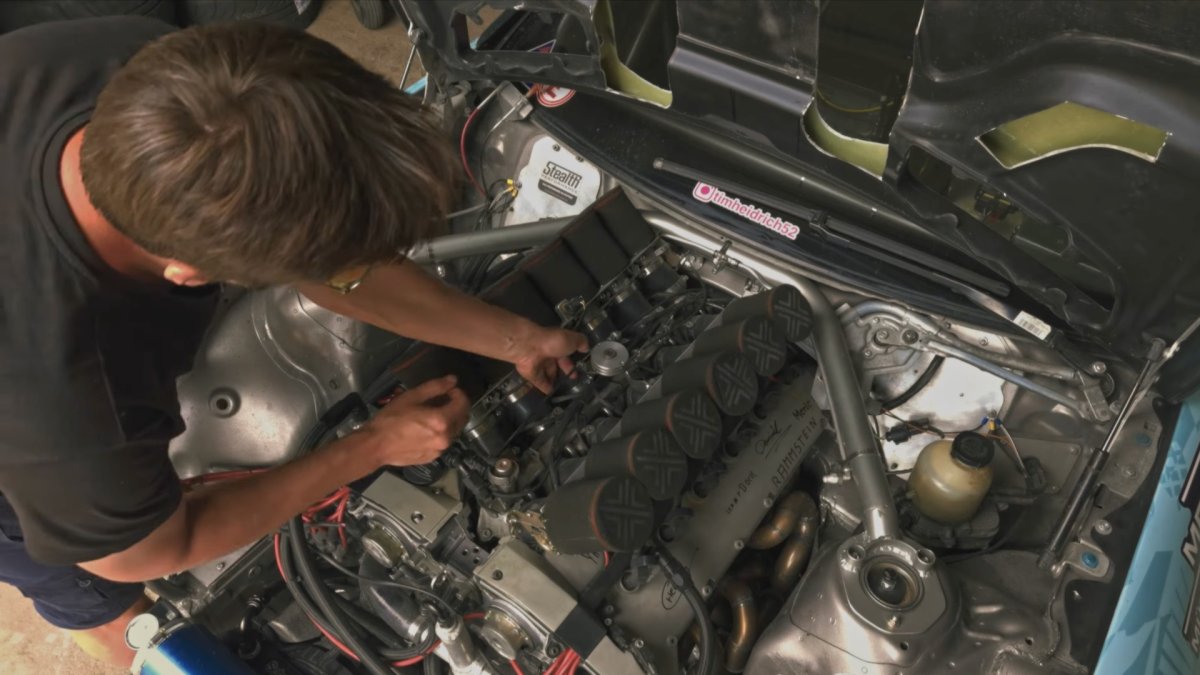
This tracks with earlier experiments. Another YouTuber simulated an inline-11 a few years back and got similarly acceptable results. That engine could theoretically function but would be absurdly long, a packaging nightmare for any realistic vehicle application.
The more interesting discovery was what happened as cylinders kept dropping. Each deactivation pulled the exhaust note lower, adding bass and roughness. By the time four cylinders were shut down and the V12 was running as a simulated V8, the tone had descended into that deep, familiar rumble that American muscle car fans have worshipped for decades.
It confirms something most enthusiasts already sense intuitively. The character of an engine note comes less from absolute cylinder count and more from the firing order, balance, and harmonic intervals created by the configuration. A V12 is smooth because its evenly spaced power pulses cancel vibrations. Start subtracting cylinders and you introduce irregularity, which the human ear perceives as texture and aggression.
This is exactly the kind of analog alchemy that automakers are now scrambling to replicate with synthesized sound. Hyundai has built a sci-fi soundtrack for its electric N performance cars. Bentley thinks percussive drum sounds best suit its upcoming Torcal electric SUV. BMW blended multiple acoustic sources together for the Neue Klasse EVs launching soon.
None of those efforts have convinced purists, and experiments like Maisteer’s illustrate why. The difference between a V12 and a V11 is subtle enough that most people can’t hear it without a frequency analyzer. But everyone can tell the difference between a combustion engine and a speaker pretending to be one.
The gap between 11 and 12 cylinders turns out to be almost nothing. The gap between real combustion and digital simulation remains a canyon that no automaker has figured out how to cross.






Share this Story