
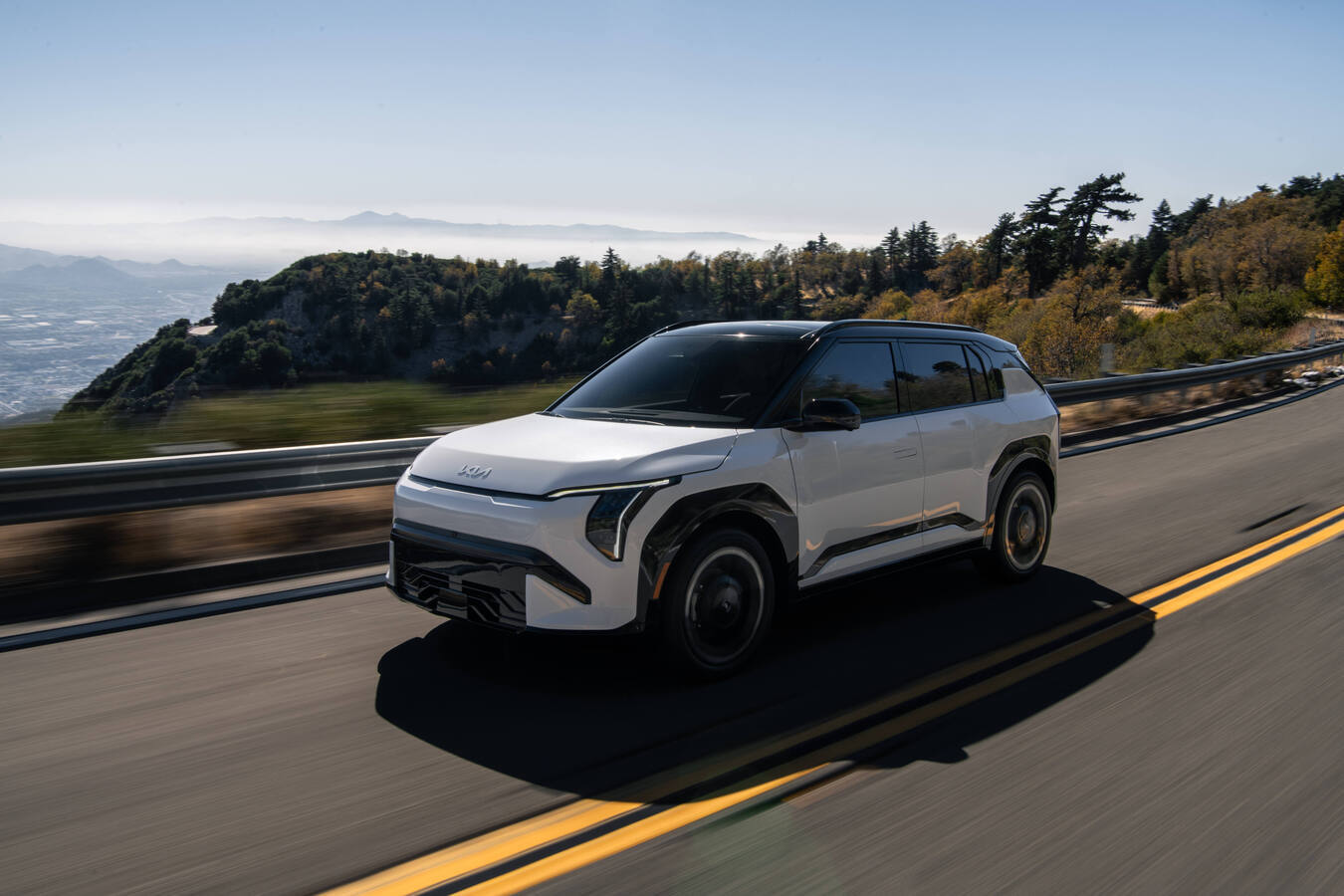


Kia is rolling its upcoming 2027 EV3 compact electric SUV into public view for only the second time on American soil, parking it alongside a lineup that tells you exactly where the Korean automaker thinks the market is headed. Demo Days Los Angeles, June 27-28 at the Rose Bowl in Pasadena, is the stage.
The EV3 is the headliner, but Kia isn’t putting all its chips on battery power. The display splits neatly down the middle: three electrics, three hybrids. The 2027 Telluride Hybrid, 2026 Sportage HEV, and 2026 Carnival HEV sit right next to the EV9, EV6, and that new EV3. Six vehicles available for consumer ride-and-drives. A carefully hedged bet.
That hedge is the real story. Kia clearly wants shoppers to see it as an electrified brand, but it’s smart enough to know that most American buyers still aren’t ready to go fully electric. So you get the Telluride — the brand’s bread-and-butter three-row — now available as a hybrid.
You get the Carnival minivan, quietly one of the best family haulers on the market, electrified just enough to ease range anxiety without triggering it.
The EV3, though, is where the ambition lives. It’s a compact electric SUV aimed squarely at a segment that barely exists in the U.S. right now. Think of it as Kia’s answer to a question the Chevrolet Equinox EV and Tesla Model Y have been circling: Can you build an affordable, right-sized electric crossover that regular people actually want?
Kia has been on a remarkable run. The EV6 won World Car of the Year. The EV9 redefined what a three-row electric could look like.
Both are assembled in the United States. The EV3 slots below them in size and, presumably, in price — a critical gap in a market where sticker shock has been the single biggest barrier to EV adoption.
Russell Wager, Kia America’s VP of marketing, offered the standard corporate line about “sustainable mobility leadership” and vehicles for “every stage of life.” Strip away the polish and the message is simpler: Kia wants to own the electrified middle class. Not just the early adopters or the tech crowd. The family hauling soccer gear on Saturday morning.
Demo Days itself is a consumer-facing event, not an auto show. No velvet ropes, no concept cars spinning on turntables. People drive the vehicles, ask questions, sit in the back seat, and check if a car seat fits.
It’s retail theater, and Kia is treating it like a product launch.
The timing matters. Tariff uncertainty has rattled the entire industry. EV incentive structures remain a moving target in Washington.
Buyers are confused about what qualifies for what credit, and many have simply stopped trying to figure it out. Putting vehicles in front of real people at a stadium parking lot is about as direct as marketing gets.
Kia’s nearly 800-dealer network in the U.S. gives it distribution muscle that most EV startups can only dream about. With several models now assembled domestically — including the EV6 and EV9 — the brand has insulated itself from at least some of the supply chain chaos that continues to plague competitors.
The EV3’s second public appearance won’t generate the breathless coverage of a global debut. But a compact electric SUV from a brand that has consistently delivered on quality, pricing, and design is exactly the kind of vehicle that could shift the market’s center of gravity. Kia isn’t waiting for permission.

Share this Story