
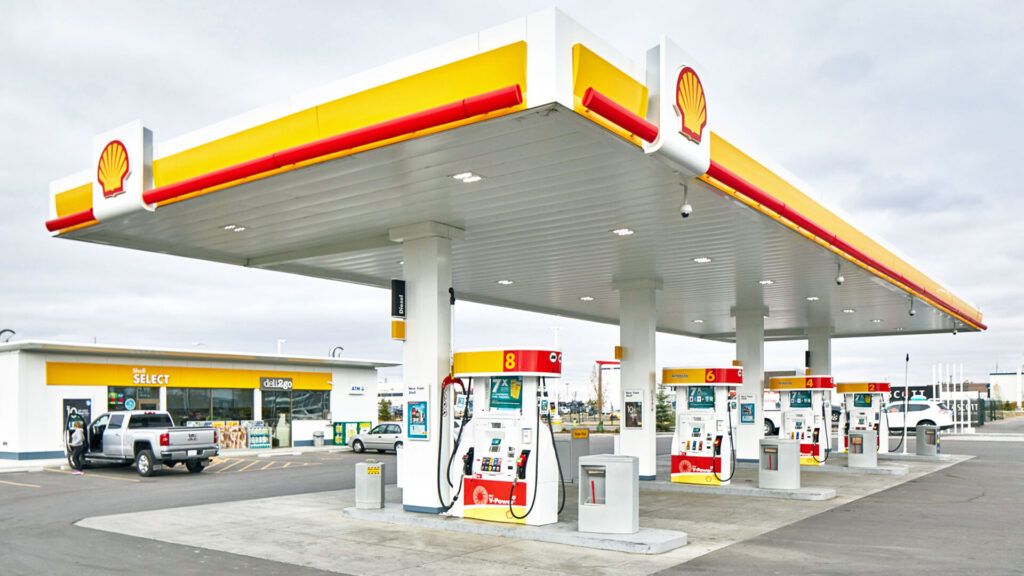


Shell posted $6.9 billion in adjusted profit for the first quarter of 2026. That is more than double the $3.3 billion it reported just three months earlier. The average gallon of gasoline in the United States now costs $4.558.
A year ago, that same gallon was $3.154. Diesel sits just 14 cents below its all-time record of $5.816. Those numbers tell you everything about where the money is flowing and who is catching it.
The war in Iran, which began February 28, arrived late in the quarter but moved oil markets fast. CEO Wael Sawan referenced “unprecedented disruptions in global energy markets,” the kind of careful, lawyered phrasing executives reach for when the disruptions happen to be extraordinarily profitable.
Shell responded to its windfall the way oil majors always do. A $3 billion share buyback program. A 5% dividend increase, putting per-share payouts at $0.3906.
That is the full toolkit for rewarding shareholders while pump prices gut household budgets.
Wall Street, curiously, shrugged. Shell’s stock dropped 3.39% on the day of the announcement. Investors either expected more or are pricing in the risk that a Middle East war cuts both ways.
Roughly 20% of Shell’s gas and oil production comes from the region. Operations in Oman remain intact, but the company acknowledged the conflict is creating problems elsewhere in its portfolio.
Greenpeace UK did not shrug. Activists projected messages onto Shell’s London headquarters, calling the company a “war profiteer.” Their statement was blunt: “Shell’s profits have doubled since Trump started his illegal war with Iran. They are making billions while thousands die, an entire region is destabilized, and our energy bills skyrocket.”
The organization pushed for a windfall profits tax to fund relief for families crushed by living costs and climate impacts. It is the same argument that surfaced during the 2022 energy crisis, when Russia’s invasion of Ukraine sent oil prices soaring and Big Oil posted record hauls. The political appetite for such a tax was thin then, and it is unclear whether a war the U.S. itself initiated changes that calculus.
The timing matters. February 28 left only about a month of wartime pricing in the first quarter’s books. If Shell nearly doubled profits with a partial quarter of elevated prices, the second quarter could be staggering.
Shell is not alone. Every integrated major with upstream exposure is riding the same wave. But Shell’s numbers landed first and loudest, making it the lightning rod.
There is a pattern here that repeats with mechanical precision. A geopolitical shock spikes commodity prices. Consumers absorb the hit immediately.
Oil companies absorb the profits on a slight delay, then announce buybacks and dividend bumps. Politicians express concern. Nothing structural changes. The cycle resets with the next crisis.
Drivers filling up at $4.56 a gallon are subsidizing that cycle in real time. Shell’s quarterly report is not an anomaly. It is the system working exactly as designed, for the people it was designed to work for.
The second quarter numbers will arrive in a few months. Expect them to be even larger. Expect the outrage to be louder. Expect the outcome to be the same.




Share this Story