
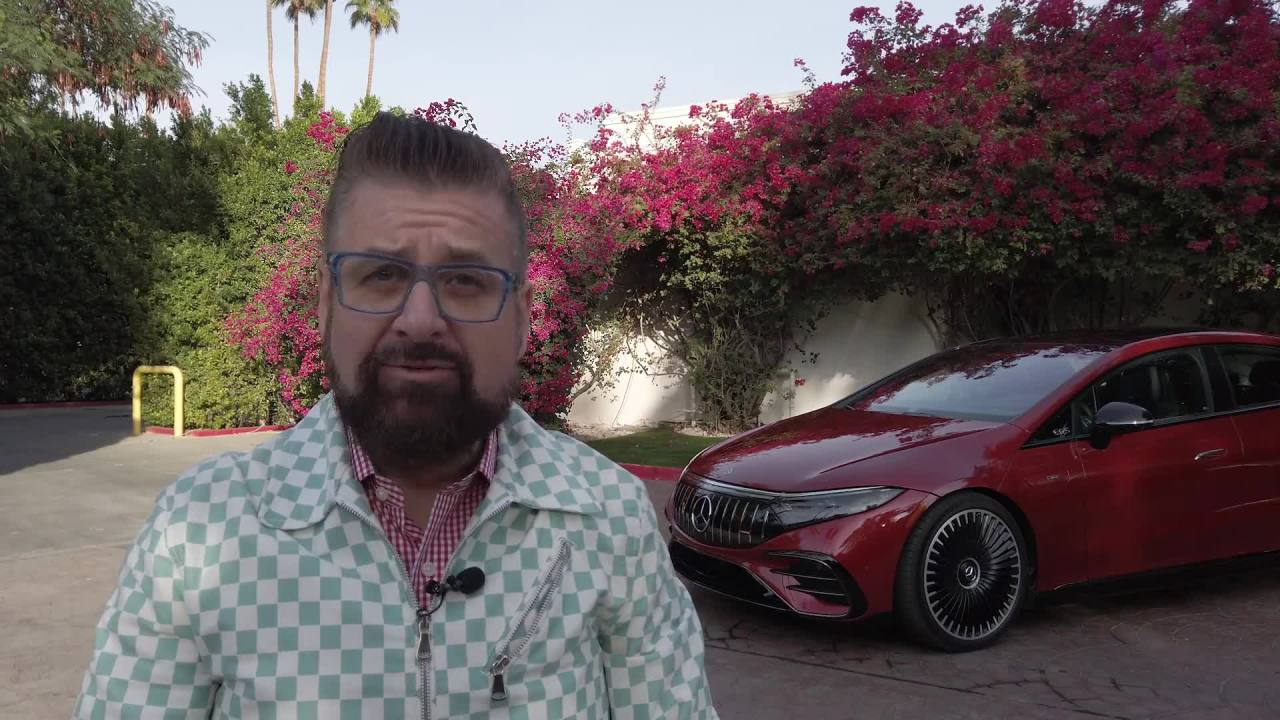


The 2027 Mercedes-Benz EQS claims a WLTP range of 925 kilometers, roughly 575 miles, on a single charge. That’s Munich to Paris without stopping. If the number holds anywhere close to real-world conditions, it represents the most significant range leap in the luxury EV segment since the original EQS arrived in 2021 and promptly disappointed owners who found its EPA figures optimistic.
More than a quarter of the vehicle’s components are new. This isn’t a mid-cycle refresh with updated bumpers and a press release full of adjectives. Mercedes gutted the electric architecture and rebuilt it around an 800-volt platform, a 122-kWh battery with silicon-oxide-blended anodes, in-house electric drive units, and a two-speed transmission on the rear axle.
DC fast charging peaks at 350 kW, promising 320 kilometers of range in 10 minutes at compatible stations. At legacy 400-volt chargers, the battery splits itself into two halves, each pulling up to 175 kW. Clever engineering for a charging network that remains maddeningly inconsistent.
The real headline-grabber, though, is steer-by-wire. Mercedes claims to be the first German automaker to put the technology into series production. There is no mechanical connection between steering wheel and front wheels.
Redundant signal paths and backup through rear-axle steering and ESP-controlled braking interventions are supposed to guarantee control if anything goes sideways. The payoff is a flatter steering wheel, a cleaner cockpit, and a variable steering ratio that adapts to speed and situation. Whether drivers trust it, or even notice, is another question entirely.
Underneath sits Mercedes-Benz Operating System, or MB.OS, the company’s long-promised supercomputer backbone. It runs the entire vehicle, from drivetrain to infotainment to driver assistance, and enables over-the-air updates across every domain. Up to 27 sensors feed the assistance suite, which includes standard lane-change assist, evasive steering, and a parking system that can reverse along a recently driven route when you’ve run out of room to turn around.
Recuperation power jumps to 385 kW, a one-third increase over the outgoing model. Mercedes says everyday braking can be handled almost entirely through regeneration. The two-speed rear transmission uses first gear for launches and a long-ratio second gear for highway cruising, with only one planetary gear set engaged at cruise, a deliberate efficiency play.
Aerodynamics remain ruthless. The drag coefficient sits at 0.20, with a frontal area of 2.51 square meters yielding an effective resistance area of 0.5 square meters. Mercedes notes, with evident pride, that this is less air resistance than a road cyclist generates.
The air suspension now uses cloud-based damper regulation, reading the road ahead and pre-adjusting before the car reaches a speed bump. The promise is a magic-carpet ride. The execution will determine whether this EQS finally matches the S-Class experience that early adopters expected and never quite got.
The car arrives at U.S. dealerships in the second half of 2026 in EQS 450+, EQS 500 4MATIC, and EQS 580 4MATIC configurations. Pricing hasn’t been announced, but expect it to reflect the ambition. Mercedes needs this car to work.
The original EQS launched as a technology statement and became a cautionary tale about software glitches, confusing controls, and range that didn’t match the sticker. Three years later, the company has essentially rebuilt the car from the battery cells up.
The specifications are formidable on paper. Every one of them was formidable on paper last time, too. The difference now is that Mercedes has no more runway for excuses.
Rivals from BMW, Lucid, and a relentless Chinese contingent have closed the gap or surged ahead. The 2027 EQS isn’t just a new car. It’s an answer to a question Mercedes has been dodging since 2021: Can it build an electric flagship that lives up to the three-pointed star?
Share this Story