
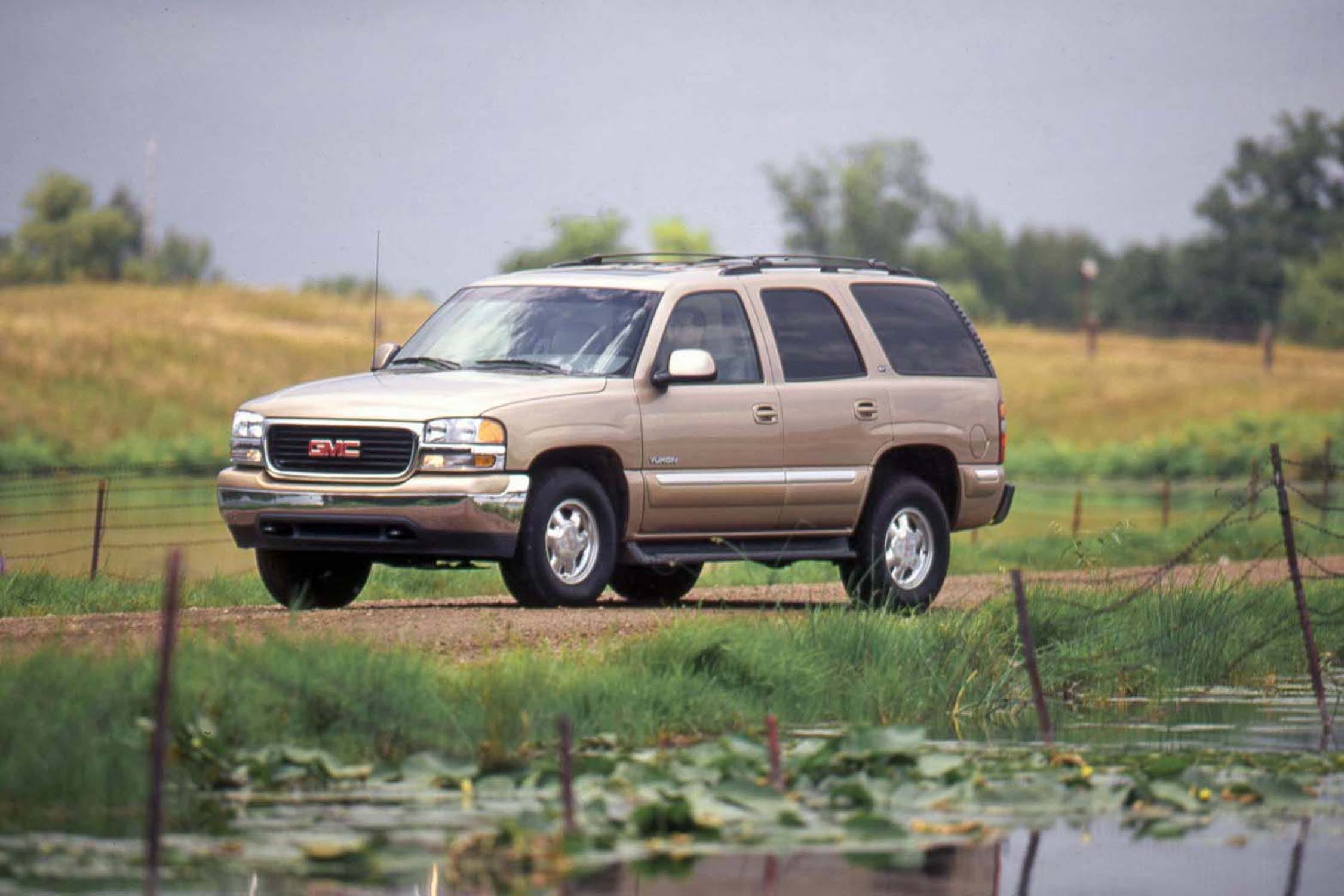


Twenty-five years ago, General Motors pulled off something quietly remarkable. It took a pickup truck platform — the bones beneath the 1999 Silverado and Sierra — and turned it into a full-size SUV that was faster, stopped shorter, and handled better than the truck it replaced, despite weighing 29 pounds more and running a smaller engine. The 2000 GMC Yukon SLT wasn’t a revolution. It was an execution masterclass, the kind Detroit used to fumble routinely.
Car and Driver’s original test, published in November 1999, laid it out in numbers that still read well. The Yukon’s 5.3-liter Vortec V-8 pushed 5,467 pounds to 60 mph in 8.6 seconds. The 1999 Tahoe Z71 it replaced, carrying a larger 5.7-liter V-8, needed 10.3 seconds.
Quarter-mile times dropped a full second — 16.7 at 85 mph versus 17.7 at 77. That’s not incremental improvement. That’s a generational leap from a powertrain family GM had engineered from scratch.
Braking told the same story. From 70 mph, the Yukon stopped in 213 feet. The outgoing Tahoe needed 248. Thirty-five feet is roughly two car lengths — the difference between a close call and a collision at school drop-off speed.
But the real revelation wasn’t in the stopwatch numbers. It was the steering. Car and Driver’s testers — a group that included self-described SUV skeptics — praised the Yukon’s straight-line tracking, noting the absence of those maddening micro-corrections that plagued every highway mile in the old model and still haunted the Ford Expedition and Excursion. For a vehicle this size, planted and predictable counted for more than skidpad heroics.
The ride remained a mixed bag. Smooth pavement felt composed and quiet — 68 dBA at a 70-mph cruise. But the solid rear axle, a necessity for towing duty and off-road credibility, turned washboard dirt roads into a hula lesson for rear passengers. Some compromises are baked into the architecture.
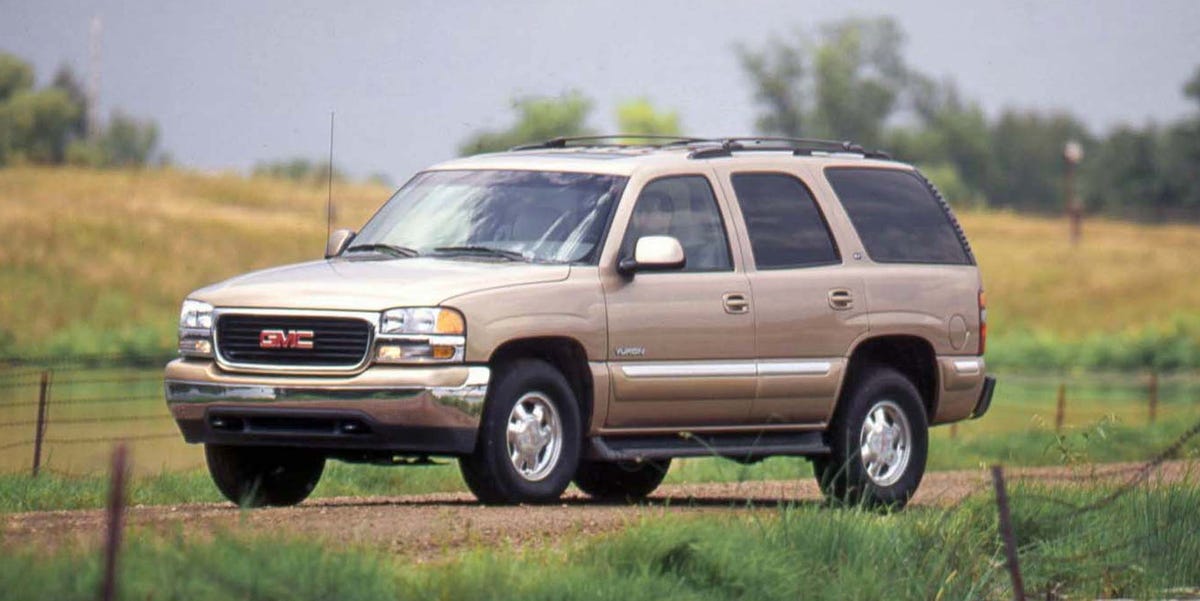
Inside, GM showed it was paying attention to the details that actually matter during a twelve-hour family drive. The nine-speaker stereo sounded competent from every row. A new sunroof opened up the cabin’s cave-like interior.
The middle-row center seatback folded forward into a console with cup holders — a small touch that signaled someone on the design team had actually ridden in the back of one of these things.
Third-row seating existed, technically. But Car and Driver was blunt: those rearmost seats were for kids, and cargo space behind them held a row of grocery bags and little else. The magazine suggested leaving the third row at home permanently if you rarely carried more than five people. Honest advice that most SUV buyers quietly follow anyway.
The AutoTrac four-wheel-drive system worked through a dashboard button, sending power rearward until it detected slip, then feeding torque to the front axle automatically. With 8.4 inches of ground clearance and Firestone Wilderness all-season tires, the Yukon could handle legitimate off-road duty as long as nobody confused it for a Wrangler in axle-deep mud.
At an estimated $35,500 — roughly $65,000 adjusted for inflation — the Yukon SLT delivered genuine leather, a disc player mounted separately in the console, and the kind of road manners that made even the anti-SUV faction at Car and Driver concede the point. Their verdict was unusually generous: the best big SUV on the road.
What makes this test worth revisiting now is context. The 2000 Yukon arrived at peak SUV backlash — gas was cheap but guilt was rising, and the cultural knives were out for anything this large. GM’s answer wasn’t to apologize. It was to engineer the thing so well that the criticism ran out of oxygen.
The Yukon SLT earned 15 mpg observed, drank premium self-regard from a 26-gallon tank, and didn’t pretend to be anything other than what it was. A quarter century later, with Yukons pushing 6,000 pounds and $80,000 sticker prices, this one reads like the last moment the full-size SUV made its case on pure competence rather than sheer excess.
Share this Story