
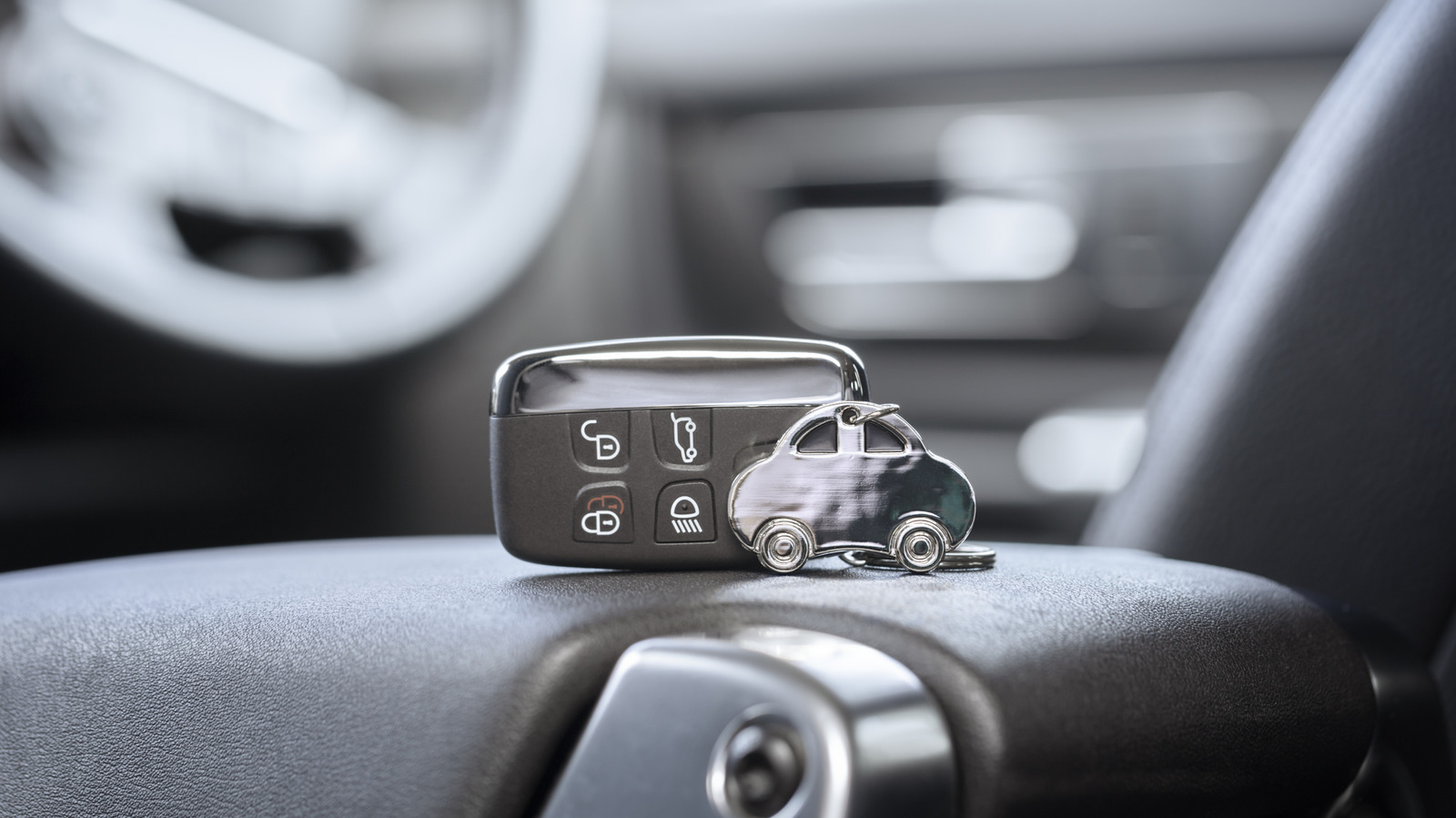


A coin cell battery the size of a shirt button can lock you out of a car that costs more than your first house down payment. That is the quiet bargain behind keyless entry and push-button start. The convenience is real, and so is the failure point.
A smart key does the same jobs a metal key always did. It locks, unlocks, and starts the car from your pocket or purse by sending a short-range wireless signal to a sensor in the vehicle. Walk up, pull the handle, press the button, until the fob goes silent.
Automakers saw that coming. Nearly every car with a smart key carries a backup system, and most owners have never looked for it.
The first line of defense is the warning. Your driver display should tell you when the fob battery is getting low, either with a message or a dummy light in the gauge cluster.
Ignore it, and the signal weakens. In many cases you can still start the car by holding the fob close to the start button while you press it.
Some cars go further. Look for a symbol showing a key with bracket-like radar waves on either side, often on the steering column or in the center console. That marks the proximity sensor, and holding the fob against it should start the car even when the fob’s battery is completely dead.
Other manufacturers kept the old hardware hiding in plain sight. On some Mercedes-Benz models, including the C-Class, the start button cover pops off to reveal a traditional ignition keyhole. The same hidden keyhole shows up on most Chrysler, Dodge, and Jeep products from the late 2000s and early 2010s.
Using it shuts down keyless start entirely. That also defeats the relay trick thieves use to drive off with keyless cars in seconds.
Getting the engine running means nothing if you cannot open the door. Passive-entry handles have left plenty of drivers standing in parking lots, jabbing a dead fob at a locked car.
Most smart keys hide a physical key blade inside, freed by a small release latch. The driver’s door handle usually has a removable cap that conceals a real keyhole underneath.
Both are designed to be invisible. That is the point of the styling, and the problem when you need them in the rain.
The owner’s manual shows where they are and how they work. Read it before you need it, not after.
The trickier scenario happens with the engine already running. A fob can die mid-drive, or a passenger can climb out with the key in their pocket.
The car will not shut off on the spot. It keeps running and will most likely throw a warning on the dash.
The real trap comes next. Put the car in park and you may not be able to shift back into gear.
Turn the engine off and it stays off until the fob is back in range. Drop your spouse at the airport with the key in their jacket, and you could be stranded at the curb.
Cabins keep filling with bigger screens and smarter software. The weakest link is still a battery that costs a few dollars. The fix is still a piece of cut metal most drivers forgot they own.




Share this Story