
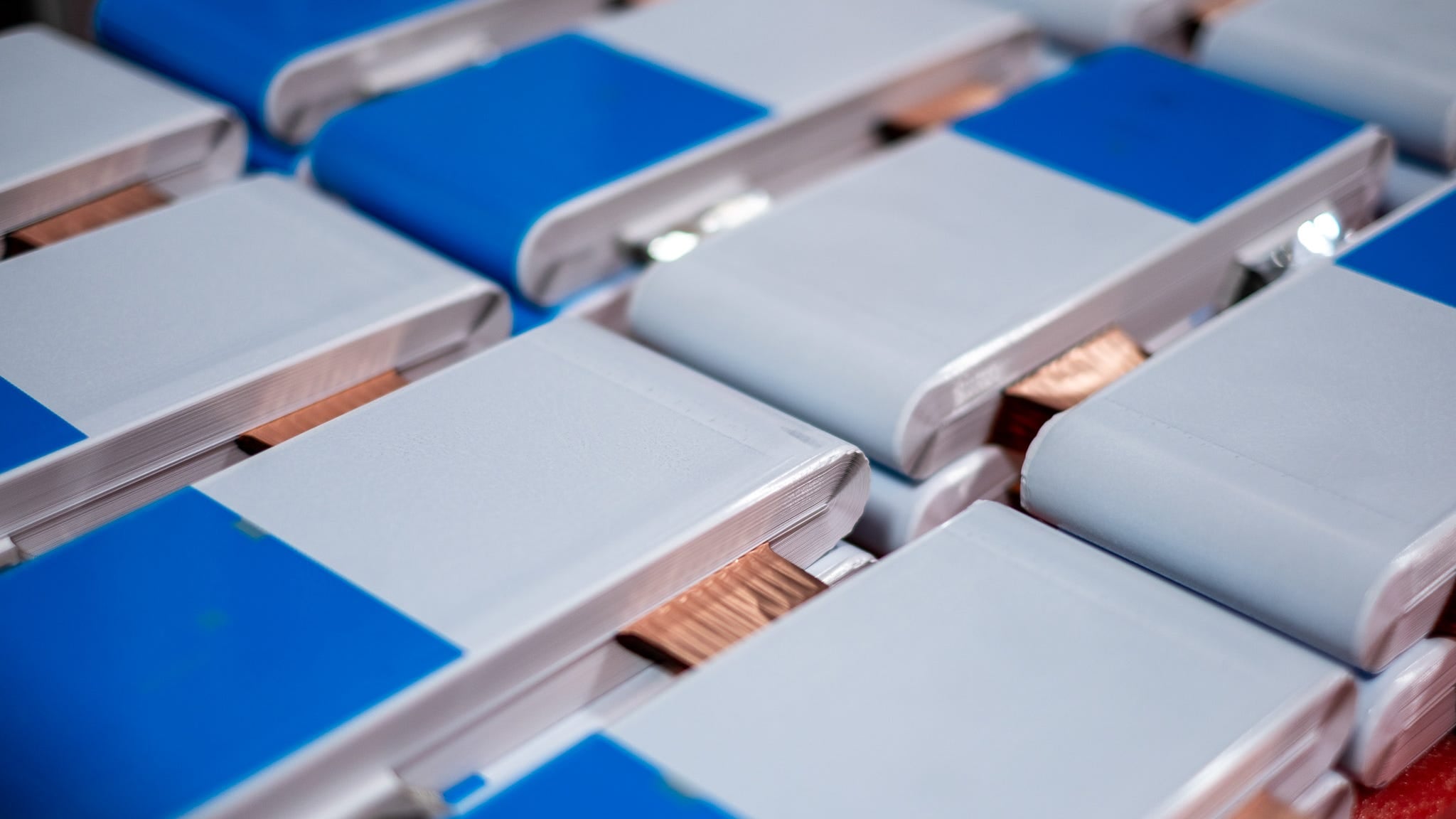


Ford says the battery accounts for 40 percent of what it costs to build an electric vehicle. For a pickup with an announced starting price of $29,945, that number dictates nearly every engineering decision.
The 2028 Ford Fathom, the first truck on the company’s Universal EV Platform, enters production in late 2027. Ford has been releasing details slowly. A recent MotorTrend tour of the new BlueOval Battery Park Michigan offered the clearest look yet at the pack underneath.
It looks less like a Ford battery and more like a Tesla one.
Start with the chemistry. Most EVs sold in America run nickel manganese cobalt cells. The Fathom uses lithium iron phosphate, the same cheaper chemistry found in the Kia EV3, the Chevrolet Bolt, and the entry-level Tesla Model 3 RWD.
LFP’s raw materials cost far less, but there’s a catch. The cells are heavier and bulkier than NMC cells storing the same energy. That’s an awkward compromise in a vehicle class already fighting weight.
Ford’s answer is to need fewer of them. Engineers have gone after aerodynamic drag and tire rolling resistance hard, because every efficiency gain lets them shrink the pack without losing range.
Ford claims that work removed enough battery to cut $1,300 from the sticker. On a truck priced under $30,000, that is no rounding error.
The bigger departure is structural. The Fathom’s pack does three jobs, and storing energy is only the first.
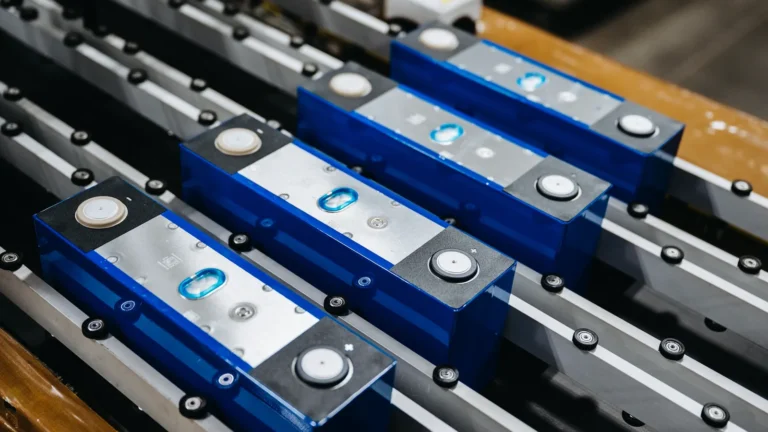
The second is holding the truck together. Ford built the pack so its 108 cells, housed in rectangular aluminum cans, act like steel cross-car beams. Loads travel from one side of the truck, through the cells, and out to the structure and tires on the other side.
Those cells can carry as much as 40 percent of the loads moving through the vehicle. That includes everyday driving and side-impact crashes.
Getting there meant breaking an old rule of battery engineering: a cell should never deform. Ford says analysis and lab testing proved otherwise. The idea echoes the stressed-member engines of the Ferrari F50 and Aston Martin Valkyrie, strange company for a budget pickup.
The third job is the cabin floor. Ford will install carpet and front seats directly on top of the pack, then raise the whole assembly into the truck from below and bolt it in place.
Tesla already builds the Model Y and Cybertruck this way. The method cuts assembly time and part count, two numbers Ford needs falling right alongside the price.
None of this is accidental. The Fathom team is stocked with former Tesla engineers, hired to make a 123-year-old automaker act like a startup.
It shows. A recent Ford blog post declared, “The best part is no part, and the second-best part is one that serves multiple purposes.”
Elon Musk has been saying nearly the same thing for years. Ford did not credit him.
The battery is only part of the rethink. The Fathom also brings 48-volt electronics, a zonal computing setup, an all-new production process, and cells Ford builds in its own plant.
That is a lot of first-time technology stacked into one cheap truck, from a company that has never shipped any of it at volume.
Production is roughly a year away. Ford has shown the plant, the cells, and the philosophy. Now the $29,945 truck has to actually roll off the line.


Share this Story