
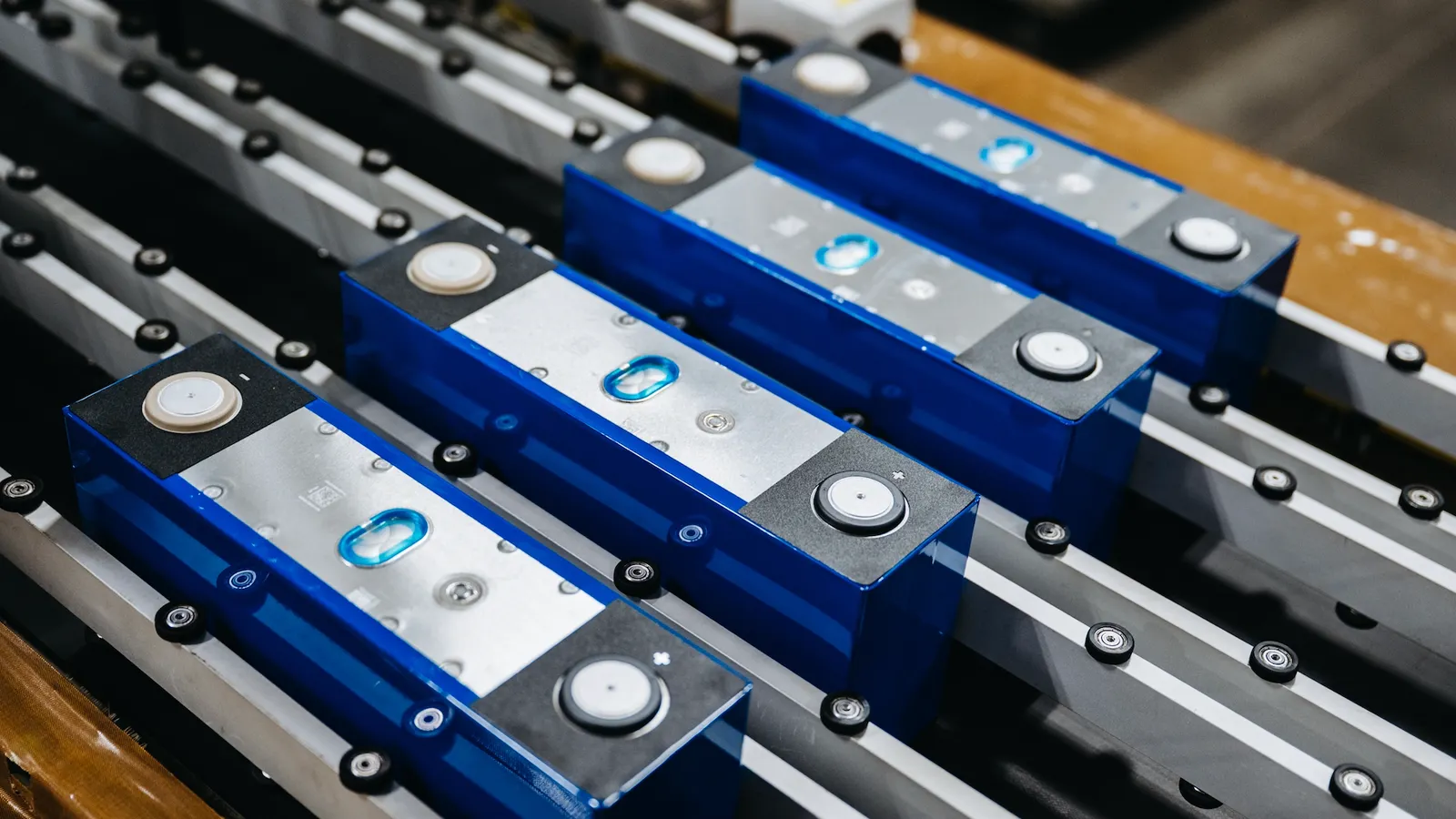


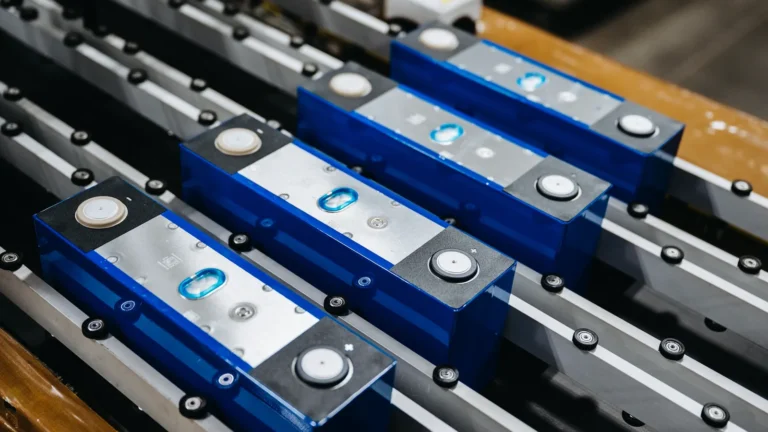
Ford’s battery plant in Marshall, Michigan, has finally shipped something. The first lithium iron phosphate cells off the line are headed to Louisville, where they will power prototypes of the Fathom electric pickup.
It took three years and $3.5 billion to get here. The plant was announced in 2023, and Ford confirmed the first delivery in a Nov. 18 blog post.
The line runs at 40 cells per minute. Ford says that makes it among the fastest LFP production lines outside of China.
That qualifier says more than Ford probably meant it to. The technology used to make those cells came from China in the first place.
Ford owns the Marshall plant outright. The process belongs to CATL, the Chinese battery giant, under a licensing agreement that has drawn fire from Washington.
In a Sept. 3 letter to CEO Jim Farley, Transportation Secretary Sean Duffy said the department remains “deeply alarmed” by Ford’s reliance on Chinese technology and its impact on American jobs. He urged Farley to cut the ties.
Ford’s answer was careful. The company called the CATL arrangement a “limited technology-licensing and services agreement.”
In other words, it is not a joint venture and not a foreign-owned factory. Ford is buying know-how, not handing over the keys.
Charles Poon, Ford’s VP of vehicle hardware engineering, framed the shipment around capability rather than origin. “This milestone is about more than shipping our first cells,” he wrote. “We’re building the expertise to produce high-quality batteries at scale for more affordable EVs and a new energy storage business.”
Expertise is the word to watch. Licensing a process is one thing, but learning to run it at volume in a plant Ford controls is the real bet.
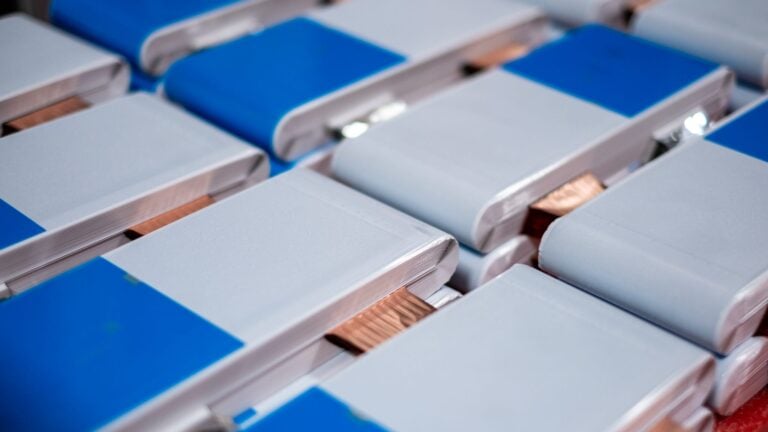
The cells are prismatic, rectangular blocks designed to fit into the chassis as a structural component. In the Fathom, the battery pack becomes the floor of the truck.
LFP chemistry skips nickel and cobalt entirely. That cuts cost, and cost is the whole point of this exercise.
The Fathom starts at $28,350 before a $1,595 destination fee. Ford promised an electric pickup under $30,000, and on paper it has one.
Getting there depends on cheap, durable cells. Right now, the playbook for making them at scale was written in China.
Ford is chasing quality targets that sound more like semiconductors than car parts. Workers in Marshall use camera-based inspection software to catch defects, with the goal of counting failures per billion cells rather than per million.
The durability promise is just as aggressive. Poon said in August that Ford wants its electrified powertrains to last at least 15 years or 225,000 miles.
The pickup is only half the plan. In May, Ford launched Ford Energy, a subsidiary building battery storage systems for data centers, utilities and large commercial customers.
That business runs out of the Glendale, Kentucky, plant that once belonged to the BlueOval SK joint venture. It uses production capacity the EV side left unused, turning idle floor space into a new revenue stream.
There is a catch. CATL is also a major producer of storage systems for data centers, so Ford is walking into a market where its own technology licensor is already a heavyweight.
Marshall is scheduled to reach full production in early 2027, ahead of the Fathom’s launch at Louisville Assembly that same year.
Duffy wants the China ties cut. The first cells are already on their way to Kentucky.
Share this Story