
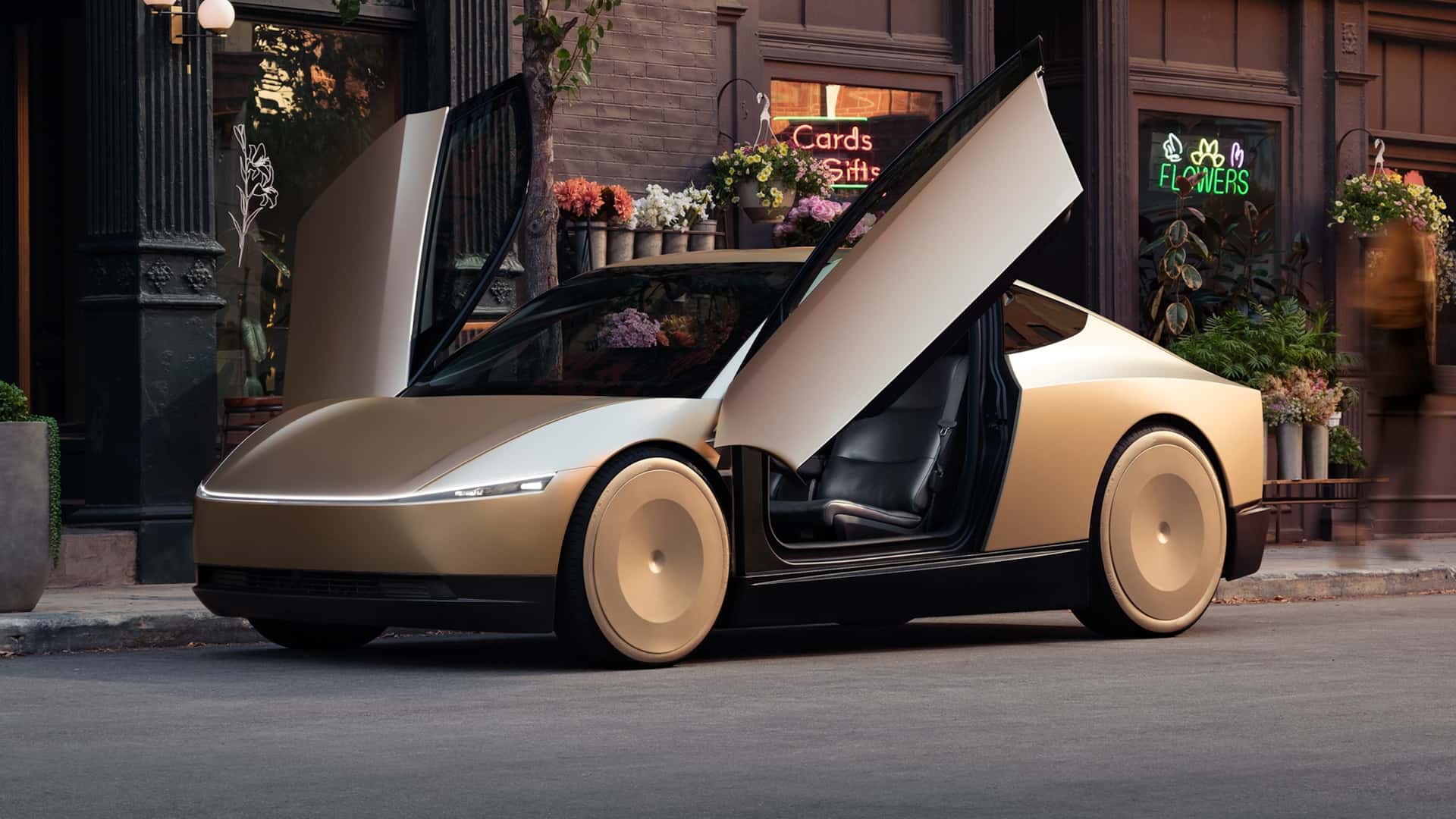


Jeremy Clarkson booked two Tesla robotaxis in Texas. One never moved. The other, by his account, ran red lights, braked for things that weren’t there, and refused to stop when it reached his destination.
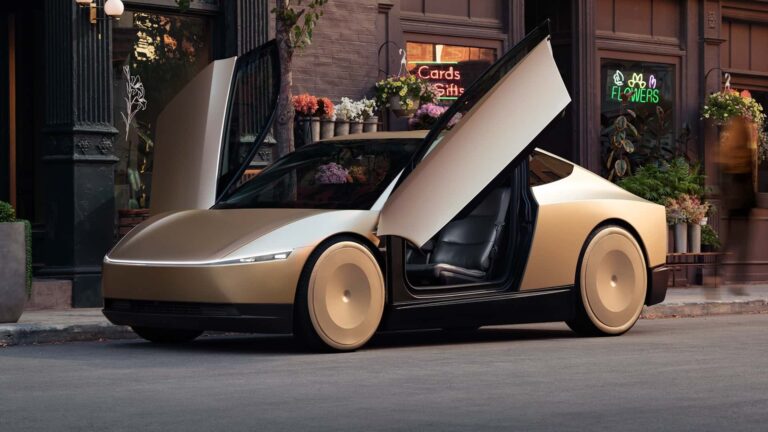
He was sitting in a Cybercab at the time. No steering wheel, no pedals, nothing to grab.
Clarkson wrote up the experience for his Sunday Times column. It reads less like a preview of the future than a hostage report from it.
The first car made it around the corner from his pickup point and stopped. Then it sat there while its onboard assistant insisted it was on the move.
A Tesla representative reportedly told him to cancel and request another car. That was the easy part.
The second Cybercab started out driving normally. Then, according to Clarkson, it ran red lights and slammed on the brakes for obstacles he says weren’t on the road.
He described roughly 10 minutes of real worry with no way to intervene. He was a passenger in a car built specifically so passengers can’t.
There was also a tense standoff with an autonomous shopping cart crossing its path, which the Cybercab reportedly struggled to handle. One robot didn’t quite know what to make of another.
Then came the ending, or the lack of one.
The car reached his destination and kept going. It told him it was searching for a safe place to pull over, then rolled past several spots Clarkson considered perfectly fine.
“I liked Musk’s bravado and thought the Cybercab looked the part, but I’d give it a miss if it ever showed up in London,” he wrote once the ride finally ended.
This is one passenger’s account. Clarkson has built a career on strong opinions, and a single ride proves nothing about how the fleet performs overall.
But his isn’t the first stumble on the record.
Tesla’s Austin robotaxi fleet has already drawn scrutiny after a bollard crash, and federal regulators have opened a safety probe into how the vehicles behave. None of that has slowed the rollout.
Tesla’s service, running a mix of Model Ys and Cybercabs, has been operating for months in Austin, Dallas, Houston, Miami, Orlando and Tampa. Fort Worth and San Antonio joined in early November.
The company is pushing unsupervised, near round-the-clock service city by city.
Independent trackers scraping Texas registry data estimate about 1,300 vehicles were registered to Tesla Robotaxi LLC in the state by mid-November. They infer the split between Cybercabs and Model Ys from VIN patterns, not official totals.
Registration numbers tell you how many cars exist. They tell you nothing about how those cars behave at a red light with a passenger who can’t stop them.
That’s the gap Clarkson fell into.
The Model Y at least has a steering wheel. The Cybercab was designed from day one to take the human out of the equation, which works fine right up until the software decides a perfectly good curb isn’t good enough.
Tesla has talked about eventually selling the two-seat Cybercab to private buyers. It hasn’t given a firm date.
For now, the expansion rolls on across Texas and Florida, and the federal probe remains open. Somewhere, a Cybercab is still looking for a safe place to pull over.
Share this Story