



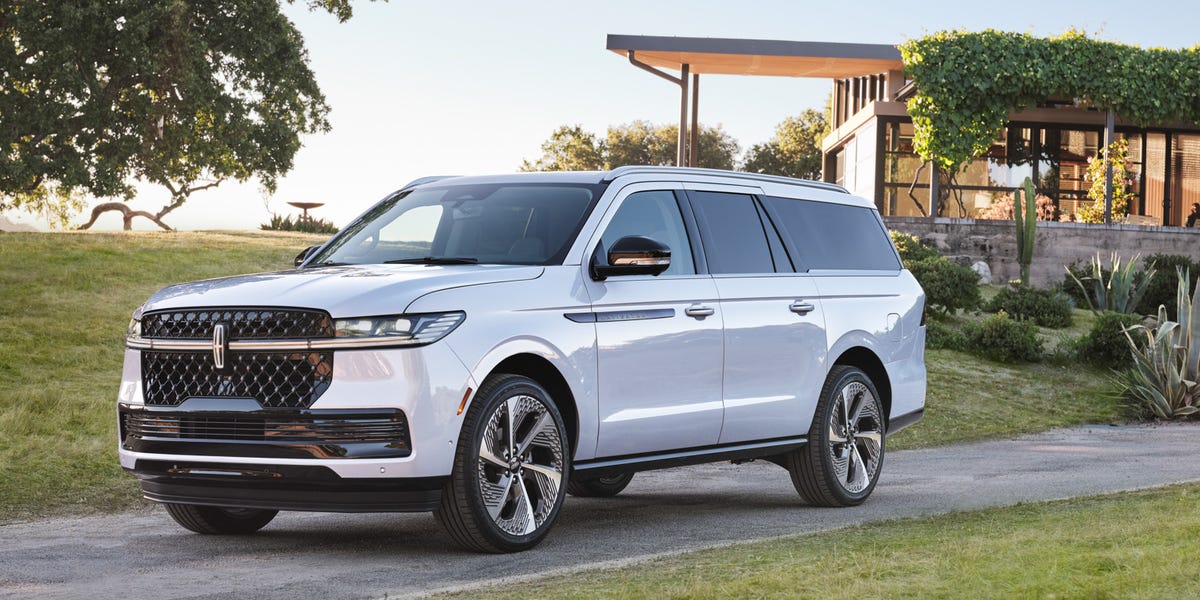
Lincoln is recalling 36,994 Navigators because the front passenger seat can move on its own. The remedy is not a repair. Dealers will switch off the feature responsible.
The recall covers 2025 through 2027 model year Navigators equipped with the Chauffeur Seat Feature. It’s the kind of option that defines a full-size luxury SUV: a second-row passenger taps a touchscreen in the center console and moves the front passenger seat out of the way, sliding it forward, sliding it back, or reclining it.
According to documents Lincoln filed with the National Highway Traffic Safety Administration, that touchscreen can be fooled. Residue on the display may trigger the power adjustments without anyone touching the controls.
In plain terms, a smudge can move a seat.
The filing describes a second failure mode. If the home button on the rear touchscreen is pressed at the same moment as a seat adjustment, the seat may keep traveling until it hits the end of its track, with no further input from anyone.
An empty seat creeping forward on its own is unsettling. An occupied one doing the same thing is a different matter, and that’s where the injury risk lives. A front passenger can find the seat sliding or reclining underneath them, with the command coming from a screen behind them.
The fix tells you how Lincoln views the problem. Owners are being asked to bring their SUVs to an authorized dealer, where the Chauffeur Seat Feature will be deactivated at no charge.
Lincoln hasn’t mentioned a software patch, a redesigned panel, or a revised touchscreen. Based on the recall details, the function simply goes away, and nothing in the filing suggests it comes back.
So the buyer who paid for a Navigator partly because it pampers rear-seat passengers will leave the service bay with one less reason to sit in the back. The recall makes the seat safe by taking away the convenience.
This is the tradeoff the industry signed up for when it started burying physical controls behind glass. A mechanical switch needs a deliberate push.
A capacitive screen reads conductivity, and oily fingertips, spills, and grime all conduct. Lincoln’s own description puts residue at the center of the defect.
The Navigator recall also lands at a busy time for Ford. The company is under federal investigation over airbags that can cause burns.
It has recalled the Expedition, the Navigator’s mechanical sibling, along with heavy-duty trucks over faulty lights. Bronco models have been recalled over possible engine fires.
None of those campaigns share a cause with the seat defect. Taken together, though, they keep the Ford family name on the NHTSA recall list at a steady clip.
Lincoln says dealers and owners should already have received notification by mail. Owners who haven’t seen a letter can enter their VIN on the NHTSA website, or search by year, make, and model, to confirm whether their SUV is included and check for other open recalls.
Until that dealer visit, the console touchscreen stays live. The seat still answers to it, and the screen still can’t tell a fingertip from a smear.




Share this Story